What is fly fishing? Why do we fish? A very short introduction
For as long as humans have lived near rivers and oceans, we’ve fished. And I’d argue that fly fishing is the closest to how our ancestors did it. Read on for a broad introduction to the sport, the differences between fly and bait fishing, and more.

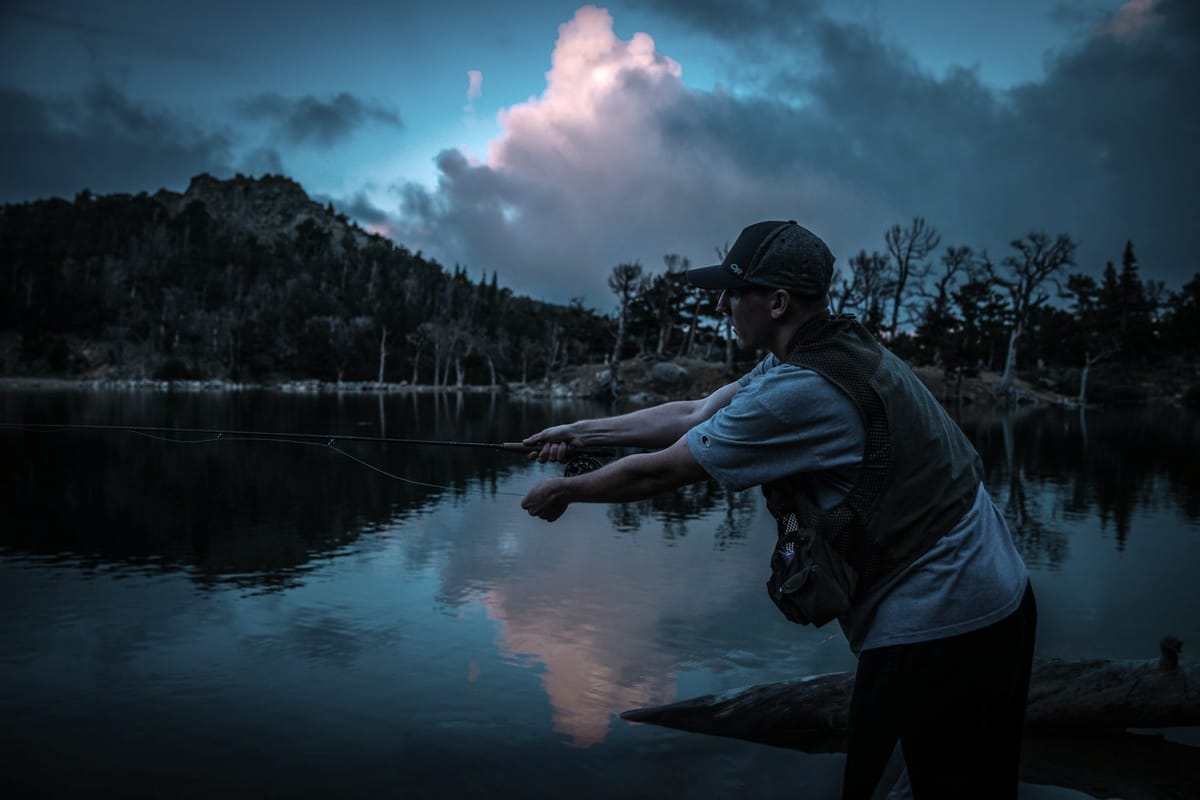
For as long as humans have lived near rivers and oceans, we’ve fished. I think fly fishing is the closest to how our ancestors did it. Here's a veritable expedition around the breadth fly fishing, including all the rabbit holes fly fishing can offer curious explorers, all the ways fly fishing is different, and different style and types of fly fishing.
Whether you're curious about the difference between fly fishing and regular fishing, wondering what types of fly fishing exist, or simply want to understand why millions of anglers are passionate about this ancient art, this guide covers everything you need to know about fly fishing.
This article is part of the Mindset pillar of Current Flow State's Learn to Fly Fish library. To support this work, and access exclusive perks, consider becoming a member.
 Nick Parish
Inside this entry
- Fly fishing, defined
- Fly Fishing vs. Spin Fishing vs. Bait Fishing
- What fly anglers do differently
- Types of fly fishing
- The fly fishing learning curve
- Why do we fly fish?
- The many facets of fly fishing
- Fly fishing education and instruction
- Frequently Asked Questions
Fly fishing defined
A formal definition of fly fishing might go like:A style of fishing wherein the weight of the line propels an imitation of an insect as a lure.
And that wouldn’t be wrong. It wouldn’t account for everything. But it’s a good start.
Fly Fishing vs. Spin Fishing vs. Bait Fishing
Fly fishing is very different from spin fishing or bait fishing. For one, fly fishing doesn’t use bait, ever. A bait-casting rod is designed to cast a larger payload, either real or fake bait. On the live side, that’s gobs of worms, live minnows or shiners. Their replicas, plastic ones, like swimbaits or softbaits and plastic jigs, fall into the same category (but a little less gooey). A spin casting rod is designed to flip a spoon or spinner, a concave piece of metal that imitates a swimming fish when it’s rapidly reeled back through the water.
Here’s another set of unscientific comparisons, this time lumping bait fishing and spin fishing together as “gear”, the general term fly anglers use to refer to other styles of fishing:
| Gear | Fly | |
|---|---|---|
| Rod | Short and stiff | Long and flexible |
| Line | Straight | Different dimensions |
| Casting power | The weight of the lure | The weight of the line |
| Live bait? | Sometimes | Never |
| Mobility | In a seat | Wading and moving around |
| Casting style | Low-key | Look-at-me |
| Stereotype | Common | Snobby |
| Attitude | Git 'er done | Contemplative |
Sure, these are all stereotypes. Not all gear anglers plop down on their camp chair and flip their spoon at the same hole for hours, without bothering to understand what’s going on first. But many do. That last row is maybe the most important, and the biggest distinction (again, generally speaking). Fly fishing is a contemplative pursuit. When we fish artificial flies for trout (not necessarily streamers, but more on that in a bit) we’re attempting to imitate a cross-species interaction, not just the piscivorous nature of fish. Trout eat bugs, bugs need clean, cold water. Cold, clean water doesn’t happen without natural, unspoiled watersheds.
There are advantages and disadvantages of each method. You can teach a child to cast a spin fishing or baitcasting rod in ten minutes. Casting is much harder when you start fly fishing. And you can typically cast farther, with a larger lure, on a spinning rod. So you can stick lures into places many fly anglers can’t access. It’s not uncommon to see expert bass anglers flip lures into Solo cups at fifty paces. Fly casting, with its delicate approach and lightweight flies, doesn’t typically work that way. But, as you develop more versatile fly casting skills, it can. You can reach under branches and cast to great distances.
Bait casting and spin casting lures can typically be fished much deeper than their flies. Again, advanced methods offer all sorts of exceptions. Saltwater fly anglers, or fly anglers on lakes, can get flies down pretty deep.
Let’s add another dimension:
What fly anglers do differently
We make fake bugs, from fur and feathers and thread and hooks. Some fake bugs—we call them flies—are so tiny you could fit three of them on a dime without touching each other.
We then tie those flies to lengths of line—that start as small as the thickness of a human hair and work their way thicker and thicker—together until they get to a fly line, which is typically now plastic, but in the past was made of silk, or horsehair.
Then we us our long, flexible rods to lift the bugs off the water and set them down in a place where we’ve seen fish feeding, or we think they’ll be likely to eat, in a way that doesn’t look fake. And we try to keep hold of them when the hook lodges in their mouth.
But here’s the thing: in the many years humans have fished, fly fishing is the norm, not the anomaly.
Humans have been documented fishing this way for a very, very long time—thousands of years. Other than how the equipment is made, there’s very little that’s different now than depictions of angling in the Roman empire.
This article is part of the Mindset pillar of Current Flow State's Learning fly-fishing library. To support this work, consider becoming a member.
Types of fly fishing
Within the broad world of fly fishing there are different methods and techniques for different circumstances, rivers, and fish. This can get incredibly nuanced, but by and large there are five main types of fly fishing that a well-rounded angler should be aware of.
Dry fly fishing
Dry fly fishing is the thing that pops into most people's minds when they think about fly fishing. It's the act of using an artificial insect to imitate one that would have been eaten off the top of the water. (Dry, meaning it's been exposed to the air, and may be ready to fly away.)
Dry fly fishing is a great option for beginners because it's relatively straightforward, from a tackle perspective, and nothing, I repeat, nothing can beat seeing a fish eat a dry fly on the surface of a lake or river. It's one of the most unbeatable sensations in all of sports. Seeing your first dry fly eat is the equivalent to standing up on a wave when you're learning to surf, or making your first really satisfying contact with the club head when you're learning to golf.
What matters most in dry fly fishing is presenting the fly accurately and without much disruption to fish, and then helping it get the longest drag-free drift possible in order to be mistaken for a natural food item. False-casting dry flies is what prompts the embarrassing question from non-anglers, "Are you waving it around up there so much just so the fish see it?"
 Nick Parish
Nymph fishing
"They're not biting today" is the biggest lie in all of angling. Fish are always eating. They have to be, they don't have a cupboard to store their food away in. They have to keep their internal furnace going, and feed their metabolism. The secret is that fish are always eating, but just not always in a way that's visible to us. They're frequently eating below the surface.
This makes nymphing—fly fishing with flies that sink below the surface—one of the most effective fly fishing techniques. If you're not seeing fish rising, it's common to use a nymph to try to find fish hanging out near the bottom of the river.
Is it slightly yes thrilling than a dry fly eat? Yes. Do you sometimes need to nymph in order to verify fish actually exist in the river and justify your trip? Also yes. Nymphing is one aspect of fly fishing that's undergone a lot of innovation in the last several decades, as international competitive techniques proliferate among everyday anglers.
Wet fly fishing
If we go back to the ancient origins of fly fishing, it's likely that most of it was done with wet flies, which, essentially, hang from our lines in the water, and move around underneath the surface, imitating hatching insects.
A wet fly can be cast any which way in a river: upstream, downstream, across. But it's mostly fished in a style known as "on the swing," where the tension created by the river's current makes the fly flutter up and down the water column, enticing fish into action.
 Nick Parish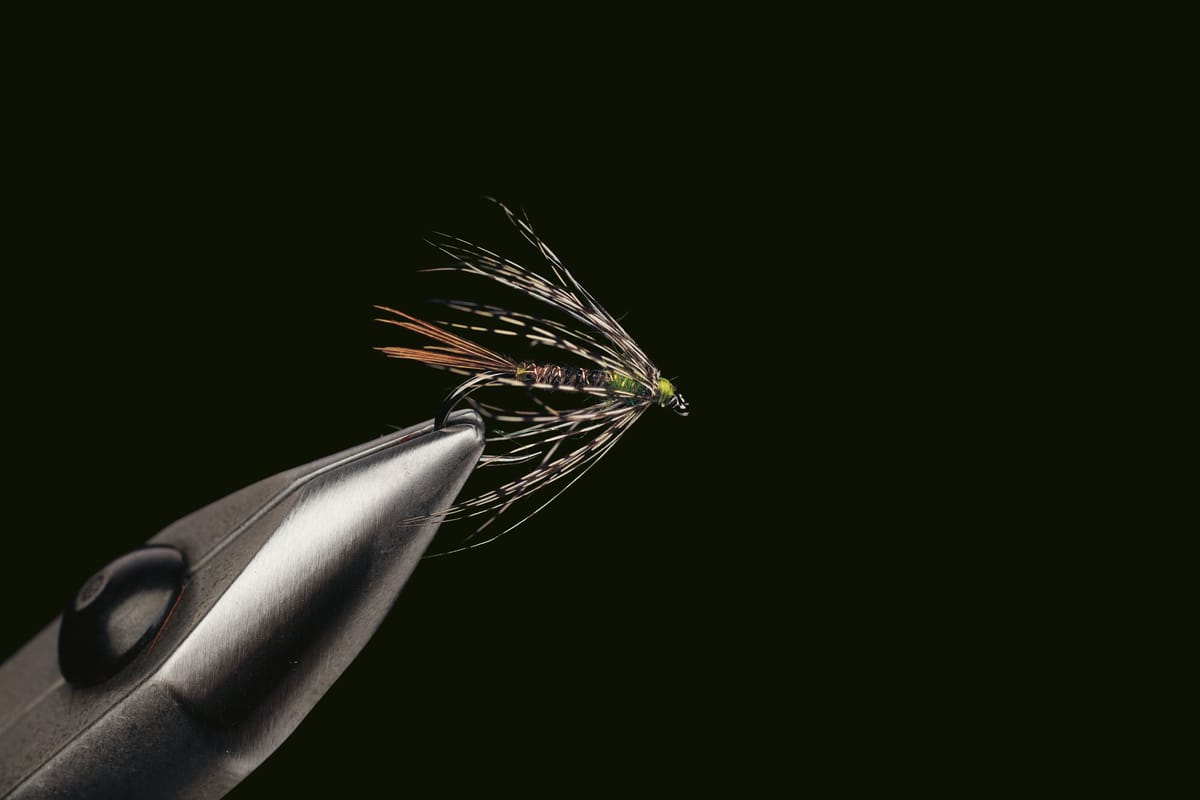
 Nick Parish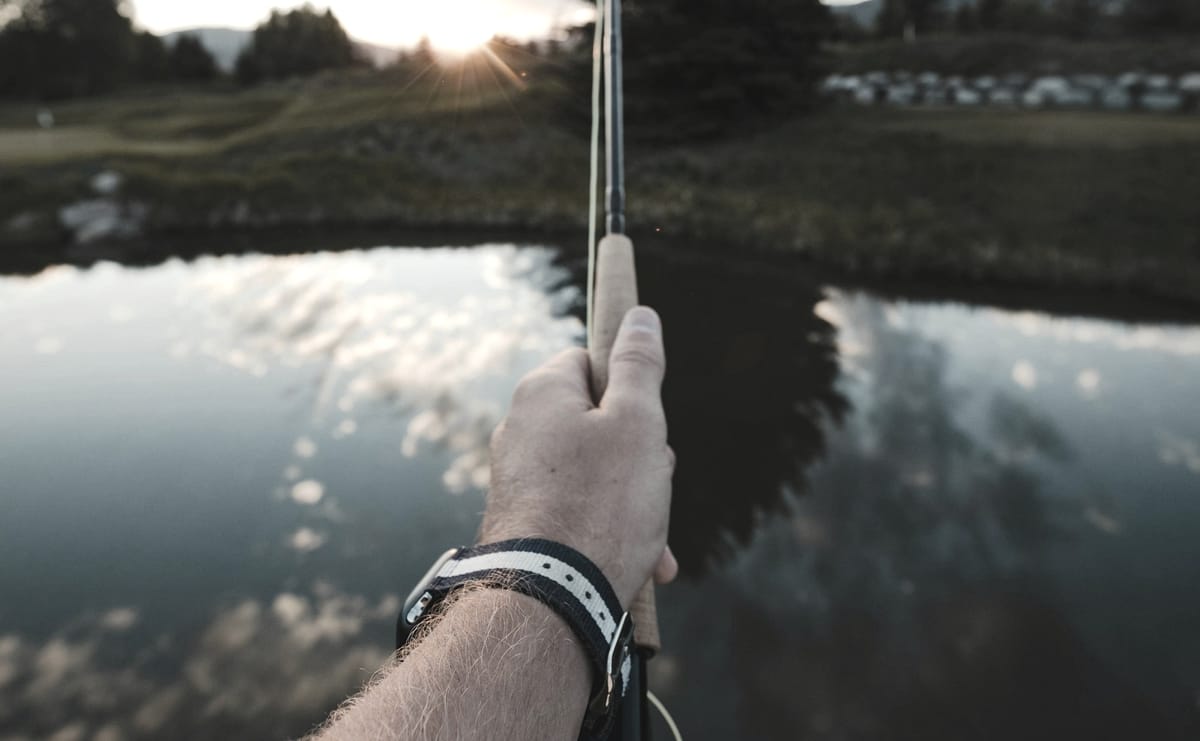
Streamer fishing
Dry flies, nymphs, and wet flies all imitate aquatic insects, typically of the big four orders: mayflies, caddisflies, stoneflies, and midges. They're mostly food that floats Streamers, on the other hand, imitate larger prey: baitfish, crayfish, leeches, and others. Food that swims.
When you're fishing streamers, you're taking a much more active, aggressive approach, stripping (vigorously pulling back) the flies you're fishing. (Yes, we still call them flies even though they no longer imitate bugs but instead fish. Yes, I recognize this is a limitation and will try to do better.)
Streamer fishing is not for beginners. It's generally done with larger rods, and larger hooks, that you're more likely to sink into the back of your skull if you're a beginner caster. (Here's how to get it out if that happens.) But, streamers tend to move the largest fish, on average. Big fish that are looking for a big dinner tend to be the ones that go after streamers.
 Nick Parish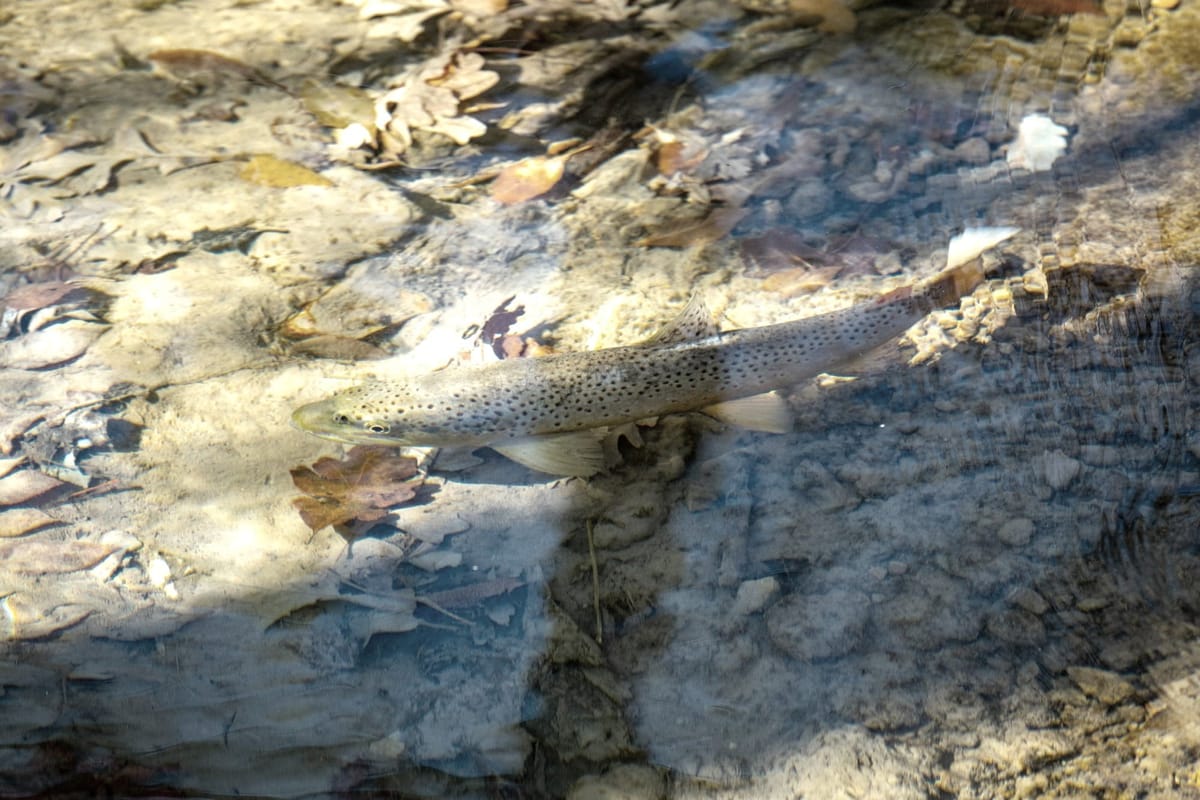
Saltwater fly fishing
Last, but not least: saltwater or marine fly fishing.
Imagine a river. And all the water in it. Big or small, just imagine it. It's a happy little river, right? The sun is shining, it's burbling along.
Now, imagine the ocean. Imagine all the different creatures that live there. Imagine its unquenchable violence, its constant activity, its cold and uncaring heart. It's cold. It's wet. It's salty.
Saltwater fly fishing is where fly fishing is its most extreme. Even though it tends to take place in in-shore coastal refuges rather than out in the open ocean, saltwater fly fishing is harder on everything: tackle and gear, bodies, souls. It's where the biggest, most aggressive fish dwell. It's where you're most likely to be eaten yourself, or disappear and never come back.
Saltwater fly fishing is almost always with types of flies fished like streamers: Flies that imitate hapless baitfish, ready to become a bigger fish's lunch. Unless you were reared at the foot of Neptune's playground and you've always been at home around the ocean, you'll probably come to saltwater fly fishing last in your learning curve.
The fly fishing learning curve
There's no doubt that fly fishing is harder to learn than spin fishing, or what you might term "regular" fishing. The number one reason? Casting. Learning to cast a fly rod is probably closest, mentally, to learning to swing a golf club. You can learn enough to be able to make contact with the ball in about an hour, but you can work your whole life to develop a swing that can consistently put the ball where you want it, and reach levels of the sublime.
Same with fly fishing: learning to unroll a fly line from your rod in a crisp, compact loop and land your fly on that tiny bit of river where a fish is waiting can take an awful long time. But you can learn to chuck a heavy nymph rig and watch a indicator in a morning.
How long does it take to learn to fly fish?
Some anglers come to the sport great guns, and once they have their first experience, are smitten. They're voracious about getting back out on the water as much as they can, and soaking up whatever information they can get their hands on. If this is you: Welcome! You're in the right place, and among friends.
Other anglers come by their exposure more slowly. Maybe they fish on a vacation, or once or twice a year with a buddy. But, they're interested in making fly fishing a bigger part of their life, because they realize it brings out the best in them. It isn't always clear how. If this is you: Welcome! You're in the right place, and among friends.
There's really only one way to become a better angler: fish more. The fastest possible way to progress up the fly fishing learning curve is to fish more, with more experienced anglers.
Try to get out as much as possible. Embrace the suck: bad weather, getting skunked, big tangles. Join a local club, and tap all the old timers for whatever knowledge they can give. Practice everything. Practice casting. Practice tying knots. Tie flies. ID bugs.
And when you can't fish, try and immerse yourself in angling culture. Read books. Watch films people have produced (not just the shorts / reels / TikToks; focus on the filmmaking. If it has credits, it's legitimate). And try to always keep challenging yourself with new opportunities and areas to explore.
 Nick Parish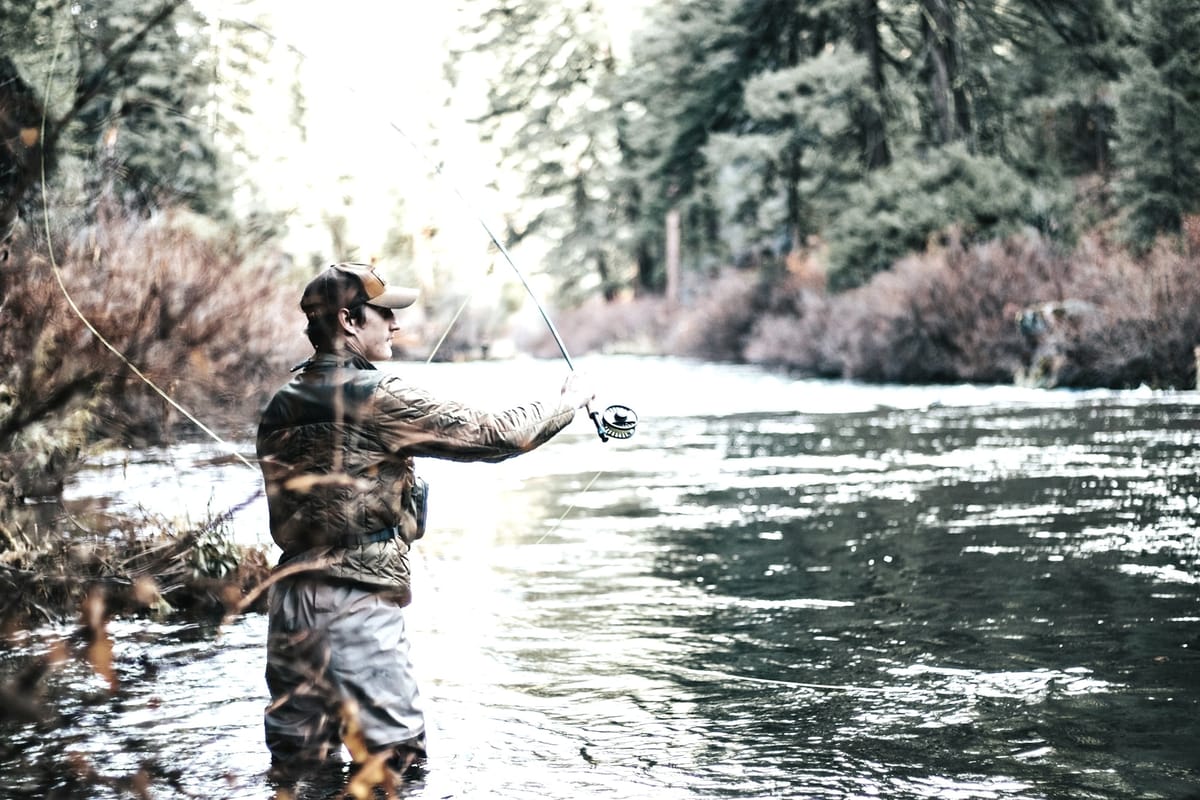
Why do we fly fish?
Many men go fishing all of their lives without knowing that it is not fish they are after. - Henry David Thoreau
Spoiler alert: It's not always about catching fish. When you start out, you want to catch fish. That's great. As you progress, you realize it's not everything. There's a hoary old cliché that's appropriate to deploy here:
The five stages of fly fishing
- First, you want to catch a fish. Any fish.
- Then, you want to catch a lot of fish.
- After that, you want to catch a big fish.
- Once you catch a big fish, you want to catch hard fish, in exotic places, with specific techniques.
- Finally, you're content watching others catch fish.
To me, whichever stage you're at, in terms of your progress as an angler, fly fishing is a doorway to explore the things we're most curious about in life. We grow those passions through this corridor of water, and being wild and free in the outdoors.
Fly fishing is a passion of relationships.
Fly fishing can transcend angling to become a doorway to explore the things we’re most curious about in life.
What are you already passionate about?
How might fly fishing enhance that?
Where might your journey lead you?
Fly fishing's many sub-hobbies
There are dozens of sub-hobbies that go along with fly fishing. It's a very broad range of interests that seem to coalesce around this one big tent. And there are a lot of other parts to it that people get into.
Learning to cast
A lot of people love to develop their casting. The love the artistry of the physics of loading the rod, the muscles involved. I have a casting mentor. She's a licensed master caster, out of Sisters, Oregon. Her whole thing is just doing really good fly casting.
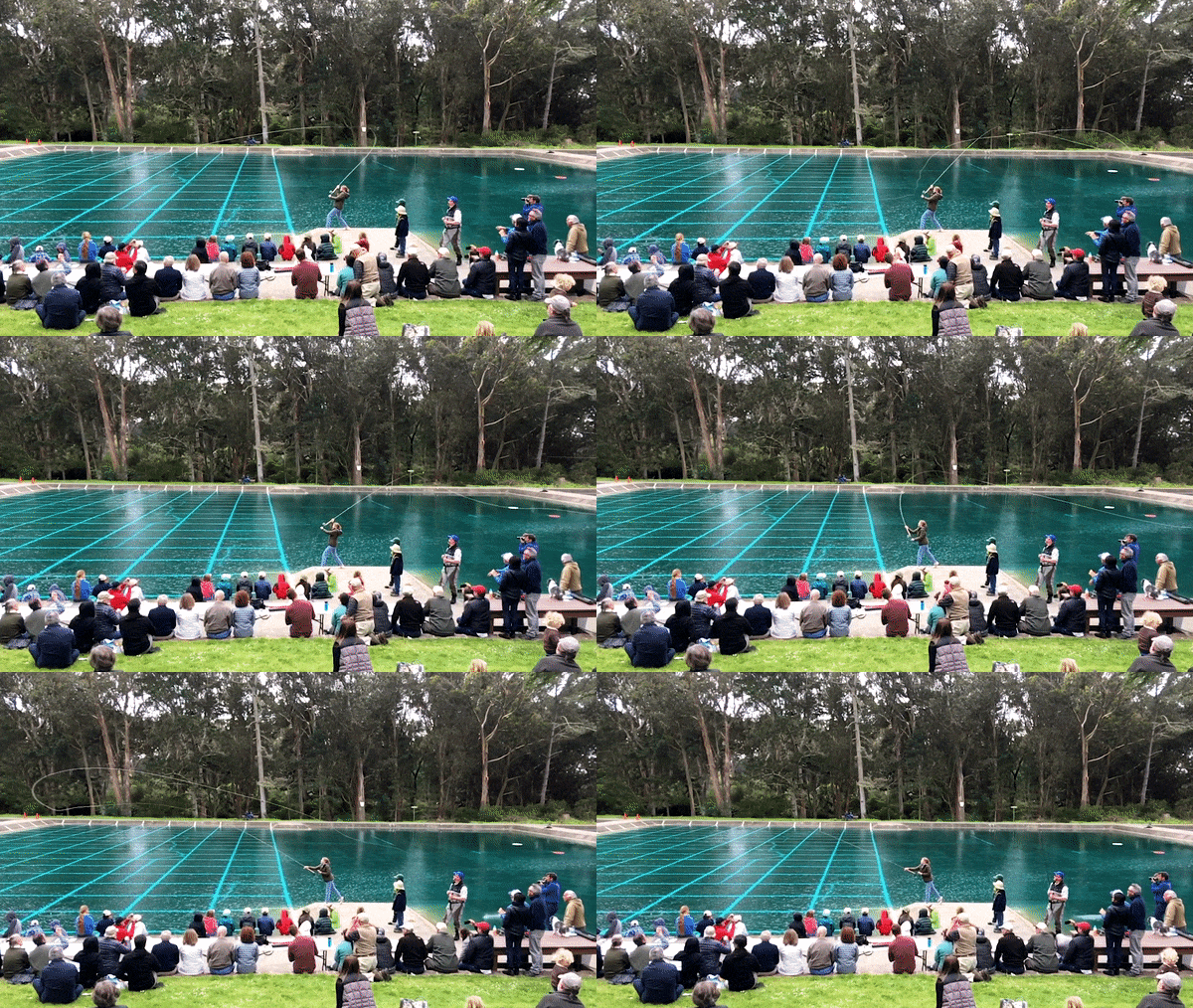
The sport exploded with casters in the 20th century, people wanting to get good at it. At Westmoreland Park, here in Portland, at the height of this they built a casting pond. They have one in San Francisco as well, in Golden Gate Park, the Golden Gate Casting Club practices there. Just so people can tune up their casts. There are competitions and everything.
And in fact, America's number one female caster, Maxine McCormick, lives here in Portland. She can cast 160 feet. The New York Times called her the Mozart of Fly Casting. She was born in 2004. Here's a great profile in Outside magazine. The article included this animated gif, which is a joy to watch:
Tying your own flies
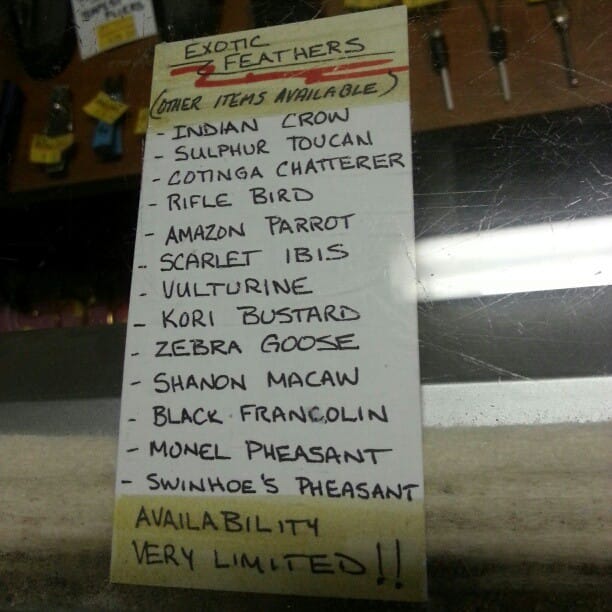
One of the great fly fishing books is The Feather Thief, which is all about the sort of Victorian obsession with exotic birds their feathers, young fly tier broke into a famous museum near London and stole thousands and thousands of dollars worth of exotic bird skins to furnish the exotic salmon fly tying trade.
And in fact, where I used to go fish on the Salmon River in upstate New York for steelhead and salmon, there's a shop up there that's got a sort of hidden tag on the glass compartment there that says if you need any of these special feathers, please get in touch. It's a list of a few of the exotic feathers people use to tie flies. There are fly tying competitions. Some fetch hundreds and even thousands of dollars, and are used primarily as art objects.
My wife jokes that it's like a Hobby Lobby whenever the tying material comes out: it's all tinsel and feathers and thread and crafty stuff. So you can get very deep in that.
You do not save money by tying your own flies. That's a huge beginner mistake that I've got to have. "Ah, I'll just save some money tying my own." No, you just buy more stuff that you don't actually use.
My path to fly-tying was not one of perfectionism or aesthetics. My manual dexterity is, shall we say, challenged. I am not very precise. But nymphs, where there's no fiddling with upright wings and fancy hackle, and basic steelhead flies, those I can do. And, I mostly do them out of necessity and cheapness.
All angles of tackle are sub-hobbies. You can get very deep in rod making. My sister's boyfriend makes fly rods. You can buy the blank rods, and you can put your own guides and cork and all the different pieces to them to your specification. So some people make their own fly rods. Handmade nets.
Boats and watercraft
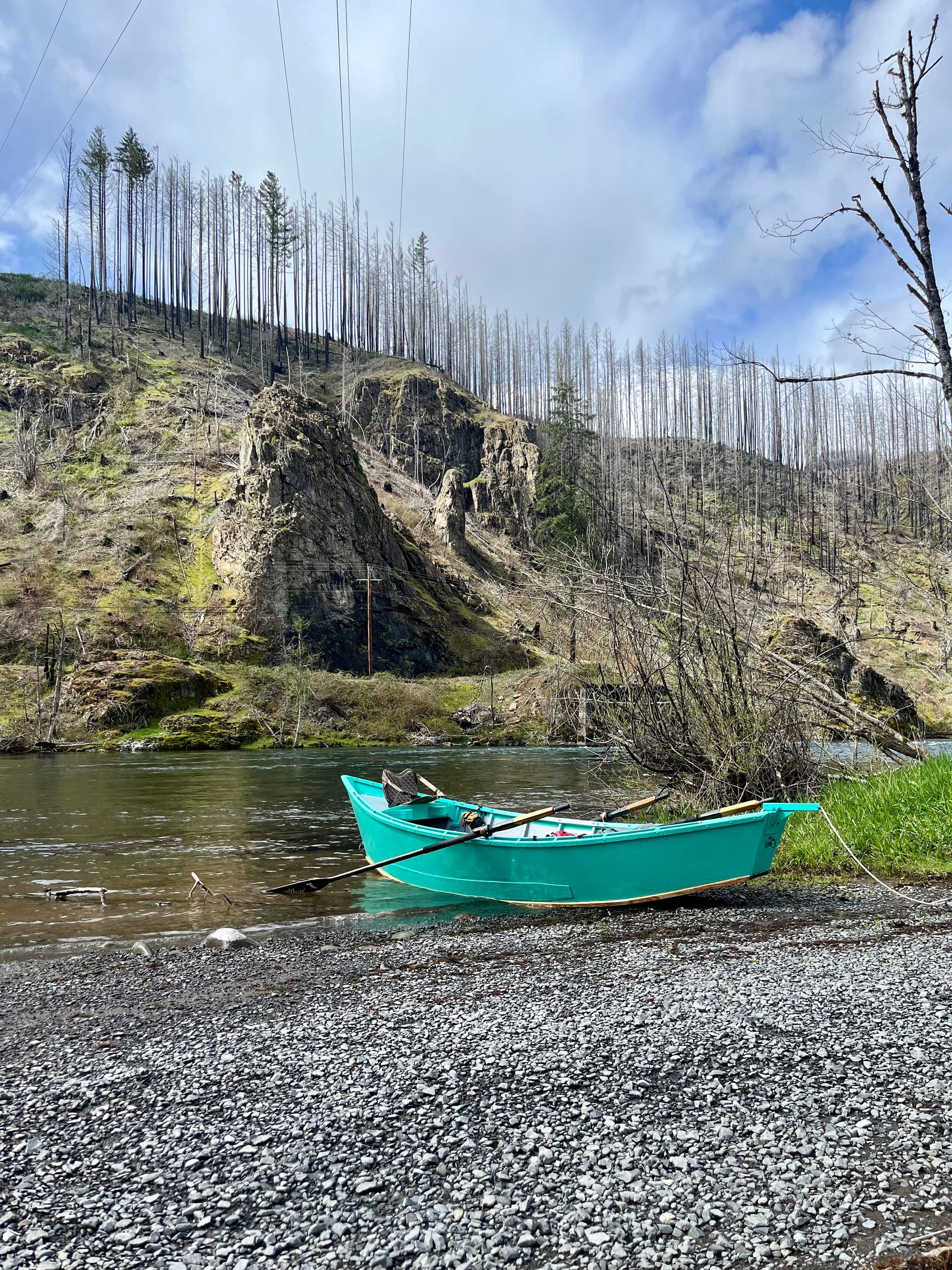
Boats are another sort of sub-hobby. A lot of people get involved with watercraft. Some make their own drift boats.
I inherited a homemade wooden drift boat two years ago. (Side note: There's no such thing as a free boat. I have spent many more hours sanding and painting that boat than I have fishing from it, so far.)
Rafts, kayaks, canoes, stand-up paddleboards, float tubes, Watermasters. Row your boat.
Arts and crafts
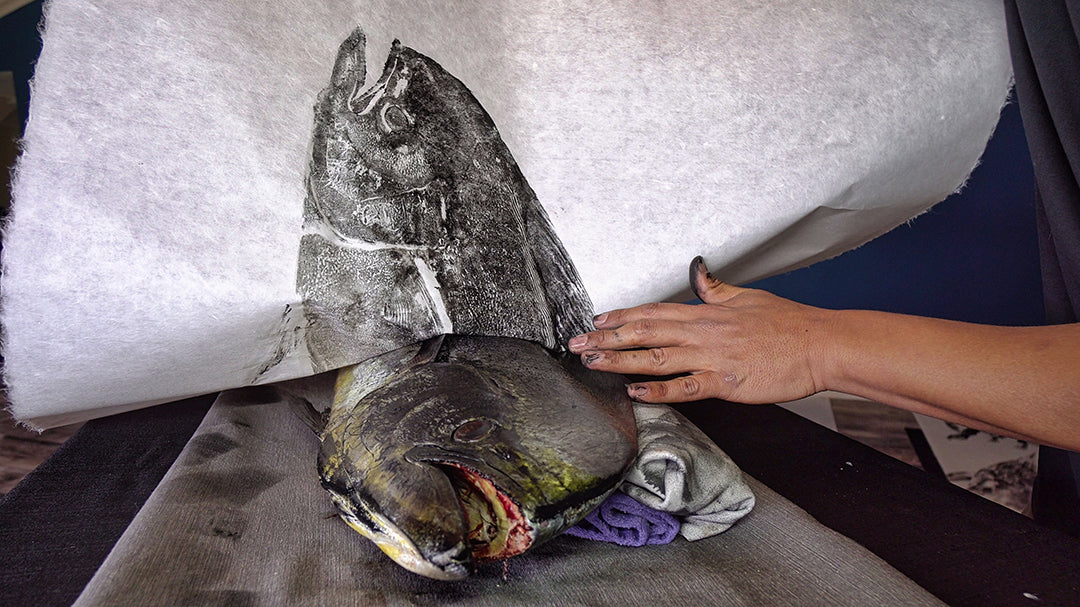
There's that whole arts and crafts angle. People make their own nets. People paint fish. People go out and fish and do watercolors. One artist, Dwight Hwang, practices the Japanese art of gyotaku, essentially fish-printing, with ink and large pieces of paper.
Observing nature
And even just observing matters. River snorkeling is one of my favorite observational pursuits. There's a whole subculture of people. There's a really great Instagram account called River Snorkeling, documenting underwater footage.
Folks don wetsuits, masks, and snorkels and they go down and they do underwater photography and videography, and they hold their breath and anchor themselves to rocks and watch how the fish eat. Especially with steelhead, they're going to go down and observe steelhead. Steelhead are so elusive and they're so sort of strange and ghostly. They just enjoy kind of observing that ecosystem.
So there's so many different ways you can participate.
And I think as you get deeper into the hobby, you'll find the areas that call to you, the ones you want to explore. It could be something you're already into, or it could be something completely different.
Fly fishing education and instruction
Some of us learned fly fishing from parents or grandparents, because it runs in the family. Many learned to fly fish from books or videos. And sometimes those are enough to have the passion take hold.
The number one way to flatten the fly fishing learning curve is to make it social. Get involved with a class or fly fishing club near you. Keep an eye on the Current Flow State offerings, on our Classes page, or through the newsletter.
But, you don't have to take my word for it. Accomplished anglers George Daniel and Craig Mathews have offered their advice to get started fly fishing and fly tying in our Six Tips to Start series. Read more from them here:
 Nick Parish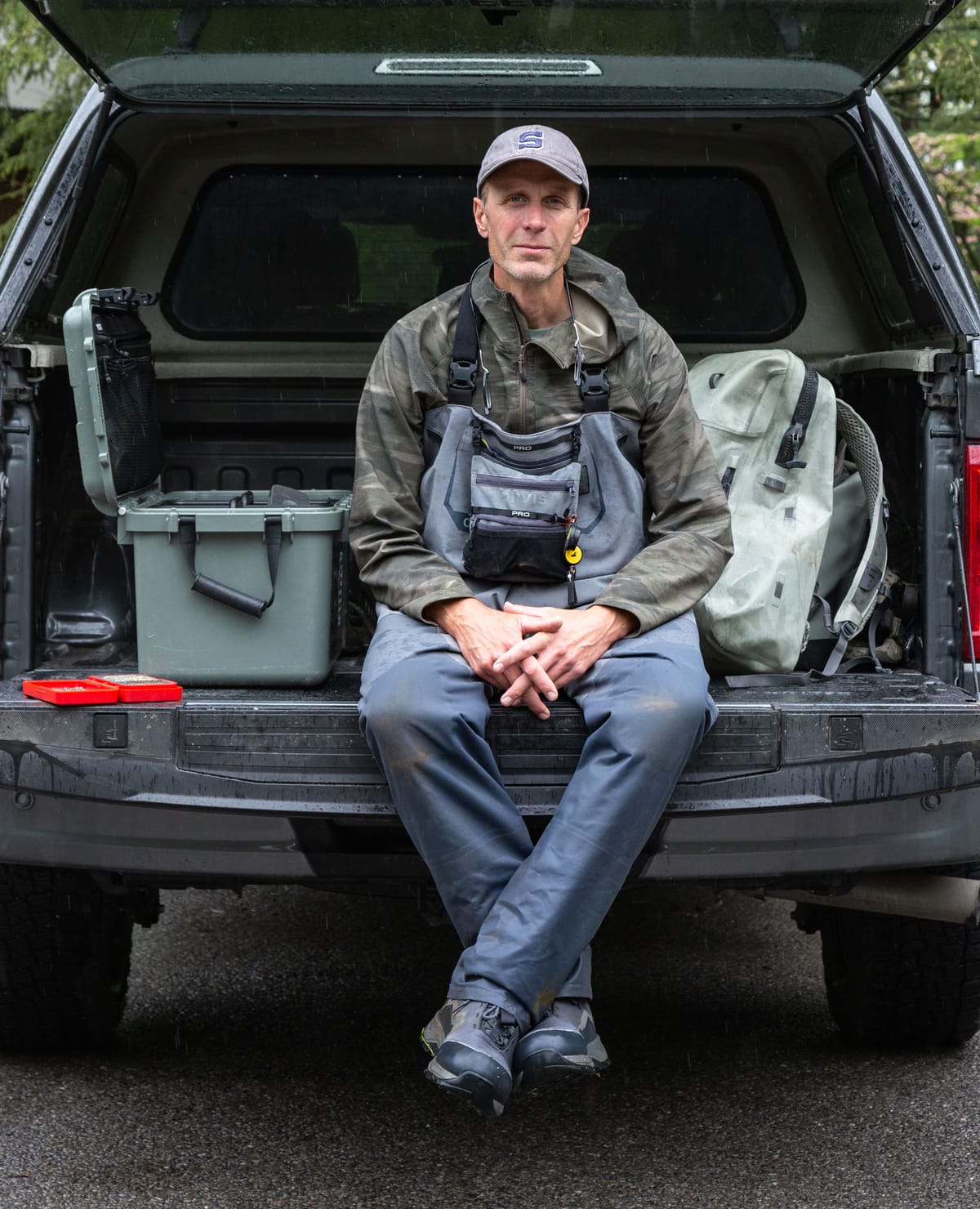
 Nick Parish
Learning to fly fish is a lifelong process
Let's go back to our main idea:
Fly fishing is a passion of relationships.
This passion can last your whole life. Fly fishing is a sport that you can be successful at in any phase of life. Building a sustainable fly fishing practice can help you become a better, wiser, stronger angler at 80 than you are at 18.
Take a moment and think about how it might intersect with what you're most passionate about.
What are you already passionate about?
How might fly fishing enhance that?
Where might your journey lead you?
Share in the comments!
Common questions about learning to fly fish:
Why is fly fishing so popular?
Well, it's tough to say. It's not the easiest way to catch fish, that's for sure, except in some select few places, or where regulations forbid the use of bait, or anything other than flies.
Some might say it offers a deeper connection with the environment, and the task of mimicking emerging insects and observing fish and the rhythm of the cast create conditions that are some more akin to an active meditation than whipping a spinner out and cranking it through the same pool dozens of times in a row.
Some people just like doing hard things because they're hard.
What's the difference between fly fishing and other kinds of fishing?
The biggest single difference between fly fishing and everything else in fly fishing the weight of the line is what makes the cast possible. Since you're casting a tiny imitation insect, you need something heavier (the line) to load the rod. In other kinds of fishing, you're using the weight of the lure, or ball of bait, or spinner, or whatever it is that sits at the end of the line.
(Yes, I know this argument crumbles in the face of heavy nymph rigs with indicators and mono leaders, but please, dear advanced reader, let's not complicate things overmuch for the new folks.)
Is fly fishing hard to learn?
You can learn enough to get started fly fishing—and catch fish—in an hour with the instruction of a good guide. A lot of people are able to get their first exposure to fly fishing this way, on a vacation, for instance.
To get to the point where you feel confident enough to be able to do all the things you need, from scouting places to fly fish, to choosing the right equipment and flies, and ultimately casting and catching fish all by yourself takes a little longer. It can come through self-study, or by taking a class, joining a club, or through online resources.
To really feel in tune with the environment, to be able to drop in to new regions and fish successfully, and to be confident that first cast can reach a rising fish, it can take lots of focused practice and study.
How long does it take to learn fly fishing?
How long have you got? Any competent guide can teach you enough in an hour to have a fun day fly fishing, but the sport is a lifelong pursuit, such that the longer you practice it, the more aspects you'll unlock, the more sub-hobbies and creative angles you'll explore, and the more you'll learn about yourself.
You can be confident that if you start learning to fly fish today, that decades from now, if you're still lucky enough to be around, and there are still fish to pursue, there will still be plenty of ways to continue to grow as a contemplative and creative angler.
Is fly fishing expensive?
Fly fishing doesn't have to be expensive, but it can be. You can get started with a simple setup to catch trout, bass, and panfish for under $200.
But, like many lifelong sports, there are all sorts of rabbit holes you can go down, and some of them contain almost fetishistic luxury items and high cost. For instance: vintage salmon reels. Or, unique watercraft. Or luxury destination travel. But fishing doesn't need to be expensive to be fun.
Where can you fly fish?
Trout tend to live in beautiful places, but you can fly fish pretty much anywhere. That's one of the greatest parts about the sport. If it swims and has fins, odds are you can catch it with a fly rod. Some types of water are harder than others to fly fish in. Some species of fish are more challenging than others to catch with a fly rod. But, fly anglers tend to be curious explorers, and odds are you can find someone who's tried—and maybe even figured out—unlocking the thorniest puzzles.
Next in this series:
 Nick Parish