One of the best ways to improve your fly fishing: Download our free fishing log template
All the theory, workflows, and downloadable tools you need to build one of the most important habits of a fly angler.

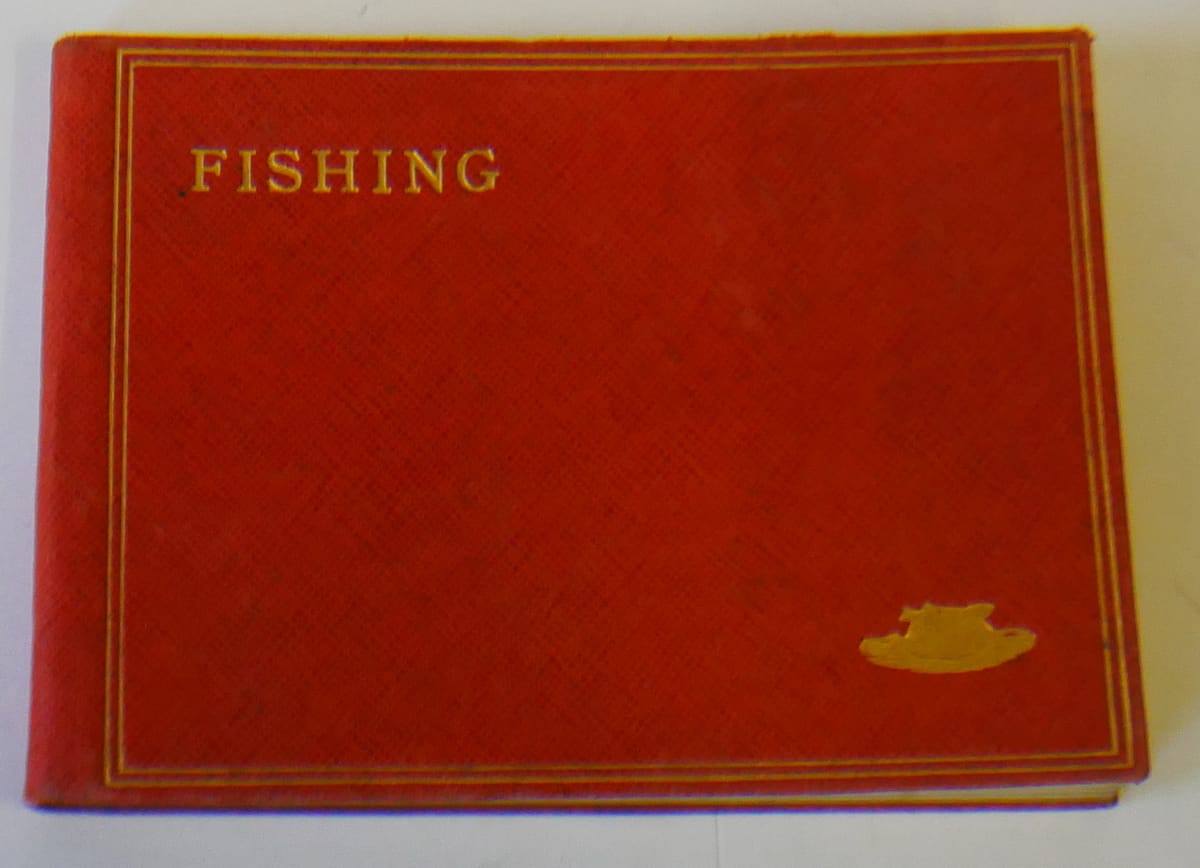
We've talked before about carrying tools to keep our fish healthy. And how to keep their ecosystems healthy. Another must-have fly fishing tool is about keeping your growth healthy.
That tool is the simple, humble fishing log. A place to record the details each time you go fishing. When you're done for the day, or the session, you tell the story. Add the specified info to cap off the session for posterity.
A fishing log is one way we continue to grow and refine our angling. It starts with a simple habit. But the practice of observation that it teaches goes a long way to improve your angling. Over time that habit becomes a critical part of your angling.
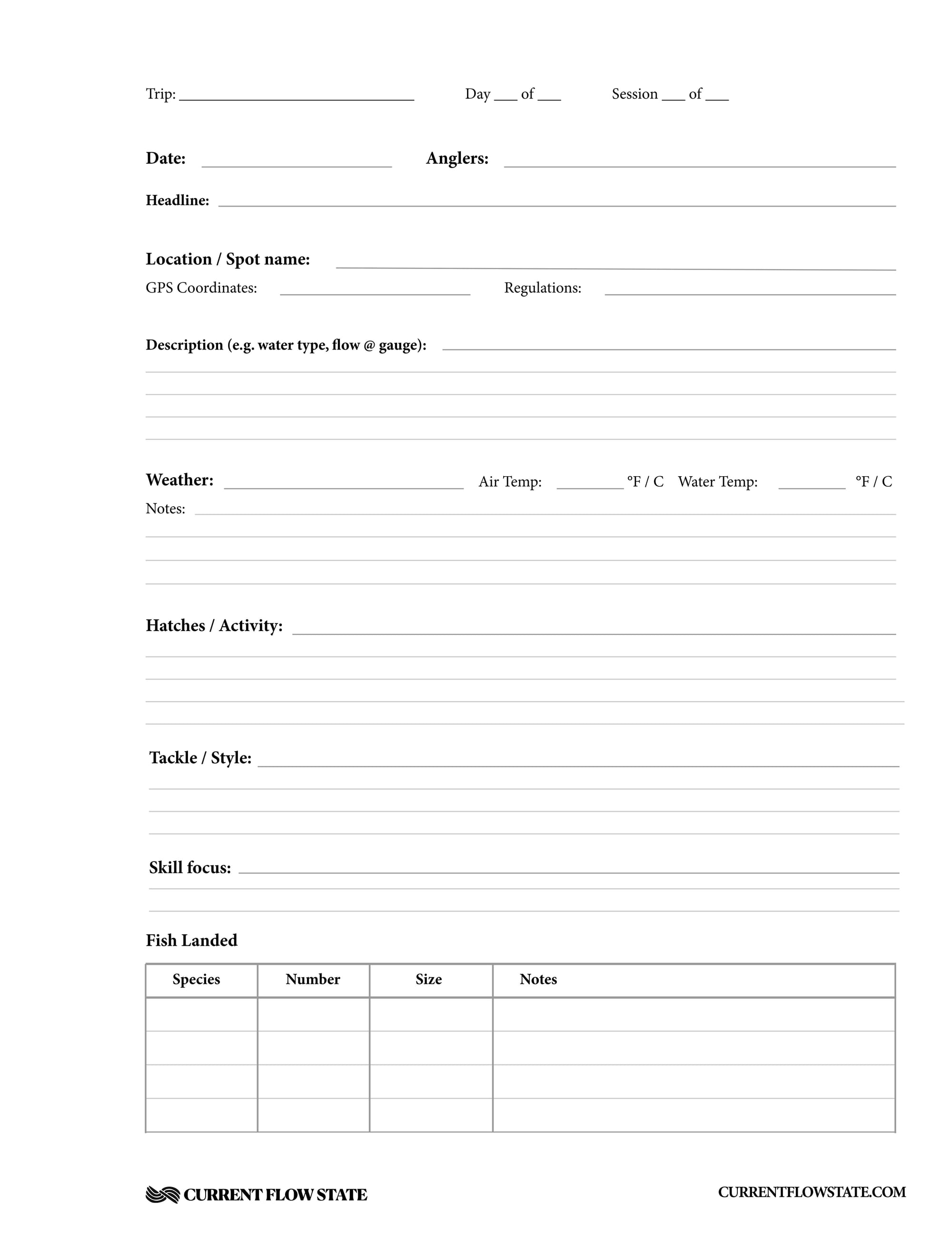
Download the CFS fishing log and access the digital form:
Try it out for yourself: Download the printable CFS Fishing Log:
Access the Google Forms template here.
Here's how to use the logs, and how to set up the digital version.
Why a fishing log is essential
You can't know a river until you spend at least a season observing it.
A fishing log helps us travel through time. It cements key details into our reference memory. Helps keep our sense memory alive.
The vivid detail you can put into a log transcends time and place. It fills in failures of memory. This sharpens your sense of the natural rhythms that govern our days on the water.
With a fishing-specific log there's structure you can't get from free-form memory of a journal.
A history of the fishing log
I reckon the fishing log is only slightly younger than the fishing story. Anglers use both to legitimize their claim.
I can just imagine: Roman legionnaires, dicing and shooting the bull. Who caught the most salmon that festivus? Eager angler Multipiscis pulls out his sheet of papyrus. He shows it to his crew to somehow make his yarns more believable.
Nearer to our century, fishing logs have evolved together with the British "game book." A game book is a gentleman's accessory detailing hunting achievements. I'm fairly certain I've seen mention of a game book in one of the Russians. Maybe Turgenev? Memory escapes me. Should have written it down. Anyway: it was the thing to do. To have a game book, and record what you shot, and where.
 Ed Wills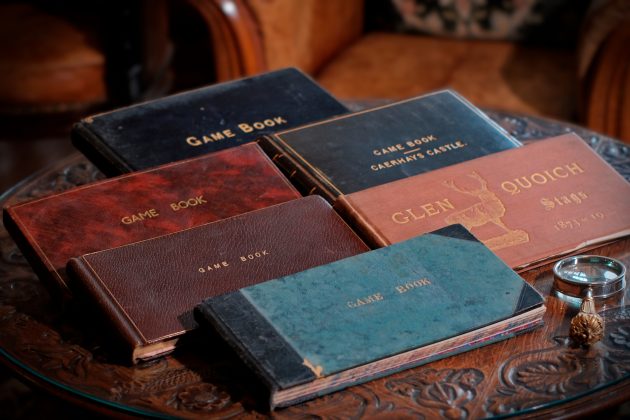
Similarly, lodges sometime host the equivalent. Visit storied salmon lodges, especially in Scotland and you'll likely find the home / chateau / castle has a ledger. These books go back hundreds of years, to the relative fat times. When salmon were plentiful. And the servants complained about all the salmon they were forced to eat. This was such a problem they wrote into their contracts. No salmon for dinner more than five times a week.
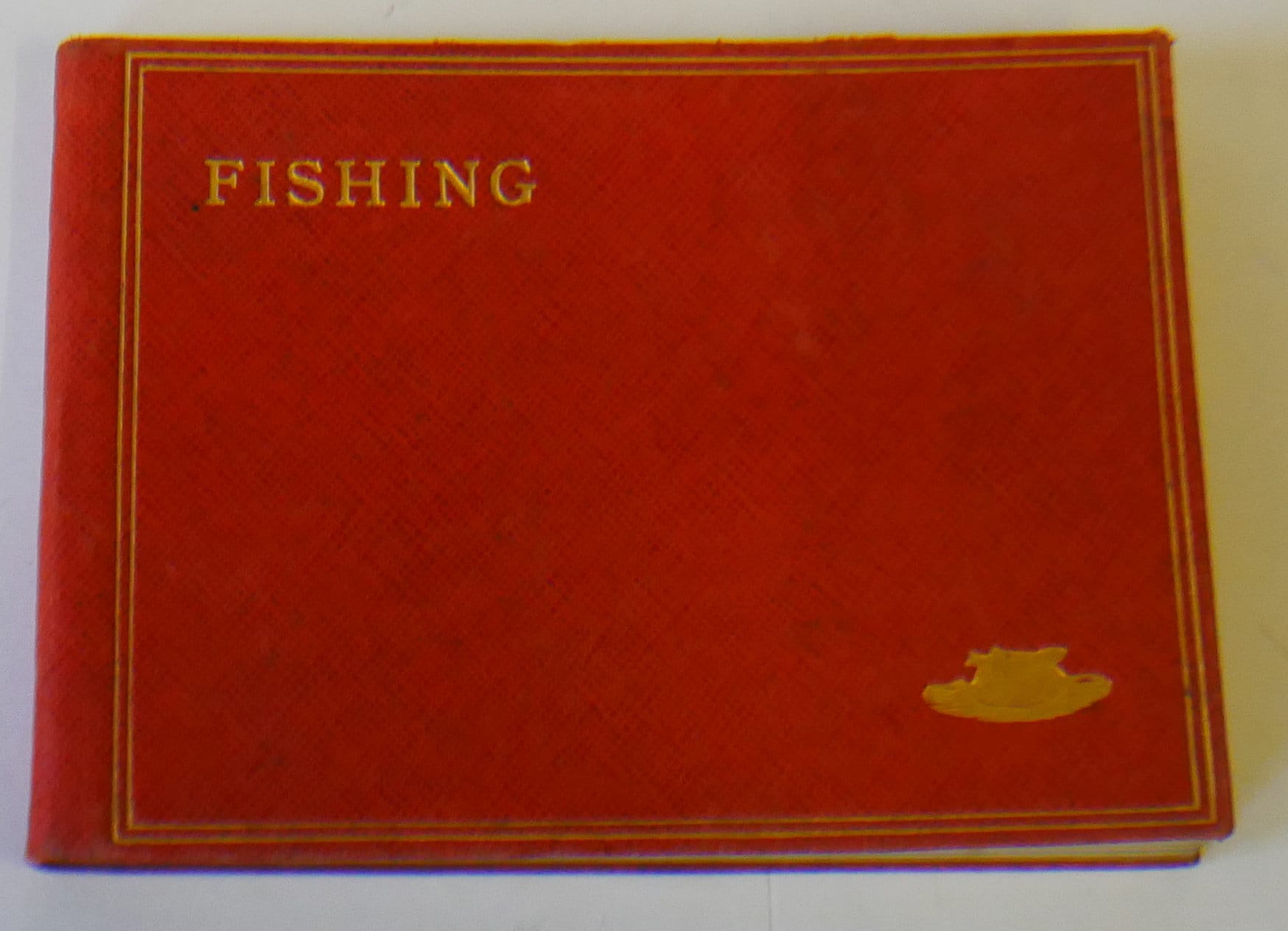
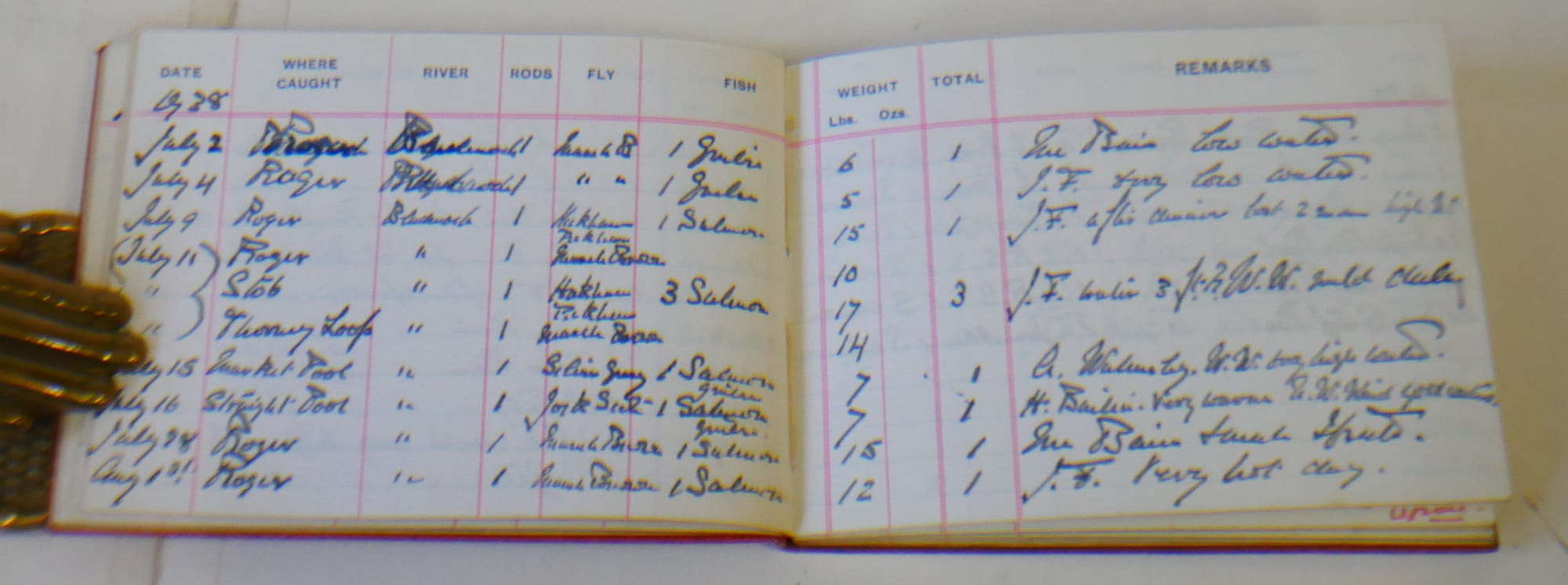
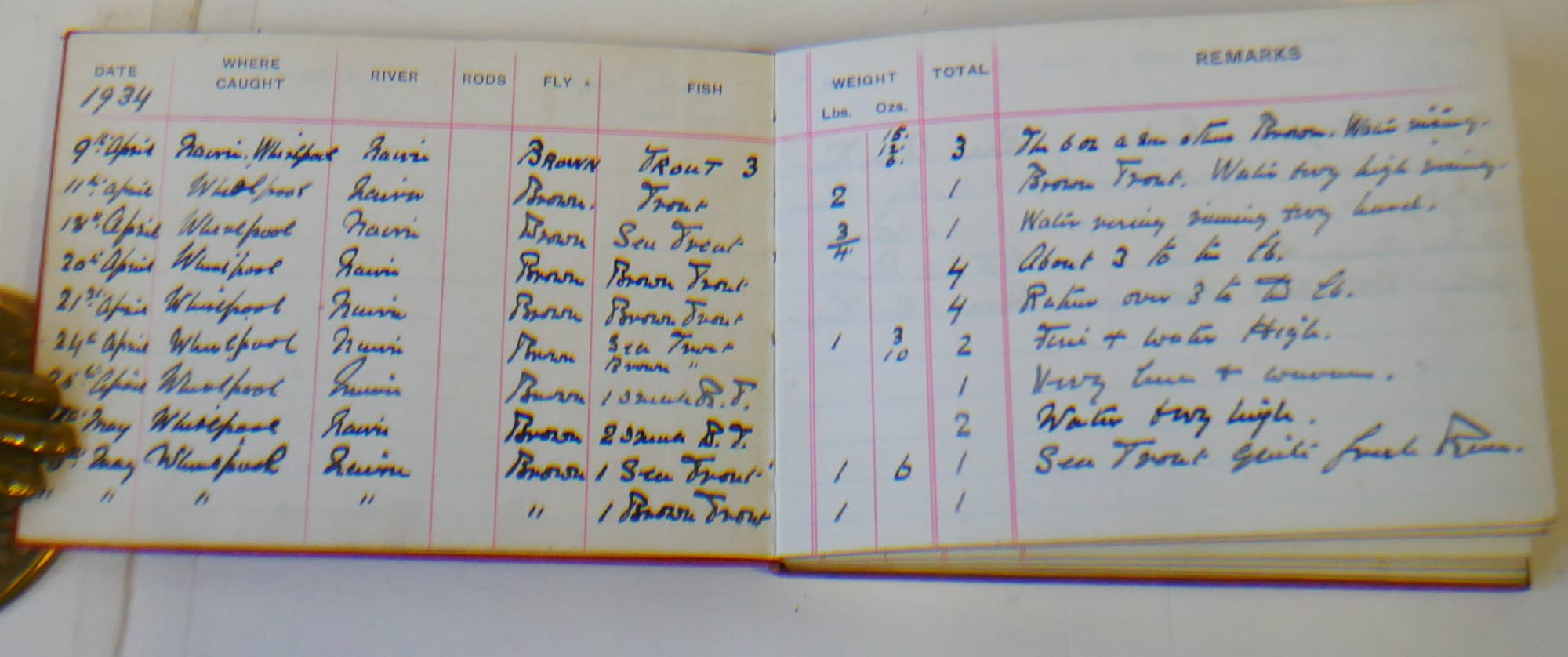
Here's one hundred-something year-old fishing log for sale:
Starting small: your first fishing logs
The first thing I wrote resembling a fishing log is in summer journal.
Here's as close as I can get, age 9: "We went fishing. We did not catch a fish" and "Today we went to go fishing again. Then I caught a can. I thought I had a fish. It weighed a lot."
Sounds pretty damn close to today, though I haven't caught a can in a while. I've graduated to whole trees. Do we ever really escape our childhood?
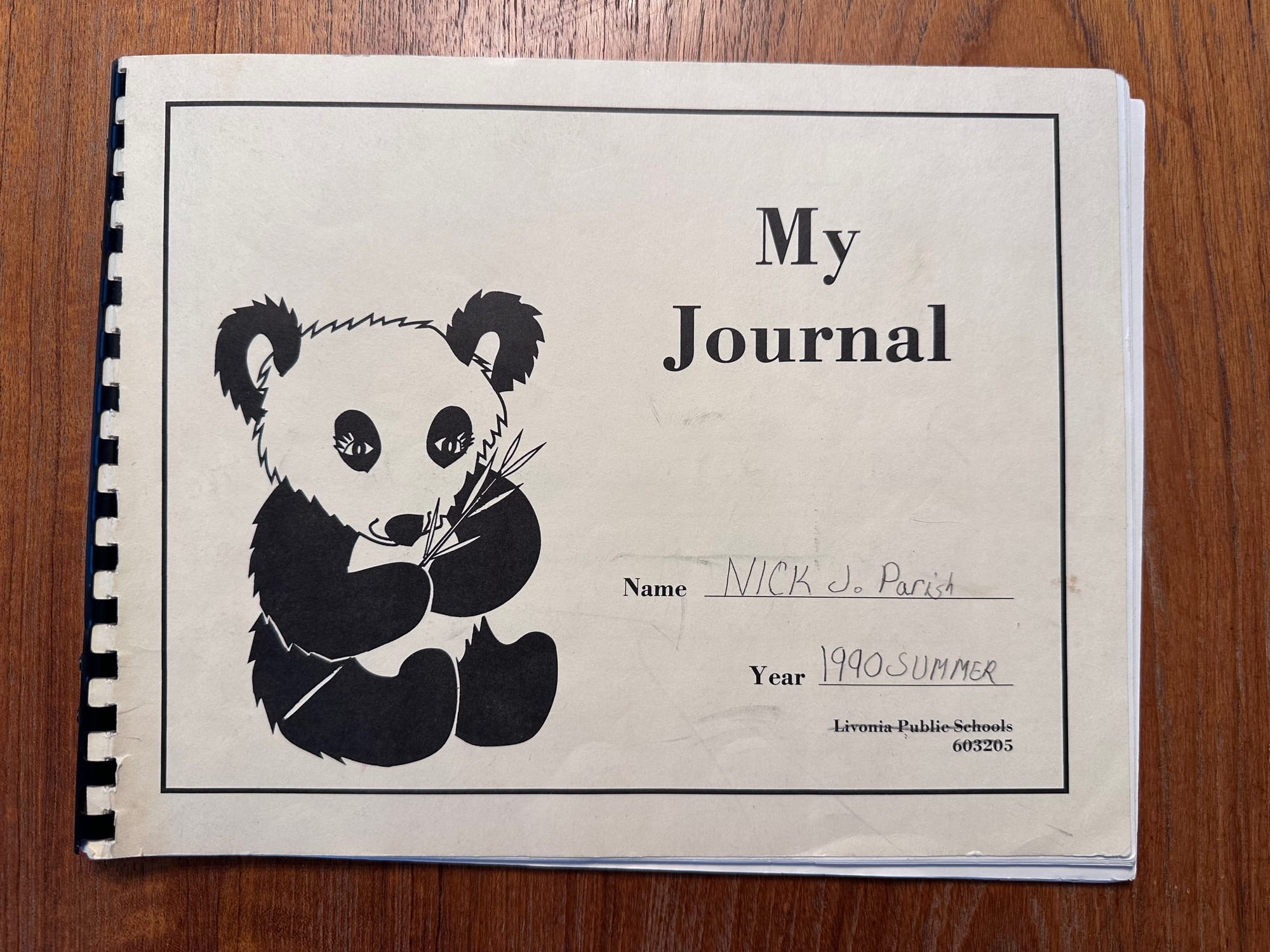
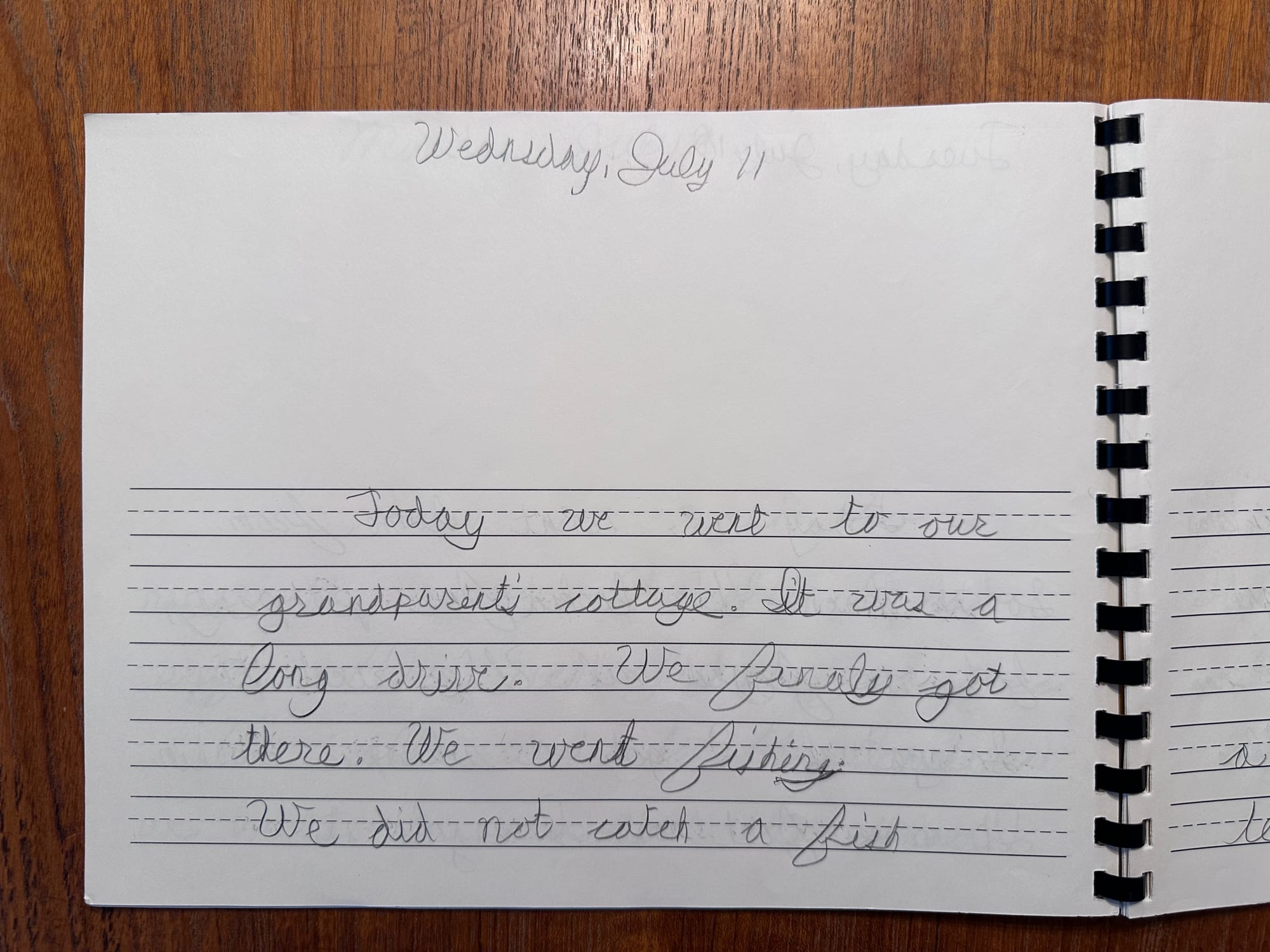
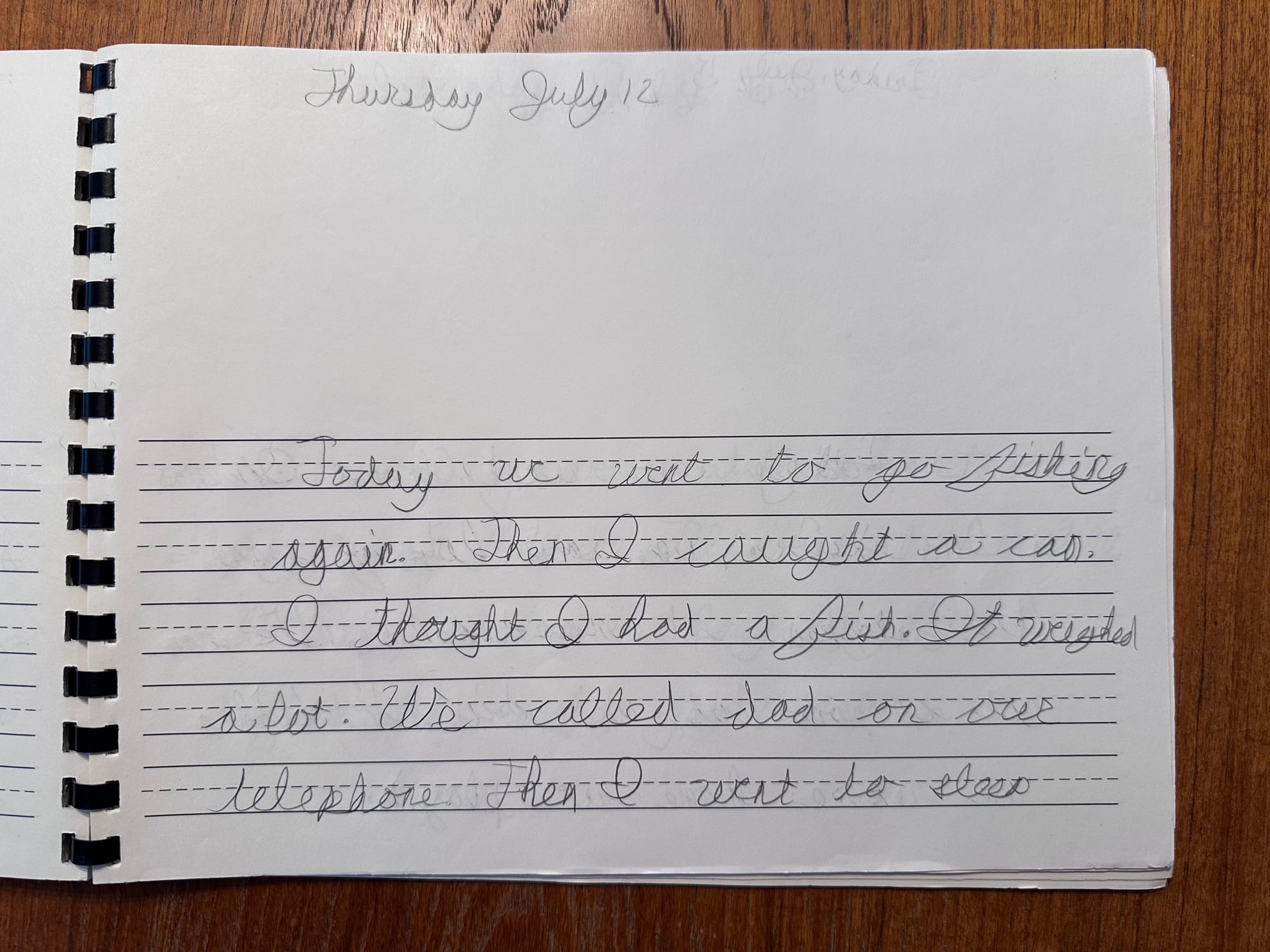
It's cute! But it's not a fishing log. It's a journal entry that happens to mention fishing.
(Have you met my inner critic? He's my inner child's worst enemy.)
Journaling is great. I do it daily. But I want you to find a dedicated place where fishing is the primary focus. Where you gather technical fishing information.
It's OK to start small. All you need is a notebook or sheaf of papers just for fishing.
Record that fishing info
For me, my first real fishing log was a three-ring binder. I started filling it in my twenties, when I started fly fishing in Montana in earnest.
I knew if I didn't start recording spots, I would forget them. The information I coveted was location data, so I could find my way back.
First, I made a Microsoft Word template with the information I wanted to capture. Then, I printed off a bunch of sheets, and punched some holes in the margins. I would fill out a sheet when I finished with each session. The pocket of the binder was full of blank sheets.
This worked for me, and is the basis of the paper log template.
How to use a fishing log
The first step of using your fishing log is gathering the information during your time on the water.
This diligence will make you a better angler. In part because it will force you to slow down and focus on less tangible aspects of the fly fishing experience.
Once you start seeing those intangibles, then you'll start writing down the other stuff. The inside jokes. Or the strange phrase you overheard at the gas station. Or you'll try and transpose the sounds a redwing blackbird makes.
Creating and managing a paper log
It's a pretty simple process:
- Download the template
- Print out some copies
- Add info when you fish
- Punch some holes and file them in your binder
How you file is up to you: by date, by river, by angling companion, by fishing style—whatever parameter you choose, you can organize by.
Make it habit to enter your fishing log data right after your session.
The longer you leave it, the more details you lose.
The next step is referring back to the information. When you go back to the same body of water, or when you fish in the same area, or in the same time of year, consult your log. Being able to sort your log by various key aspects of info is critical.
For me, with my three-ring binder, I organized everything by date. Every month had its own divider. Within those months, I'd arrange things chronologically.
It wasn't a perfect system. A session in Montana on August 4 would end up next to a New Jersey trip on August 5. But, it did pretty good. I tended to fish certain places at certain times of the year. And when I got a hankering to check in on a certain spot, I could enter the location data in Google Maps and be transported back there.
Key fields in the CFS fly fishing log
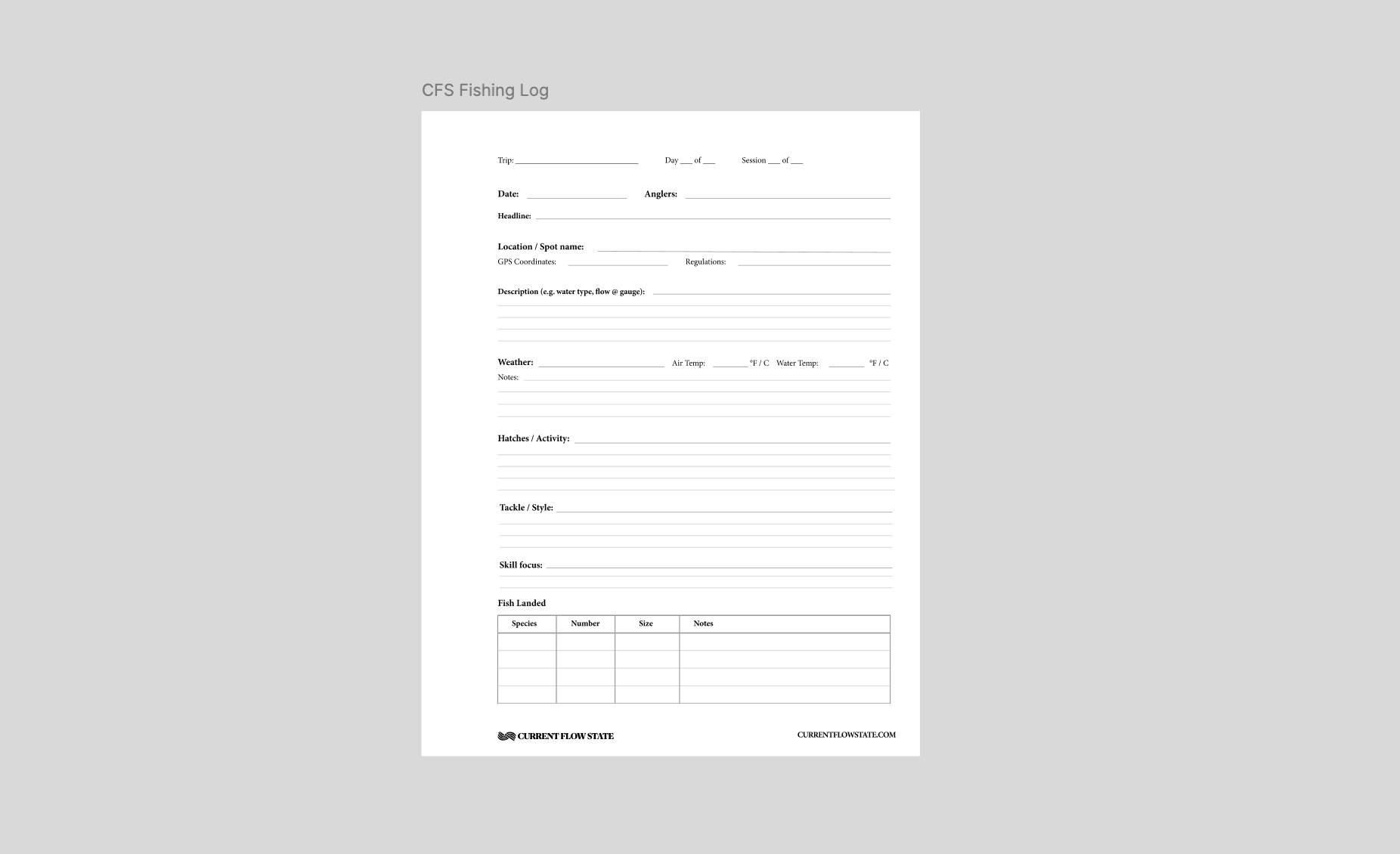
Here's what I try to capture about each fishing session in my log:
- Date
- Trip
Was this part of a trip? Give the day, of the trip and the number of the session, e.g. "Montana 2021, day 3, session 3" - Headline
Sum it all up in one sentence. What happened? - Anglers
Who was fishing? - Body of water
What river, lake, ocean? - Location
Be more specific. - GPS Coordinates
Be very more specific. Grid coordinates, degrees (°) minutes seconds
*n.b. I'm less diligent now as I was before about capturing location. Blame the apps. Sometimes this area just contains a reference to where I've got the rest of the info. (E.g. "see OnX waypoint") - Start and end times
- Weather description, generally
- Description of the water fished
- Flow @ gauge station?
- What tackle and techniques did you use?
- What skills did you focus on building?
*n.b. Focus on building fly fishing skills one at a time. Don't try to nymph and fish streamers and fish dries in the same session. Stick to one and build the repetitions you need. - See any hatches or insect activity?
- Air Temp, Degrees F
- Water Temp, Degrees F
- Fish Landed
Number, species, size - Notes
- Regulations
Checkbox for what regulations were applicable
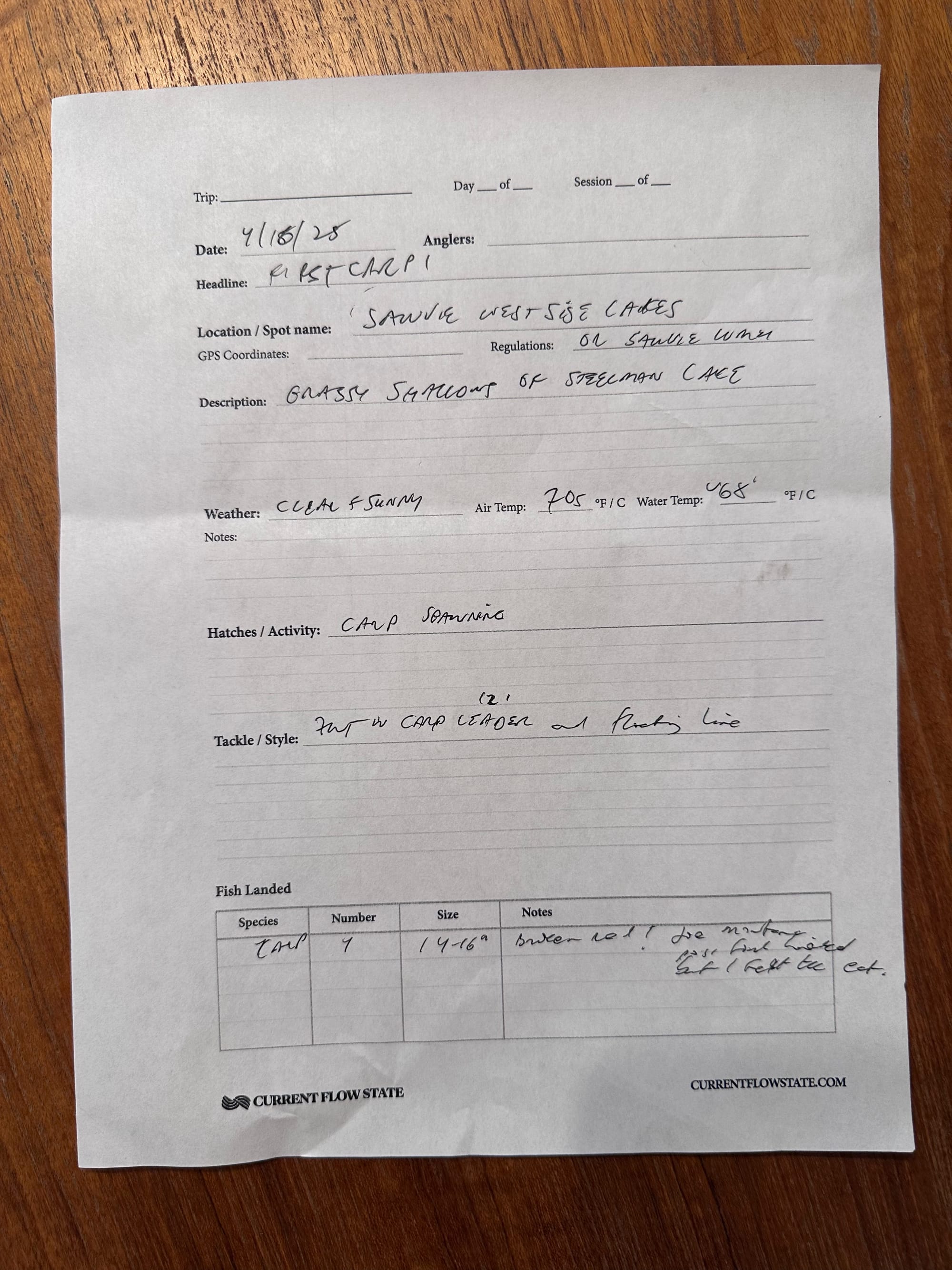
I don't jot it all down, every time. Most times it looks a little something like this:
Making the switch to digital: How to use the digital CFS log
Over time my logbook got big enough to make it hard to consult. Certain days had six, seven, eight entries. I wanted to be able to cross-reference by location or state. I wanted to or find entries that included reference to midges or snow. It was time to go digital.
So, I entered everything into a cloud spreadsheet, and created a Google Form to feed that sheet. Now, after I'm done with a fishing session, I just tap a bookmark and enter the information.
I always have a few printed pages with me, or an additional notebook, stuffed in the waist pack or boat bag. I have to write down numbers immediately. Temperatures, weather stuff, that's all ephemeral. If I don't write it down when I take the sample (with my trusty must-have stream-side tool the thermometer) I'll forget it. But, my primary archived logbook now is digital.
Setting up your digital fishing log
Here's that Google Forms template again. Using it is simple:
- Make a copy
- Publish the form
- Add data
- Dump it into a Google Sheet
Just tap "Use Template" in the top right and you'll be in the Google Forms interface, where you can publish your copy of the form.
Tweak whatever parts of it you want, and then hit Publish on the top right. This gives your form a permanent home on the web. You can go back and edit fields as you decide what's best for you. Save this URL as a bookmark so you can come back to it whenever you want to fill in a report.
Now, make a test report. Go to the URL and fill in some data. There are only like three required fields. Fill in the data, submit the form, and then go back to the form, and you can see there are Responses. You can now "Link a Sheet" to those responses, which creates a Google Sheet that will include all your fishing log data, as you enter it into the form.
Bookmark the Sheet URL to consult, and the Form URL to submit, and you're in business!
Here's a little walkthrough of the process:
Keeping it tight: Your logbook is your own
I remember a story a member of the Michigan Fly Fishing Club told me: He was riding in another club member's car to go fishing when they stopped for gas. She got out to pump, while he sat in the car. He started idly exploring the passenger seat. He found a Michigan Gazetteer under the seat. Bored, waiting, he started leafing through it.
The map book opened to a battered and dirtied page. The most consulted area. It was covered with hand-shaded sections and instructions and notes. He realized what he was looking at. Her deer hunting, mushrooming, and fishing areas. He panicked, shutting the book and looking around to see if he had been spotted.
He didn't spy her, and figured she was inside the station paying. So he started looking again. Really feasting his eyes.
But then the passenger door opened. She was behind him the whole time, on the other side of the car. Wordlessly, she took the book from him. They never spoke of this again. He felt intense shame.
All this is to say: Your fishing log is your own. It is your archive of secret spots. You do not have to share it with anyone. It is where your own personal fishing lore originates. Its power will grow in direct relation to the time you put into it.
Taking sides: keeping an analog vs. digital fishing log
For me, if I were starting out, I'd go straight to a digital fishing log. It's just a more expansive form, and makes the data more useful. And, my handwriting is terrible. So sometimes its difficult to read pencilled-in coordinates.
Here are a few exceptions where an analog fly fishing log might make more sense:
- If I only fished one place, like by a cottage, I would stick to an analog logbook. It's easy to feel contained across a couple of streams.
- If I only fished once or twice each year, I'd stick to an analog logbook. The effort of paging through it to find last year's entry is pretty small.
- If I was so sick of computers that additional time in front of them, even the five minutes it takes to tap in the info I already gathered on a sheet of paper, is too much. Which, some days, feels very true.
Should I use an app like TroutRoutes, OnX, or onWater as a fishing log?
With modern mapping, location data has changed. It's less critical than in the era of manual GPSes. I can drop a pin, or create a location in OnX Hunt, have my access information stored.
I'm not sure about onWater or TroutRoutes. I haven't tried them. I think TroutRoutes is becoming onX Fish, anyway. My go-to app recording access information is onX Hunt.
I would invite you to connect with me there, because it says "Invite friends," but I don't know what it does, if it's an affiliate link, or it adds you to my friends list, if there is one? Shape up your UX writing, and, uh, invite link generating, onX.
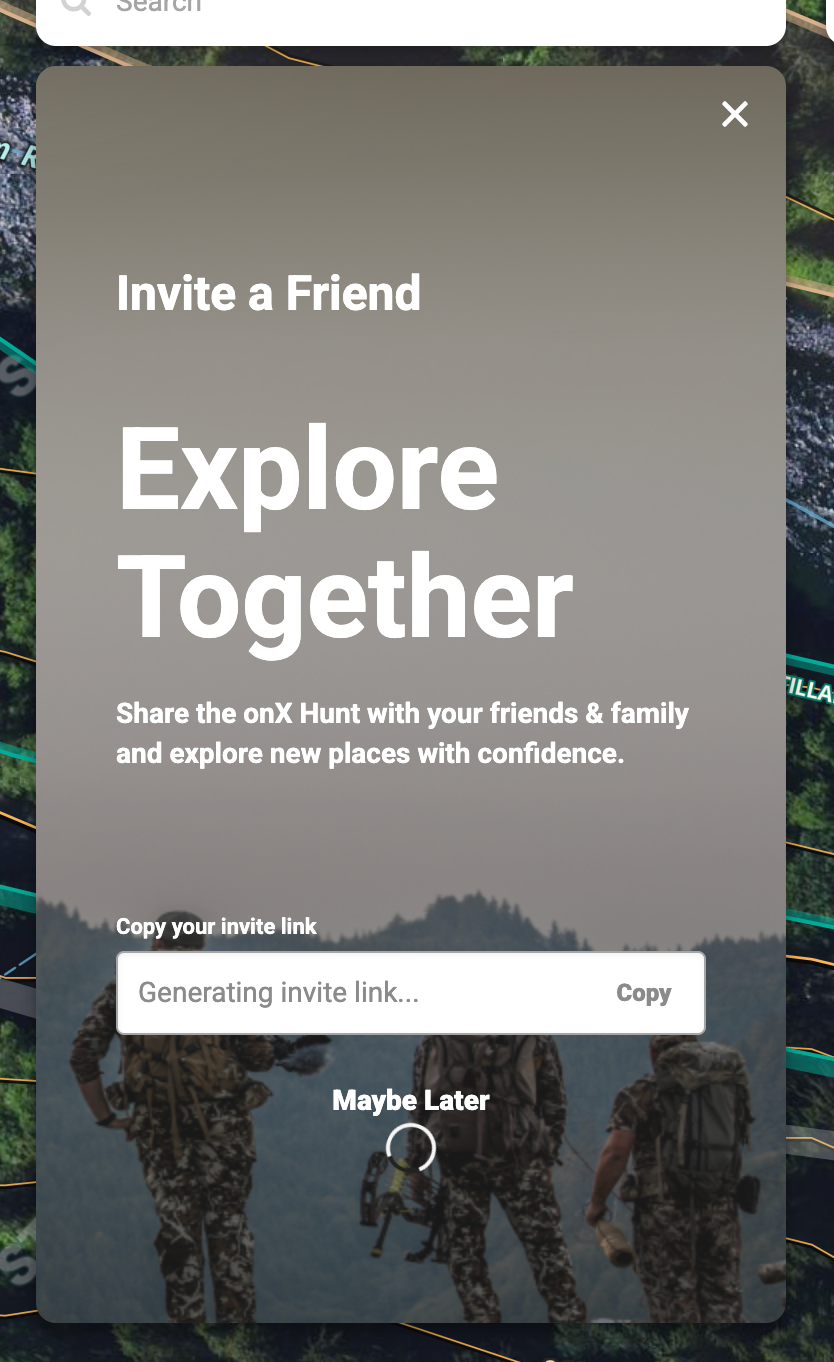
Anyway, I trade onX Hunt locations with pals. I do a ton of scouting in the desktop, with the help of Google Maps and Google Earth. So, in a sense, electronic resources have superseded parts of my old analog three-ring binder.
But I don't trust apps for scientific or emotional stuff. Weather, fish counts, hatch descriptions: that goes into the fishing log. Frustrations and successes with new styles of fishing. Jokes and random quips of conversation heard at the fly shop. "The app"—whatever it is—just isn't fit, yet.
Furthermore, I'm not sure "the app," whatever it is, is ready to let me take that info with me. When I move to a new platform, or decide to compile it somewhere else, what then? Can I export it? Will the company that hosts it be around in a decade? I like to own my data, which is why I tend to do my logging with a known, steady provider.
One day there'll be a fishing super app. But even if there is, I'll still keep my fishing log some other way.
Tell me about your fishing log!
Is digital the devil, and analog all the way? Viva print! And bad handwriting!
Or, are those anglers with their paper books susceptible to fire, flood, and bad data management, deluded Luddites?
I want to know about your fishing log workflows and techniques and manifestations.
Sound off in the comments!