Trout ain't tarpon
Sure, the silver kings might not even be on the same angling planet as rainbows, but here are ten tarpon tips, tricks, and concepts from legend Andy Mill that can be applied to any fishing situation.

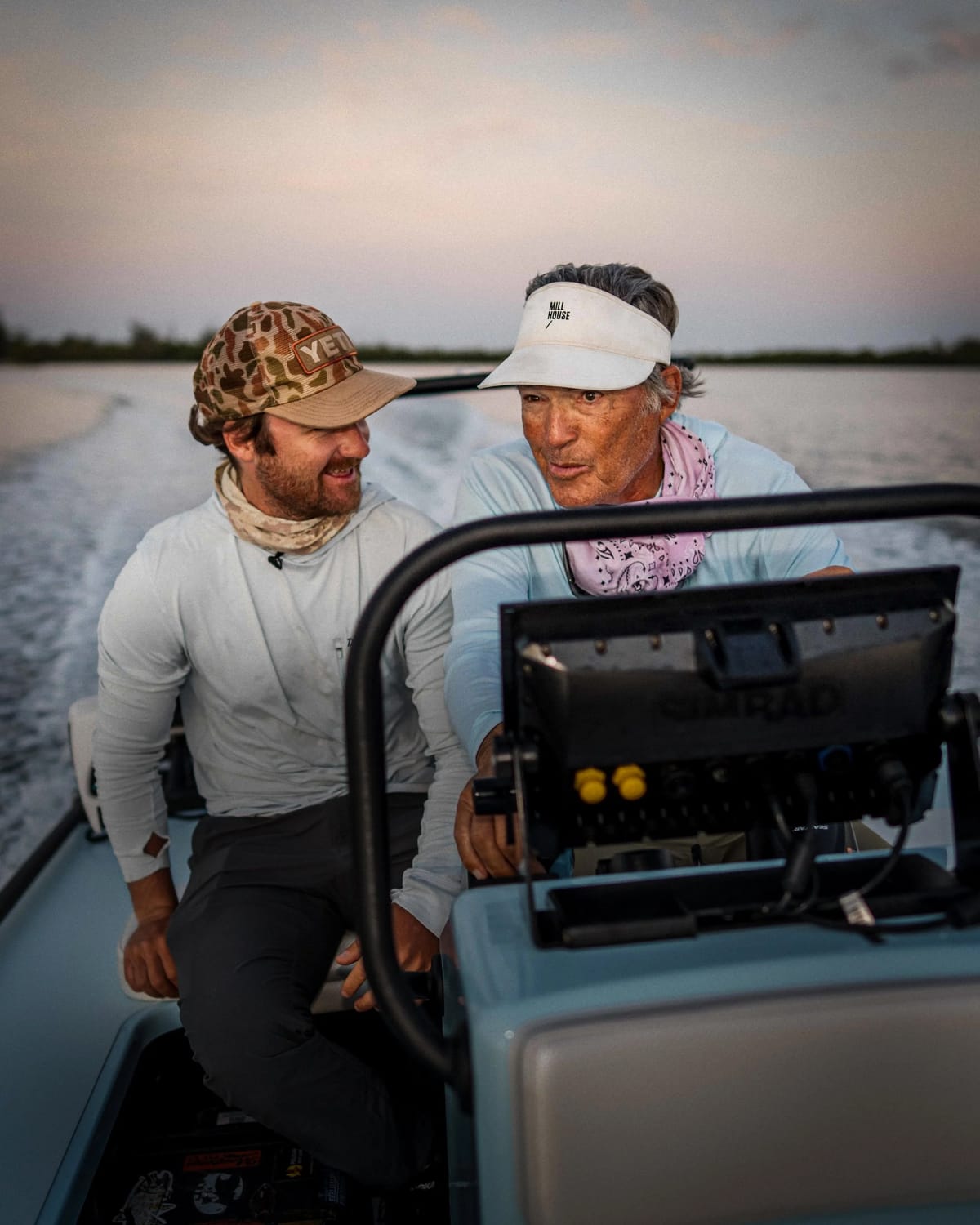
You'd be hard pressed to think of a more iconic tarpon angler alive than Andy Mill. After an early career as a competitive skier in the 1970's, Mill turned to catching tarpon on the fly, and set the standard for what a competitive fly-fisher's resume might look like: Trophy after trophy, triple, quadruple, every kind of crown. This profile of Mill written by Monte Burke in Garden & Gun will give you an idea of his epic life story.
Mill is no longer chasing IGFA records, but still makes big waves with a podcast he hosts with his son Nicky called Mill House. Due to Mill's incredible Rolodex, the pod is a who's who of his peer anglers, touching on every angle of the sport, conservation efforts, and broad strokes life stuff. It's one of my favorite angling podcasts, and well worth the listen.
So, when I heard Mill had given a masterclass on fly fishing for tarpon at the Ole Florida Fly Shop I smashed that play button. And I included it in Leaders a couple newsletters ago. But I wanted to touch on it again, because I've now watched it several times. It's got an incredible amount of wisdom and angling intelligence inside that I wanted to unpack.
Tarpon ain't trout
The biggest difference between the kind of fishing Mill does and what the rest of us mere mortals might be doing on a trout stream is that Mill is typically casting from a skiff deck (above the surface of the water) to a group of fish cruising for food.
That's not typically a wading angler's stance, and an infrequent trout feeding behavior. Trout anglers are looking for feeding fish, yes, but fish that are comfortable in their lies, making quick movements to snatch bugs. And, if we can't find a rising fish, typically we're blind-casting, and searching places we think fish are present. (Yes, I know some of you out there are fishing tropical saltwater from sweet skiffs. We are all especially jealous of you in the dead of winter. At least I am.)
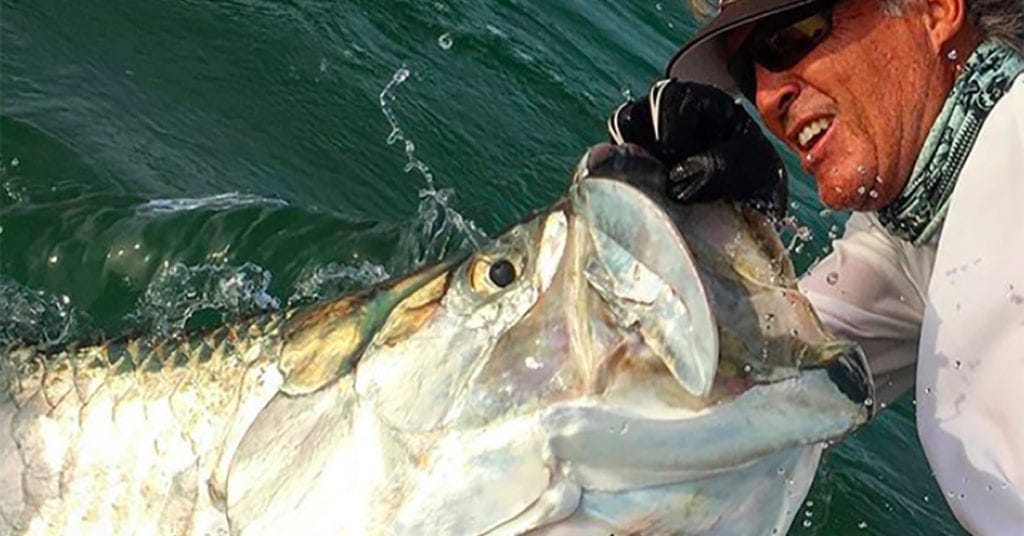
Mill covers broad tarpon philosophy across what he calls five elements:
- Reading the fish
- Presenting the fly
- Feeding the animal
- Setting the hook
- Fighting the animal
In addition to all these, he goes in depth on his gear selection, knots and rigging, flies, and more. Besides jazzing me up to go tarpon fishing, I felt like some of Mill's ideas can be applied to other kinds of fishing, including trout. Take a gander at the list, and give the presentation a spin, if only to hear a master craftsman at work.
Ten angling tips from Andy Mill
1. Informed preference is stronger than received wisdom when it comes to terminal tackle.
Mill's knot selection, leader material, and construction techniques are hard-won. He's fought, and lost, dozens, maybe even hundreds, of triple-digit tarpon, a notoriously hard fish to catch on the fly. And he's evolved these recipes constantly. He's also had to follow IGFA specifications when going for world-record fish, so he has to have precision and performance in terminal tackle.
The bottom line? You have to experiment, keep working out what works for you, and not be complacent. Are you an improved clinch, or regular clinch fan? Are you a non-slip mono loop knot believer, or on the Improved Homer Rhode side? What works for you might not be what the manufacturer says, or the easiest knot to tie. You have to always be open to improvement and evolution based on how you fish.
2. A preparation ritual can help you spend more time fishing.
Mill sun-bakes his leaders, stretching them between trees outside so they straighten and lose the memory of being on the spool. Then he carries them, straight, in tubes, sometimes even pre-tied to flies, ready to go.
How often do you change your leader? Do you stretch it before you use it, or do you just unwrap it from the package and go? Do you carry a threader box that will allow you to easily tie on small flies, rather than fumbling when you need another size 22 Griffith's Gnat in the midge hatch? Fussing over tackle ahead of time can save energy on the water.
3. Keep your fly lines clean.
Clean fly lines cast better, period. They slide through the guides easier, with less friction, they pick up off the water better. Squirting a little line cleaner on a microfiber cloth and running it along your line as you reel up for the last time for the day is an easy thing to add to your routine.
You can also imagine our sistren and brethren who fished with silk fly lines, and had to clean them, and hang dry them, after every fishing session, otherwise they'd rot. A little wipe down is nothing compared to that. And some of us still fish silk lines! Shine on, you crazy diamonds.
4. The further away you are from home, the more backup options you need.
When you're fishing for big gamefish in the salt water, people assume breaking a rod is the worst thing to happen. And it is. But the less-expected outcome is you cut a fly line on coral head. You might have brought a spare rod, but did you bring spare lines? The further away from home you are, the more you should make sure you have a plan or problem-solving skills in case you run out of a critical consumable, or need to modify a fly.
In the video, Mill unpacks what he keeps in his boat bag, and I was surprised how much of his gear is used to modify other gear to help it work better according to conditions: brushes and weight to modify flies. Backup leader styles. All tools, but knowledge is the ultimate tool.
5. Intercepting a fish is a more useful metaphor than just presenting the fly to a fish.
Tarpon are typically moving around when Mill fishes for them, slicing through the ocean in mysterious conga lines. The way Mill describes presentation, he's looking to peel one or more fish away from the pack, and give it reason to move out of a safe and comfortable position.
If you're targeting a rising fish, what is the pattern? How far is that fish moving from its lie to the surface? Look back up the river to see where that food item was 15, 20, 40 feet up above the place where it rises. Had that bug touched down yet? Had it even emerged? The more you can mentally embed yourself in that entire scenario, the more likely you'll be able to cast a fly that resembles what the fish needs it to resemble to trigger an eat.
6. Practice makes.
This is more of a personal motto, but Mill often does a demonstration of fighting a fish with a leader tied to a dumbbell, just to show how far the rod and line can go, and the right or wrong ways to land a predator that runs a buck-twenty and would prefer to be in the open ocean. (I think there was a whole outdoor casting component to this presentation that we missed, that may have included the dumbbell test, because it's referenced.)
Casting practice, knot tying practice, practice watching rivers and lakes and figuring out where fish might be, hell, even wading practice: You're only ever going to build your skills as an angler with concerted practice. I try and put my hands on a fly rod every day. Having at least a twenty-minute casting session in the back yard keeps me fluent with that tool. Practice doesn't make perfect; perfection is an unattainable quality. But practice does make.
7. One cast, one fish.
This goes right along with our mantra of "First cast, best cast." As Mill puts it: "One of the cardinal rules in in any fishing is 'One cast, one fish.'...Wait for your shot, wait for the fish to get close, then you make your one shot and get in the right spot."
Another thing practice makes? Precision. Being able to pick out that one fish working, or see that nervous water and interpret the direction a fish is moving. "We don't flock cast like you flock shoot. You pick out one animal," Mill says, which speaks to being able to bring a laser focus to bear
8. Seek and maintain your critical angle.
I love Mill's description of "critical angle" in terms of fighting a big fish. Even when you're not fighting a massive tarpon the biomechanics of lining up the strongest part of the rod with the strongest part of your body is valuable for managing a heftier fish than you're used to.
Seeing Mill strike the critical angle pose—arms nearly straight, rod down around the hips, using the power and stability of the hips and legs—will help drive this one home, so make sure you reference the video.
Obviously, you're going to be able to get yourself into a very different position on a boat versus wading, but it's important to remember should you ever get hooked into a very large freshwater fish, and a bit counter-intuitive to the (very correct) advice to always keep your rod tip up when fighting a fish.
9. Manual drag beats mechanical drag.
Drag is mostly unimportant when you think about fighting trout. It's good to have your drag set how you want it to be able to lengthen your fly line without pulling the entire line off the spool. But it's very unlikely you're going to stick a fish you aren't able to manage (initially at least) with your hands.
To hear Mill describe his approach to tarpon is even more intriguing. "I have fished 40 years for tarpon, with like almost no drag," Mill says, "Because I want to be able to create drag here, with my hands." He uses his first two fingers to hold the line to the cork, and then passes the line over his ring and pinky fingers, so he can both clamp down and pinch them together to moderate line pressure.
10. Spreading your hands to avoid tangles.
Maybe you're like me and have night terrors about a slack loop in the fly line catching around a reel when you finally get a big fish on. The fly line wraps around the the reel seat, binds up, and the fish just pops off. But the fish is your high school Spanish teacher, and turns and faces you and says "¡No me molesta!" And then you wake up. Weird!
Mill offers a simple solution: As the fish takes off, spread your hands, and let the fly line pay out through the rod. "Once he starts to depart... this slack coming off the deck of the boat, I am letting that line go through my fingers," Mill says. "You separate your hands... just let the slack come through your fingers and let it go onto the rod and out and feed it onto the reel."
That's it! Watch the video and catch tarpon fever from one of the grandmasters.
What's your plan for managing slack? Would you rather fight 100 trout-sized tarpon, or one tarpon-sized trout? (Easy one.) Tell me in the comments!