What the research actually says about fly fishing and mental health
Here's the proof: Why fly fishing makes you feel better mentally and physically.

Welcome to the first installment of our deep dig on fly fishing and mental health.
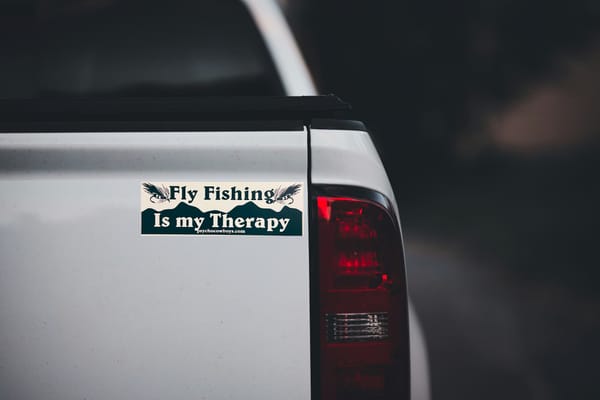
We've known long enough that fishing (and being outdoors in general) is good for you, so much so that it's become a meme. But after seeing the bumper sticker version so many times, I wanted to track down the ground truth. To find the specific research that details how peoples' lives were improved by the fishing prescription.
What follows is a non-exhaustive but extensive look at how fishing can help everything from getting your daily exercise to alleviating symptoms of more severe mental health issues like anxiety and depression, and PTSD, as well as advances in social organization bringing this cure to as many people as possible.
In this series on fly fishing and mental health
- Hearing "Fishing is my therapy" bothers me
- What the research actually says (we're here)
- Inside a fly fishing therapy session (next week)
- Why tying flies is good for your brain (coming soon)
If you've been waiting for permission to take building your fly fishing practice seriously, this is it. The research says "Go." It's up to you to start.
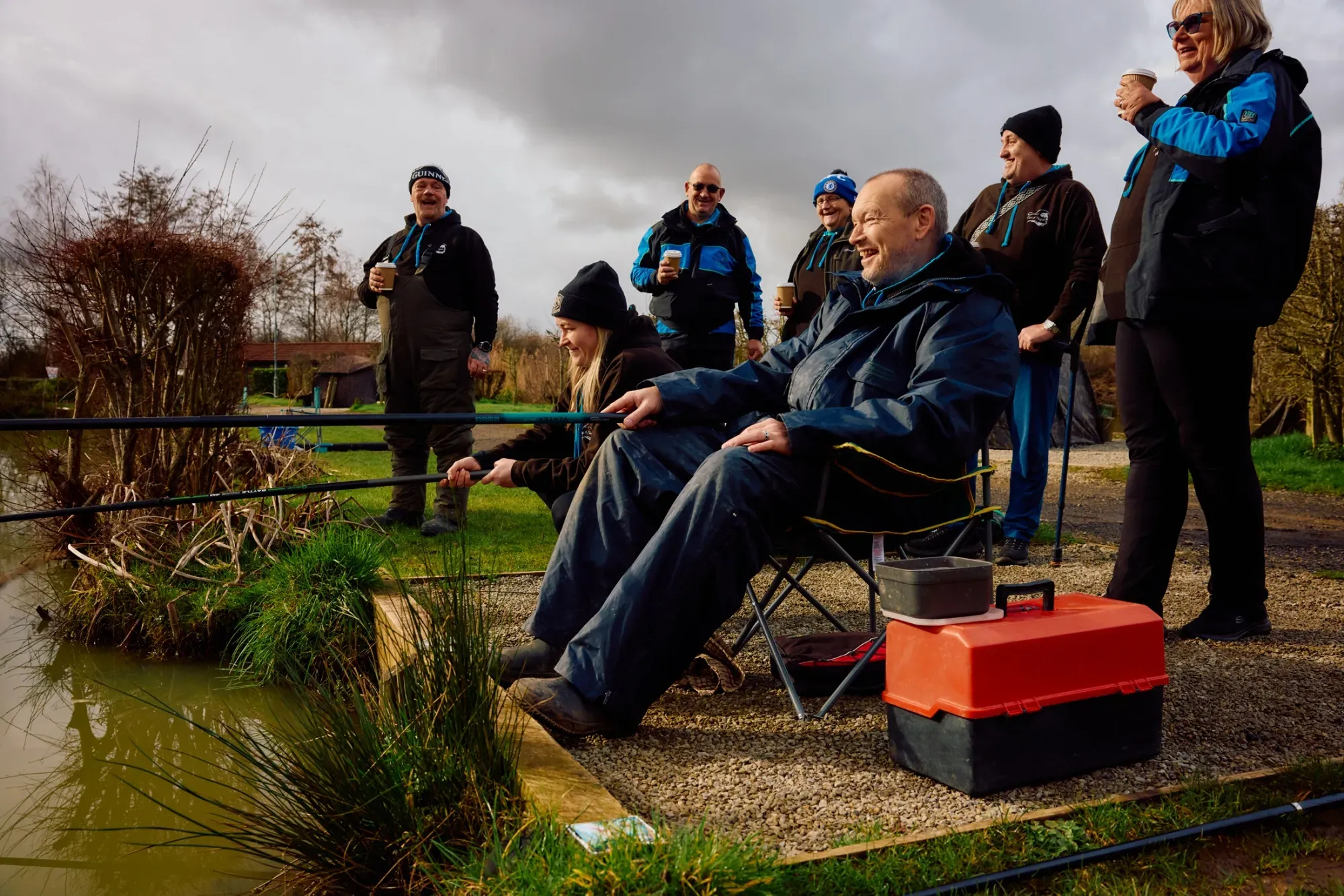
There's broad agreement fly fishing is an effective tool for improving physical and mental health
A series of foundational studies stand out as evidence that different areas of fly fishing are effective at improving individuals' health. And, more broadly, we've seen the rise of several different social programs that hope to bring about change on a population level through fishing.
This is a research area that's really taking off, and new studies are being published, but I've tried to focus on work that's been cited fairly regularly over a period of several years. That's my best attempt at a proxy for not having the chance dig deeply on any one methodology.
Much of this research comes from the UK, where inroads have already been taken to systematize fishing as therapy for larger groups. In 2021, the Greater Manchester Mental Health NHS Foundation Trust embarked on a partnership to offer a fishing prescription to those suffering anxiety and depression. Indeed, "social prescribing" is growing as a way for medical science to bring a holistic treatment regime to modern disorders of disconnection. UK family doctors have sent over 5.5m referrals to social prescription programs since the effort started in 2019, over five times what the National Health Service had initially estimated. In a recent Bloomberg article on the success of social prescribing, reporter Andrew Dickson visited an organization called Cast a Thought, which hosts folks who've been given social prescriptions to fish on its "Fish and Chat" meetups.
There's also a whole body of research that looks at other solo, quiet outdoor sports—skiing, surfing, etc.—for similar impact, and I'd expect they find similar outcomes. I'm mostly interested in the angling-specific studies, though I didn't stick exclusively to fly fishing.
A definitive metastudy on recreational angling's effects
I don't have access to medical journals, so I've looked for studies that are the most accessible to laypeople. But dozens of studies have researched the effects of angling on health.
So much so, that late last year a metastudy—a study of studies—published in the Journal of Functional Morphology and Kinesiology by a team of researchers from the Medical University of Gdańsk looked at 41 studies across our young century, from 2000 to 2025. Here's how the study summarized things:
The evidence indicates significant psychological benefits of fishing, including reductions in stress, improved mood, and clinically meaningful decreases in Post-Traumatic Stress Disorder (PTSD) symptoms reported in therapeutic fly-fishing programs.
The study also talks about the various forms of injuries one can sustain while fishing, mostly to the arms and shoulders in casting, but that's a whole other article.
How fly fishing improves your quality of life
It's almost a given that you feel better after fishing, whether or not you caught fish. Here are a few areas researchers documented health impacts:
- General fitness and stress reduction
- Increased attention span and focus
- Connection and community
Let's walk through these good-for-everyone elements:
General fitness and cardiovascular health
Wandering around outside is good for you. You don't need me to tell you that. Lateral movement over uncertain terrain burns calories, and improve core stability and balance. And that's before even talking about fishing. You've probably heard about forest bathing, but have you tried river bathing?
Here's some data from a comprehensive 2012 report entitled "Fishing For Answers: The Final Report of the Social and Community Benefits of Angling Project" (PDF) from the UK. It provided research justification for how UK lottery funds are used to support fishing activities by looking at how angling participation can be a positive social force. To help measure cardiovascular impact, they asked a fly angler to wear a heart monitor and log events as he completed various fishing activities on the Upper Don River.
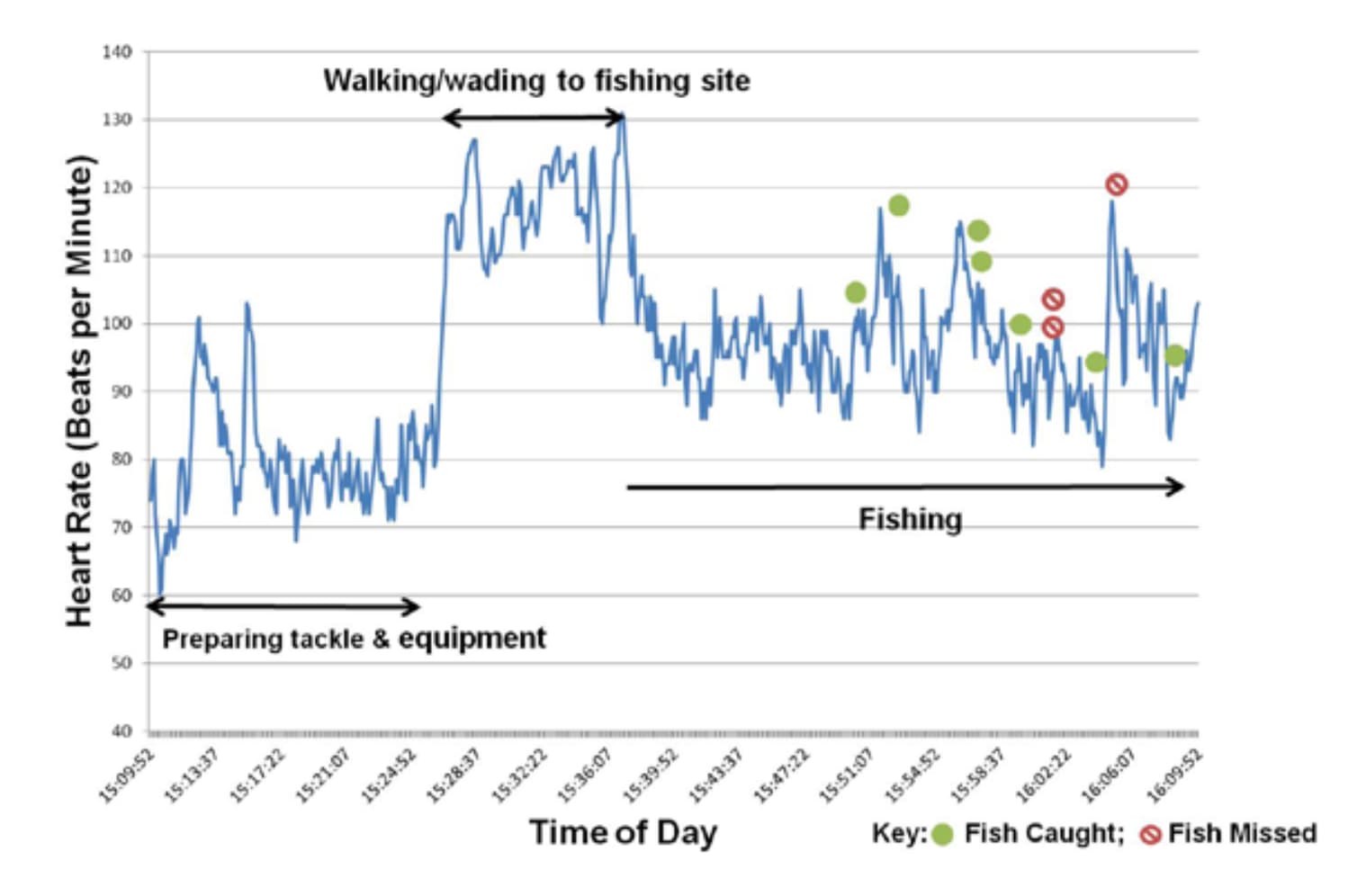
That elevated heart rate over the range of time spent fishing gets this angler into the moderate intensity range, a place the American Heart Association recommends you spent at least 150 minutes per week hanging out. Beats the treadmill at the gym, right?
Stress reduction
Like being more active outdoors, it feels almost given that fishing reduces stress, even though there may be parts of it that are stressful in themselves. A 2022 study in Ecosystems and People by Pita et al. entitled "Recreational fishing, health and well-being: findings from a cross-sectional survey" studied 244 Spanish recreational marine (saltwater) anglers and measured things like stress levels, sleep scores, and seafood intake. Researchers found the most engaged anglers, the ones that fished the most, had the lowest stress levels: "Up to 15.4% lower...than less avid fishers."
Social isolation and loneliness
With plenty of clubs and communities to join, fly fishing is an incredible way to meet new people and make real-life connections with other humans.
Part of the current social prescribing effort in the UK is including fishing in its list of activities for schoolchildren, along with gardening, and cultural activities like going to museums. In an in-progress four-year study led by renowned University College London researcher Daisy Fancourt, researchers will be gauging whether an exposure to these experiences will help alleviate feelings of loneliness and isolation.
Social prescribing is coming to the U.S., as well. Last October, the organization Social Prescribing USA held its first summit, with 50 participants gathering in New Jersey. The group emerged with a four-point plan and a movement-building goal. "With growing awareness of the loneliness epidemic, increasing recognition of social determinants of health, and demonstrated public interest in non-pharmaceutical approaches to wellbeing, conditions are favorable for social prescribing to flourish in the United States," the report details.
Attention and concentration
Fly fishing both reduces the number of outside stimuli (moving from a built, technological environment to an outdoors environment) and raises the intensity of those stimuli. You're intensely concentrating on a tiny fly as it floats down the river, willing a fish to rise and eat it. Looking at the Fishing for Answers report, helping rebuild concentration and attention by focusing on it as a trainable skill is a key aspect of fishing:
Angling "fascinates" attention, allowing people to concentrate for long periods of time seemingly effortlessly. As they become completely absorbed there is no room for other thoughts and the singular focus serves as a mental break.
Connection with nature
Most broadly, for all of us, fly fishing establishes and grows our physical connection with nature. A 2023 meta-study that looked at 832 separate independent studies found "consistent conclusions across geographically diverse experimental studies that physical connection with nature improved human cognition, social skills, physical and mental health, and psychological connection to nature."
Experiments also showed that psychological connection with nature had significant positive impact on pro-environmental behaviors and values. Correlational studies supported experimental results and, in addition, found psychological connection with nature positively correlated with mental and physical health.
It's socially and psychologically good to spend time in the outdoors, and fly fishing is a great way to do just that. One growing social prescription program in the UK, Dose of Nature, is seeing results stronger than talk therapy from its immersion programs. Doctors are now able to prescribe the therapy directly. One participant, who credits the program with helping reduce manic episodes he experiences as part of his bipolar disorder, told The Guardian "we would go on riverside walks...the focus was to slow down, so we’d sit on a bench and we’d look out to the river, really admiring all the little details, trying to appreciate all of the shapes, the way the light hits the river, the rhythm and the flow." A randomized controlled trial of the effort from the London School of Economics found "clinically meaningful benefits" in treating mental illness when it followed 375 participants for 2.5 years after their programming, according to the Guardian story.
"We’d look out to the river, really admiring all the little details, trying to appreciate all of the shapes, the way the light hits the river, the rhythm and the flow."
How fly fishing can alleviate more severe mental health symptoms, like anxiety and depression, PTSD, and suicidal ideation
With more acute symptoms of anxiety and depression, research also holds answers about fishing's efficacy. In the UK, Anglia Ruskin University found in a study conducted with 1,900 British adults that recreational anglers suffered from significantly lower anxiety disorder rates—almost 10% lower—than non-anglers.
Similarly, a study from Vella et al published in 2013 in Military Medicine followed 74 veterans with PTSD before, during, and after a two-day, three-night fly fishing trip. Researchers found "significant and sustained reductions in negative mood states, anxiety, depression, and somatic symptoms of stress. Comparisons between the baseline and follow-up periods revealed significant improvements in sleep quality and reductions in perceptual stress and PTSD symptoms."
The Anglia Ruskin University study's participants had lower rates of suicide attempts (7.5% versus 13.2%) and deliberate self-harm (10.4% versus 20.6%) compared to non-anglers.
Fishing and addiction recovery
Fly fishing's individual mental health outcomes are also being used in group settings, creating opportunities for enrichment, bonding, and exploration of self among groups suffering from addiction. Read Mikeie Honda Reiland's account of Tennessee's ARCH Academy, an adolescent addiction and recovery center with a fly fishing program central to its clients progress. Closer to home here in Oregon, we have Ripple Effect Outreach, a newly-formed group aimed at supporting folks in recovery with fly fishing-based events..
How to experience fly fishing's health benefits
OK, so we've read the research, and it's sound. What's next? Clearly, fly fishing and all the nature exposure and physical exercise it contains is a positive force in many people's lives. And there's no special trick. We can experience it just by going.
But there are a few areas to focus on if we want to bring the therapeutic aspects of fly fishing to bear. Here are several we can invoke the next time we're out on the water:
Sensory engagement
Activate your senses. All of them. Feel your rod, listen to the water and wind, watch the riffles and rills in the stream dance and play, connect yourself to the surface you're standing on. Being fully present in the outdoors is a sensation like peeling off life's heavy armor, becoming lighter and more open to what magic might happen.
Intentional presence
We don't just have to be focused and intentional when we're presenting the fly. Guiding our minds to an awareness of the present moment, and what we're doing at that exact instant, helps center us on our fishing activity and make everything else quiet down. Tying knots. Choosing flies. Reading the water. Scanning the bottom of the river for fish moving around. Don't daydream about what happened at work, or what's for dinner: Stay focused on the present.
Casting as meditation
Try and think of your casting as a form of moving meditation, visualizing the mechanics in your mind's eye each time you need to present the fly. Feel the rod flex in your hand, and the line start moving on the back cast. See it aerialize, and follow the rod tip to the rear stop. Experience the weightlessness of the line unrolling to the new start point, rod hand still. Deliver the forward cast and stop, an dwatch the loop unroll and the fly drop. Breathe, cast, fish. But don't false cast too much. You only need one or two to get your position set.
Rhythmic breathing
Connect your breathing with your casting, or your wading steps. Before you have a mantra, you'll have your breath. What does it feel like when you sync inhaling and exhaling with casting? Then, when you slow both down, what happens?
A practice of patience
Tuck a little square of fabric or foam in your pack and practice having a nice long sit at various points in your fishing session. Certainly, before you slog through the water and put down all the fish, sit and wait, and see what you can see. Nature reveals itself in the quiet. Embrace the waiting moments, and find satisfaction in the process. Listen for birds, feel the wind, give in to the awe of it all.
Take a mental health day and go fishing
In the spirit of Hallie Bateman's Artistic License, here's your prescription to fish:
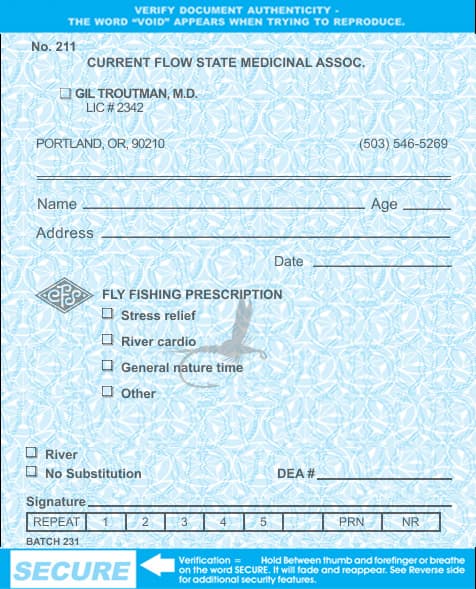
Print this out, fill in the details details, and flash it in the face of your boss, partner, or nosy neighbor when they ask you if you're going fishing yet again. You still need your actual license, but consider this the permission you need to take a positive step toward your improving your own health.
And if you're dealing with heavy, hard stuff, or just want to find more ways to be curious about what you're feeling inside, why not try actual therapy? It's a little more expensive than a bumper sticker that say "fishing healed me," but the effect will be longer-lasting.
Where do you go when you need the river to do its thing? Tell us in the comments. Your answer might be exactly what someone else needs to hear to encourage them.
Get a dose at the Maupin Meetup
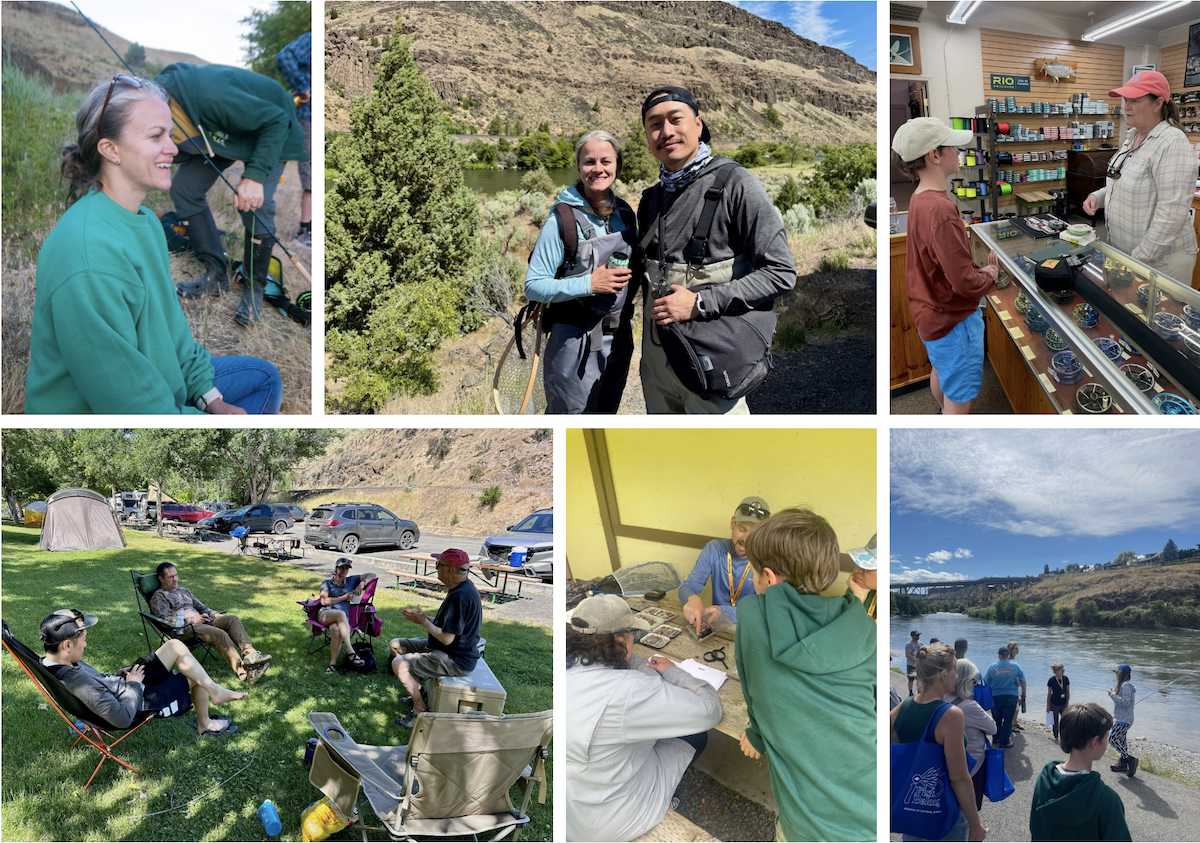
Start your prescription with the CFS crew
The salmonfly hatch and all the beauty of late spring in the high desert will be upon us soon. Join CFS May 28-31 in Maupin, Oregon, for some classic big bug fishing and the DRA's TroutFest celebration.