You only need one fly box
In Praise of C&F Design, the ultimate fly organization system

When it comes to fly fishing, I like to keep things pretty simple. I try to keep my gear acquisition sober, and use the heck out of whatever I buy. In fact, my oldest pair of wading boots are in the workshop with a new layer of E6000 right now.
But, somehow, with fly organization, I've acquired all manner of different boxes and fly holders. Seventeen different varieties, at last count, not counting the pucks and shop boxes and miscellaneous carrying cases.
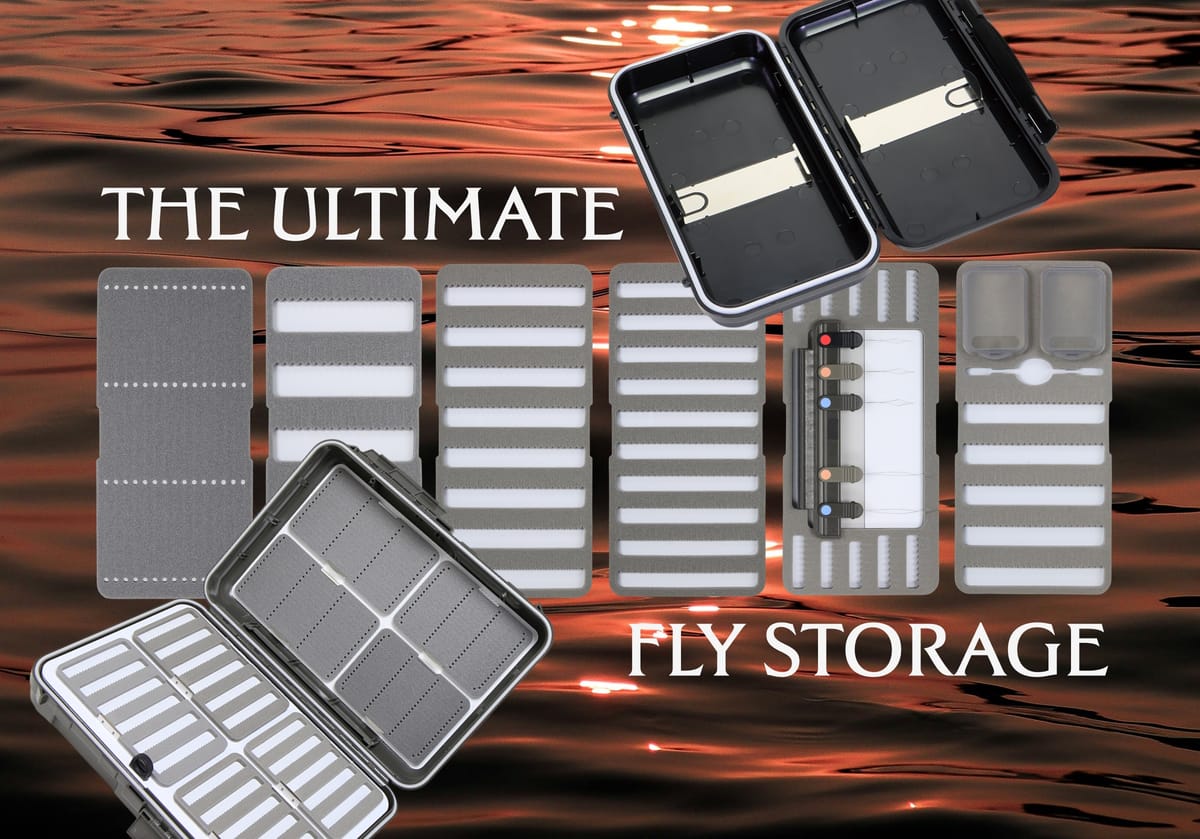
But one manufacturer rises above them all, and is slowly eliminating all competition on my lanyard, in my waist pack and at the bottom of the boat bag: Japan's C&F Design. Its modular fly storage system and high-quality waterproof boxes are a joy to use, on and off the water.
As you build your fly collection, and start to explore new ways of fly fishing and different types of waters, do a little bit of forward-planning and try to avoid the gear graveyard by picking a system that can expand with your interest.
Inside Japan's C&F Design
According to a translation of their site, "C&F Design started in 1993 as a separate division of the industrial design firm Yonenoi Design. Currently, its main business is the planning, manufacturing, sales, import and export of fly fishing equipment. C&F Design's products are planned and manufactured in-house, and approximately 85% are original designs. They are shipped to over 30 countries worldwide and are loved by anglers all over the world.”
Think of C&F like fly fishing's MUJI, another beloved Japanese brand: Basics that work extremely well together. The company offers primarily fly storage solutions, but also makes exceptionally high quality accessories, tying tools, and vises.
FOREAM: Fly Organization Rules Everything Around Me
Organizing your flies is a special ritual for a slightly-OCD angler like me. I find comfort (and control) in categorization. And one truism of fly fishing: gear expands to meet the style of adventures you go on.
You see, first, I had one fly box. Things were good. Then, I had enough flies where I needed to put dries and nymphs and streamers in different places. Because they have different uses, and they come tied on different-sized hooks.
Then, the big streamers needed their own extended space, and the wet flies moved in with the nymphs, and the caddisflies and the mayflies could no longer live together, and the hexes, the biggest of the mayflies needed their own special box, and the delicate-winged dries needed compartment boxes so they wouldn't get crushed. Then, the steelhead flies arrived: the traditional wets, the articulated Intruder-style patterns, the dry line patterns. The saltwater patterns, for stripers and snook and the fish who shall not be named. And the pike and musky flies moved in with the big streamers. And don't forget the random box of vintage flies my mother in law found at Goodwill, which I keep around for reasons unknown.
So then there's that whole Book of Genesis / Icelandic saga bit where old what's-his-name begat that other guy. You get where I'm going with this, and maybe understand why I have 17 different kinds of fly boxes.
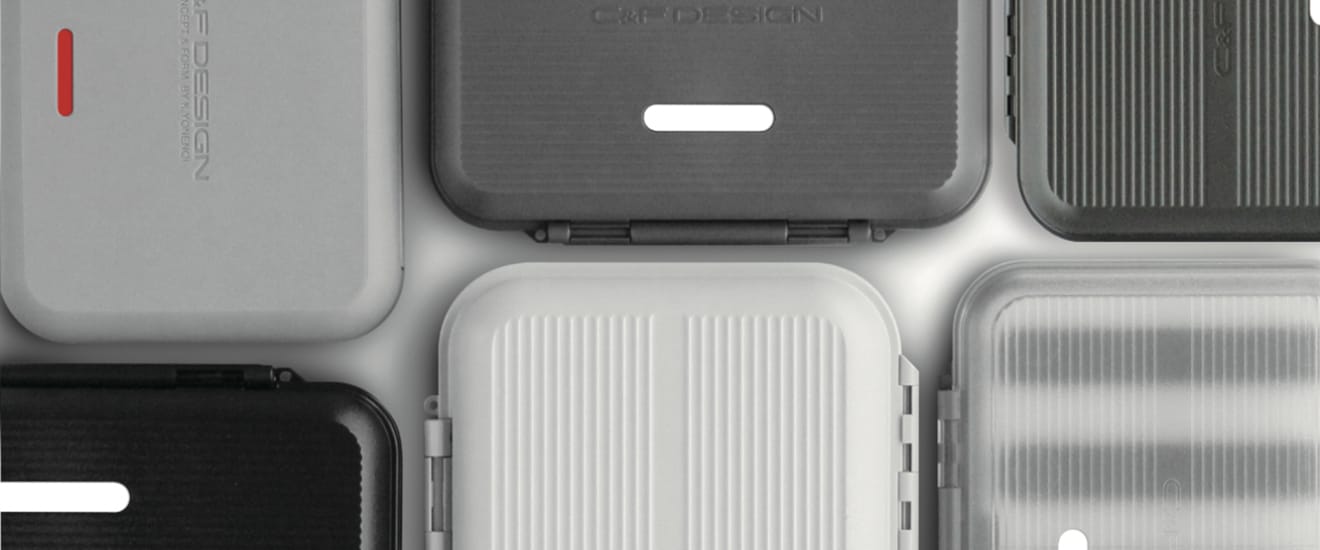
One fly box to rule them all
With all my quirks and persnickety ways of doing things, I'm actually not all that OCD once everything's in the box. Every fly just sits with similar type and size. I don't organize patterns by color, or weight, or insect subtype, or imitation phase of life. (Yet.)
But there are a couple key attributes C&F boxes do better than others. The first is they're well-made, of good material. The second, the real killer feature, is they're modular, meaning you can swap pages in and out of boxes as you fly needs change.
Quality composites
My oldest C&F fly box is easily twenty years old. It's been pulled in and out of bags and waders countless times. It's been dropped. Oh, how it's been dropped. Onto rocks, into the water, down steep embankments. And it's still pristine. The premium plastic that C&F uses is really durable. It's able to maintain its water resistance despite being used hard. I don't abuse fly boxes, but field conditions aren't always pampered. And my C&F boxes show wear way less than competitors.
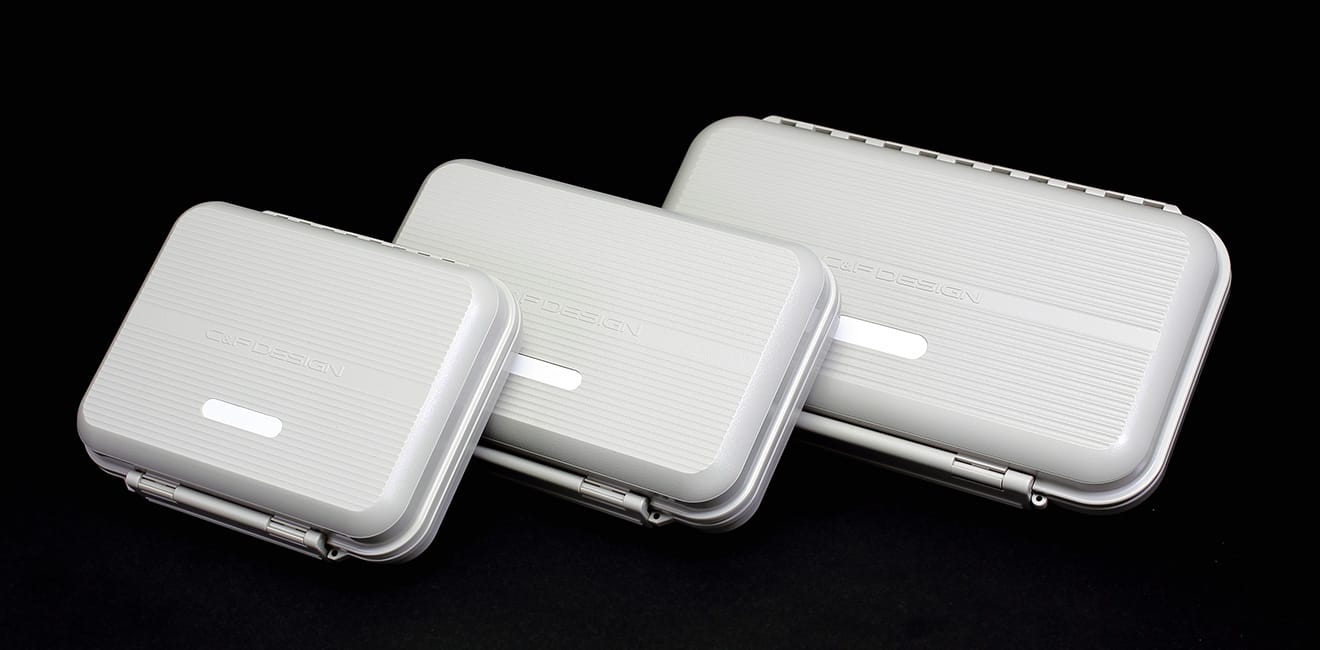
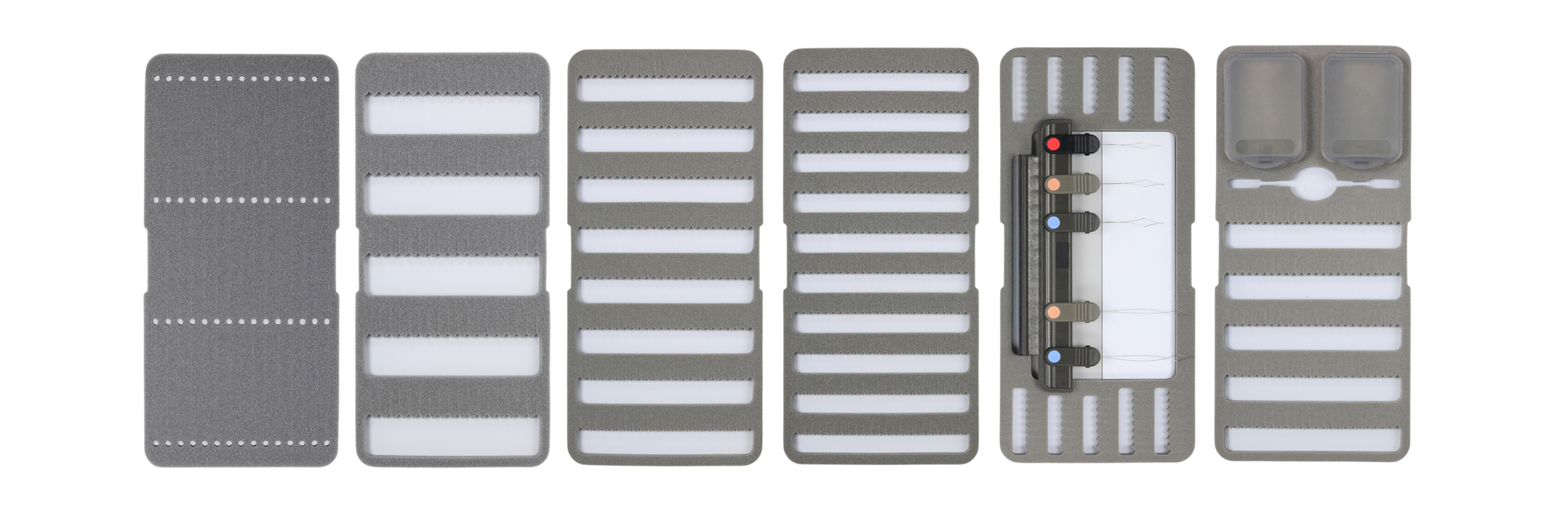
C&F system foams: modular pages for different fly types
The real killer app, the special sauce, the difference-maker for C&F boxes are its "system foams". Essentially, across the flagship line of fly storage products (boxes, lanyard-based chest packs, boat boxes) the fly storage is removable. They're easy to swap in and out by releasing a pair of metal tabs.
This means you can build pages of flies, and add them to your boxes based on need, in thousands of different configurations. Let's say it's salmonfly season on the Deschutes. I can add stonefly nymph and big dry system foams to my box, and swap out the caddis pages. And, later in the season, I can bring the caddis pages back.
System foams come in multiple sizes that can account for almost all of the flies you're going to need in any fishing scenario. Some pages even have small compartments for things like split shot or indicator yarn.
These modular system foams can live in their standard (S, M, L) fly boxes, sure, but the system really takes off when you pair the system foams with C&F's lanyards, chest packs, and boat boxes.
Take, for instance, the fly patch. Oftentimes I don't want to bring an entire waist pack fishing. I'm camping, and I just want to walk down to the lake. I bring my rod and a lanyard with the C&F fly patch connected, with tools, a spool or two of tippet, and nippers. I make sure there's a system foam of lake flies in there, and away we go.
If you're spending an entire day on the water you take a couple boxes. Or, C&F's chest pack lets you access a broader set of system foams, while keeping everything in front of you.
And for the traveling angler, or the one who can't leave home without everything, C&F boat boxes offer a great mothership for all your system foams, to be kept in the raft, the drift boat, or back at the rig. So, you can rock a single box, and once you fill those system foams up, you can add more, and if you need other storage modes like a lanyard or chest pack it's easy to swap into those as well.
Ready to dig in? Here's a box-unboxing courtesy Charlie's Fly Box, so you can get a sense of what C&F boxes look like in action.
The US market doesn't get the full range of C&F products
It's hard to access the full range of C&F's products here in the States. American fly shops don't tend to stock anywhere near all the SKUs. C&F manufacturers hundreds of unique items, and there's a sense there's just too much for retailers to keep up with.
So, for some of the more unique colored fly boxes, American anglers have to order from European sources, or direct from Japan. Which takes the cost of a fly box that retails for $27 in yen equivalent at the shop in Hokkaido, to over $70 with shipping. (Here's an orange compartment box at the Dakota Angler for $54.)
One insider described why many fly shops ignore C&F, or stock just a few SKUs: "Profit margins are modest, and it takes a lot of attention to maintain adequate inventory. C&F is a boutique line of products that feature attention to high-quality fabrication, design, and function that only the Japanese could effectuate."
That sounds...great to me? Do you have your credit card out already? Don't say I didn't warn you. Here's the whole C&F catalog, which, you can see, contains multitudes. In fact, as of this month, C&F unveiled some 30th anniversary special edition products, likely to be rare as hens' teeth here stateside.
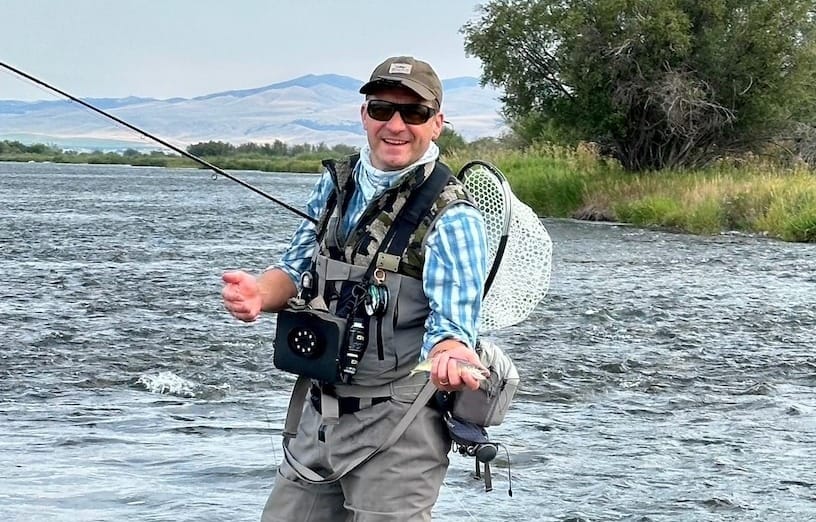
Talking C&F with fishing buddy Dave
Whenever I meet another angler that's a C&F head, we exchange that knowing nod. I reconnected with my old fishing buddy Dave last summer after many years apart. I noticed real quick like since we had last fished together he'd caught the C&F bug. Turns out he loves the C&F system even more than I do. So we sat down and chatted a little bit about what we both love about C&F Design products.
Dave! How did you get turned on to C&F?
I sprained my ankle really badly about six years ago. I was playing a lot of tennis at that time, and I wasn't going to be able to play tennis for a long time—like a year. I thought, what other thing could I get back into? I decided to get back into fly fishing in a big way. I started relearning euro nymphing, reading a lot of new stuff, and I needed to organize all this in an intelligent way. I needed to figure out what my confidence flies were, and develop an organizational system. One of the big things I found during that time was C&F Design.
The Yonex of fly fishing
What are your current daily driver C&F pieces? Is it weird to call them that? Almost like the way fashion people call clothing "pieces"?
Well, I don't like vests—I prefer a waist pack system. And I wanted a modular waist pack, like a bat belt system. I devised my own based on some commercially available fly fishing products and some MOLLE attachment products you can buy on tactical sites or Amazon. I wade pretty deep, so I needed it to be waterproof.
Once I found C&F's waterproof boxes and modular system foams, I was super hooked on the system. I started ordering a couple and understanding all the different types. There's a lot of thought and utility behind what they do. I often really like Japanese brands for a lot of reasons. There's a brand called Yonex in the tennis world that's renowned for its quality control. They have their own factories. Every one of their products is super thoughtful. Every other major tennis manufacturer in the world has somewhere between seven and nine different racket models that they sell. Yonex has three, and they make them really well.
I think it's kind of like that. There is kind of a Japanese thing there where it's like: We don't need to be like everybody else. We don't need to make a million of everything. We just need to make a couple things very well. That's the quality of Yonex that I think C&F embodies as well. I think this extends to a lot of other Japanese brands too. They really pride themselves on the workmanship and the thoughtfulness and the design and the quality of the product.
We don't need to be like everybody else. We don't need to make a million of everything. We just need to make a couple things very well.
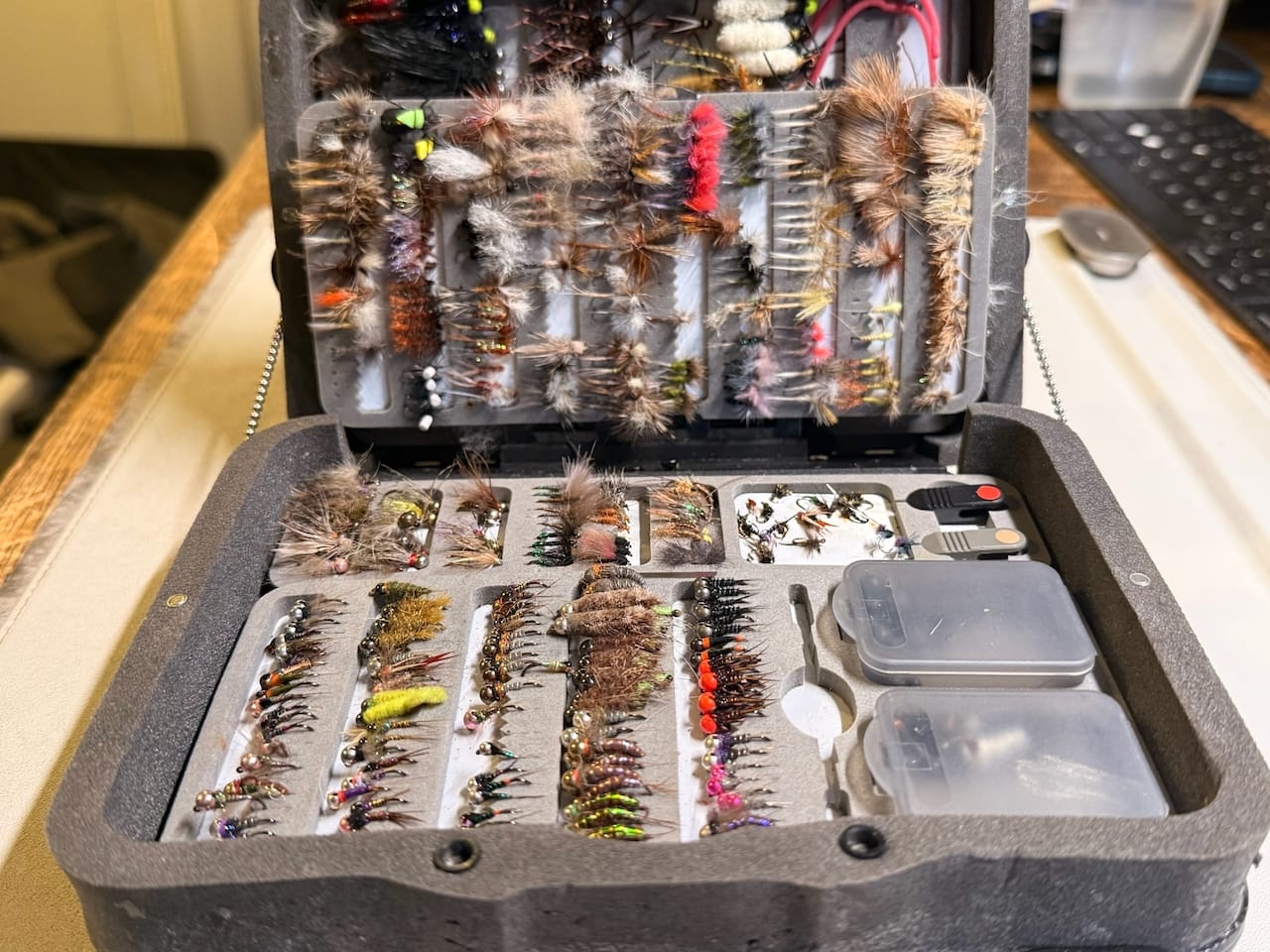
Flirting with minimalism
Do you think C&F appeals to a particular kind of fly angler, or just Japanese detail and quality fetishists like us?
If you look at some of the C&F marketing materials, you can tell they're very much designed for the more minimalist angler. I would put myself in the more minimalist camp. I'm always trying to take just the bare minimum on the river.
I use C&F's chest storage pack, and I'm constantly chiding myself: Why do I have so many flies in here? I just don't need all these flies. At this point, I know my confidence flies and my second tier flies. I've fished enough carrying a thousand flies around now to realize I totally don't need a thousand flies.
I have the small chest patch. That's a really nice product. I really like that. You're just keeping a couple dozen flies on hand. They have a wider one too that holds one system foam. You can attach either one of those to your waders or whatever. I have a custom lanyard that I've made myself, and I can put either the small chest patch or the wider one that supports one system foam.
That's sometimes really nice when I'm just going out for a little while, or I'm just wet wading and don't want all the weight. Or if I'm hiking, any of those things where you just want to go lightweight. I really feel like that's just one example of the way they really gear themselves towards the lightweight angler.
It's like they are Tenkara plus. Tenkara represents the lightest weight you can go, and the least you can carry. C&F is the next level up from that.
I can't tell you how many guide trips I've taken where the guide has a gym bag full of fly boxes, the clear 36-slot deep plastic boxes filled with flies, and we fish the same three flies all day.
I don't know if C&F is for every angler. There are definitely people out there who are way more maximalist in their approach to getting out on the river. They're going to be guiding a lot of the time and they need to have everything under the sun.
But I think if most anglers are honest with themselves about what they really need for a day out on the river, they can get pretty trim. There have been times where I'm like, "Oh, I wish I had X, Y, or Z." But you're like, okay, fine, I'll adapt. I'll either do something differently, or I'll work with what I have.
I think sometimes you become a better angler working with what you have, rather than sitting there and feeling bad about not having that one thing that you wish you would have brought.
You become a better angler working with what you have, rather than sitting there and feeling bad about not having that one thing that you wish you would have brought.
Planning ahead to avoid the gear graveyard
Obviously, what's frustrating is I've arrived at this knowledge after buying many sizes of boxes for many types of flies. I wish somebody had sat me down at 22 and said, "Hey, you're starting to spend real money on fly fishing stuff now. Just invest in this one ecosystem and thank me later."
I mean, probably just like anybody that's come to C&F, I now have a graveyard of other boxes that I don't really use any more and I don't know what to do with. I still have a bunch of stuff I'm dying to get rid of.
One C&F item I avoided for a long time but am now really stoked about are the threaders. They work incredibly well to set up six or eight tiny midges or Griffith's Gnats and it makes it so much easier to get them onto your tippet and go.
I love them. At first I had my doubts, but certainly, for anyone, they make tying small flies in particular so much easier. You can pre-set a row of flies on them before you get to the river. Then you're just threading your line through. I do this with some of my confidence flies.
You can fill these with a bunch of your confidence flies and then slide your line through super easy, you pull off the fly, and it's there, automatically threaded. I'm 50 now, so my vision's going. But also just in low light, even when I had great vision, I think it's easy to struggle to thread fine tippet through a hook eye. Even if I don't have a fly pre-loaded, if I'm a minute into a fly change, and getting frustrated, I just take out the threader and it's done. It's so much better.
This is actually one of those weird things that I don't think anybody else has copied yet. People are copying the box style, people are copying the system foam thing. I think Smith Creek has a chest pack that's pretty similar now to the C&F chest pack, and it's got this magnifier on it, it dispenses tippet. Actually looks like an interesting product. But it's not my C&F system. You're locked in, baby.
Dave shares some dangerous talk
I love fishing very small dry flies. Obviously the side effect of very small dry flies at light tippet is that you break off a lot. Anything that's going to help me get back in the game is great.
For sure. I'm definitely very much of the belief that if you're nymphing—which everybody should be doing to some degree if you want to catch fish—there's a lot of stuff under the water. There is always more than one solution under the water to catching fish. I think it's more about getting the size right than getting anything else right to me.
Even on size, there's more than one size of thing floating by under the water that's appetizing to a fish at any one time. That, more than any other reason, is probably why I've come to really enjoy nymphing. This idea of matching the hatch is quite tiresome, to be honest.
Easy, Dave.
I think if you're fishing on the East Coast a lot, I think it's even more tiresome. Out here, dry fly fishing is so much harder—at least I think it is—than on the West Coast.
For me to move back from the West Coast to the East Coast and fall in love with fly fishing again, I kind of had to learn to nymph. Now I love it because of the versatility. That in turn has really led me to develop my own set of confidence flies. You look at almost anyone—you can Google a lot of the folks who are out there on the fly fishing internet who have posted a list of their confidence flies in some way, shape, or form—and two-thirds of them are underwater. Honestly, most of the time I'm fishing like one of six flies probably.
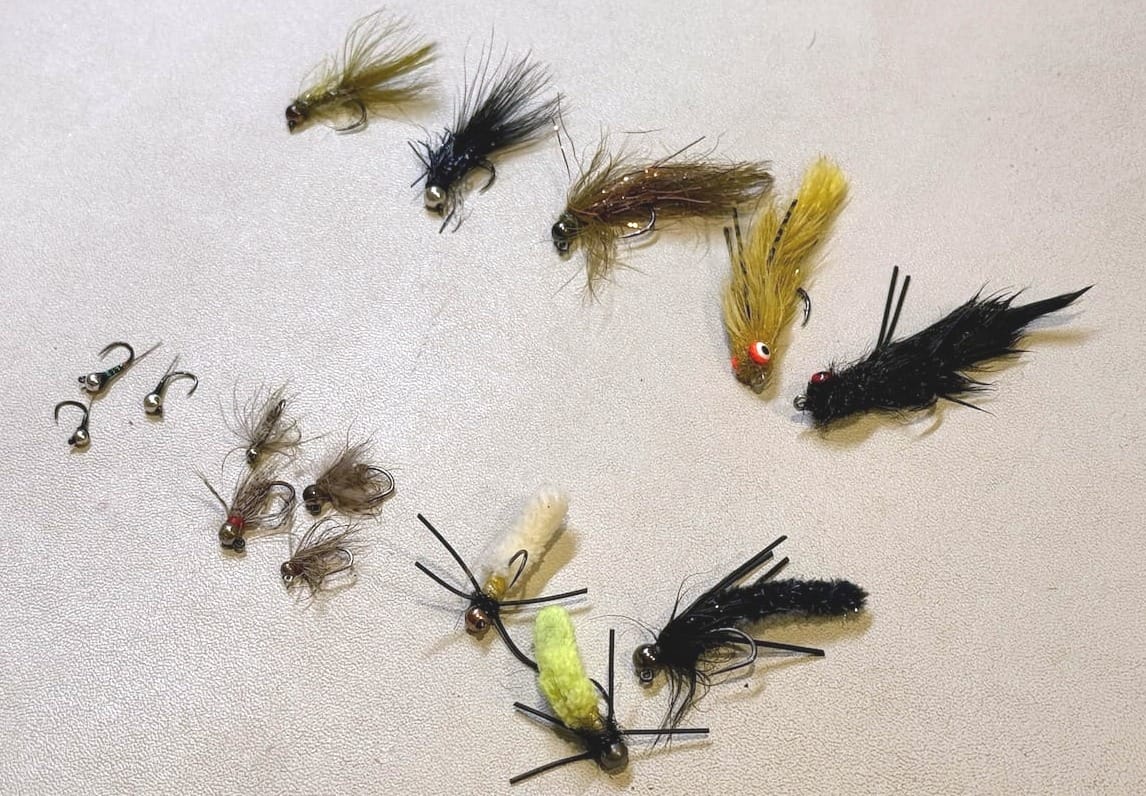
Do you know those off the top of your head? This would be a great little sidebar: Here's Dave's confidence flies.
Yeah, sure. BWO Perdigon is probably number one. That works everywhere all the time. Number two, small jig streamers. Three: Soft hackle emergers.
Four: Mop flies. I love mop flies. I don't care, people can talk shit about them all they want. They work everywhere. We were cleaning up when we were fishing the mop. I haven't been to a river yet where I felt like the mop fly was tired and the fish weren't getting on it. Especially after water has rained or any type of water has churned some things up. And color-wise, in Montana and Colorado, during or after rain, the chartreuse mop was deadly. I’ve never caught a fish on that fly on the East Coast, but it’s performed superbly out West.
This is true. You were very successful with the mop flies.
If I had to pick four flies, it'd be literally just the BWO Perdigon, the soft hackle emerger, the mop fly, and the jig streamer. If I just had to do four flies, those would be the way. Light, mid, and heavy. Almost any river under any conditions with those four flies, I could probably catch fish.
Surely C&F doesn't do everything right?
Well they don't call 'em confidence flies for nothing. What are your criticisms of C&F? Do you have any things that you wish that they could do better?
I think one of the things—and this is probably more of a me problem—it's almost like sometimes, in some of the earlier stuff maybe especially, it was too fiddly, too delicate.
Yeah, I had a problem with an older version of the small pin-on patch where it would get bumped and the threaders would fall out, and it was open on the sides. They've since evolved that product it, but that was definitely a more delicate product than I could handle.
I do see year over year they constantly make moderate improvements to their products. Even some things like their zingers or whatnot. They have a new one, I'm just looking at it now and hadn't seen before, which has this little scissor attached to it. They're constantly trying to make their products better, which you have to appreciate.
How to get started in the C&F universe
What would you recommend if you were talking to a starter who's just getting into fly fishing and is thinking about fly storage? What would be the best box size for getting into C&F? Can we help them avoid our tragic fate?
One of the big choices you need to make with C&F is which size box and which system foams you kind of want to commit to. I've committed to the large boxes, and it's nice because most of the time I can go on the river with one box.
I think figuring out the box size is super important. For better or for worse, there have been some other pieces of equipment that didn't accommodate the large box as well as I'd hoped, so I didn't stick with that equipment. I was already committed to the large box, so for example I might have gotten a waist pack where the large boxes didn't fit in it as well as I hoped. I thought, well, I'm committed to the large boxes, so I'm going to get a different waist pack.
Start with a large box and the system foams that seem appropriate for the flies you want. See if that works for you. If you know yourself to be truly more minimalist, then you might consider the medium or the small. But if you don't know that of yourself, I'd probably just start with the large.
Thanks, Dave! Love C&F Design? Hate it? Got your own quirky fly design system?
Got a trip to Japan planned sometime soon and want to make some dreams come true by schlepping back fly boxes? Tell us in the comments!