Five Flies: Riding range with Riverhorse Nakadate
CFS catches up with the multi-talented angler, musician, filmmaker, and Patagonia Fly Fishing Ambassador to talk Five Flies as he tours the United States to promote his new book, Water Lines.
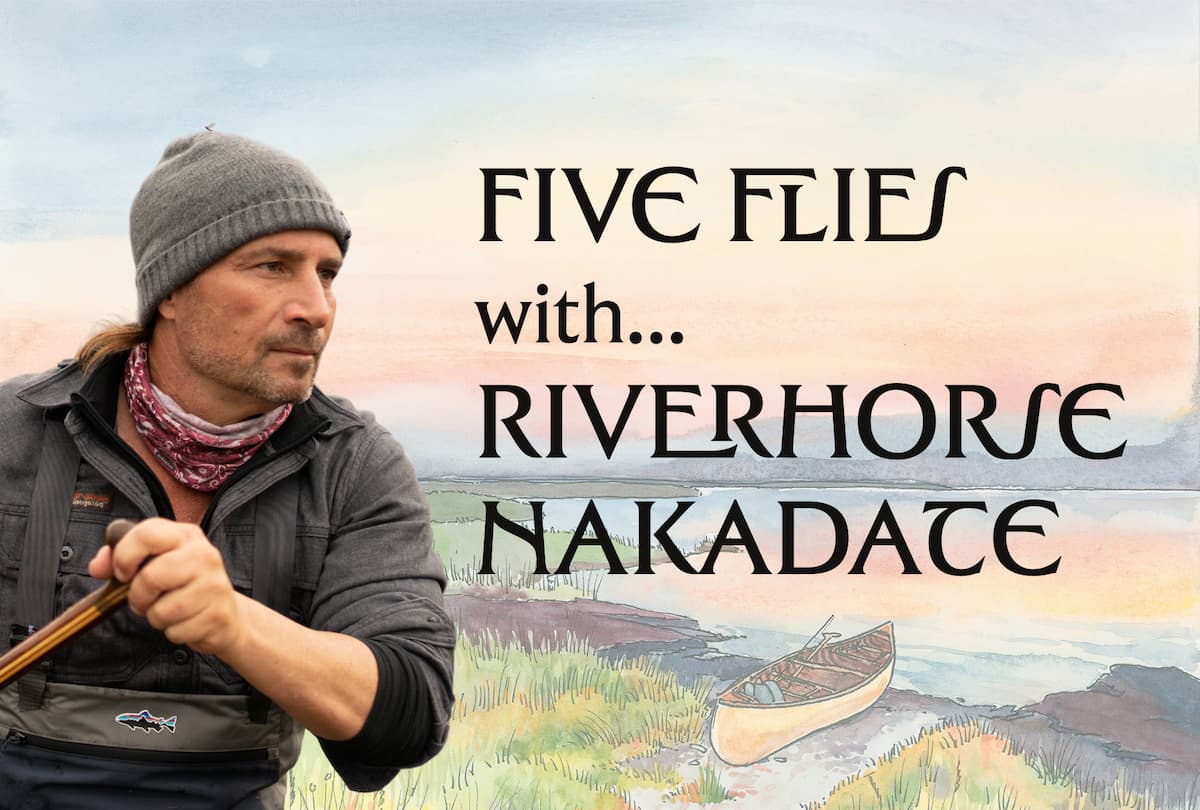
Every once in a while, you just gotta summon your barbaric yawp.
Reading Water Lines: A Life on Marshes, Rivers, Seas, and in the Rain, the new collection from Patagonia Fly Fishing Ambassador Riverhorse Nakadate, I couldn't help but indulge in some transcendentalist romance. To get out and encounter the world, really gulp it in, and roar with the wind.
The book consists of 32 short tales of angling and advocacy, adventure and adversity, from Texas to Mozambique, the Boundary Waters to the Arctic Circle. Each is permeated with an infectious enthusiasm for the world, a strong vein of stoke, and an earnest emotional core. The writing is complemented by lush illustration from Sarah L. Stephens. Several of the stories were previously published at The Flyfish Journal or on Patagonia's The Cleanest Line storytelling hub.
I caught up with Riverhorse at home in Houston after he finished the first leg of his promotional tour. If Riverhorse is reading near you, I strongly recommend stopping by. At the very least, pick up a copy Water Lines today.
Upcoming Water Lines readings
- Patagonia St. Paul – St. Paul, MN — Jul 16
- Patagonia Pittsburgh – Pittsburgh, PA — Jul 22
- Patagonia Nashville – Nashville, TN — Jul 23
- Patagonia Atlanta – Atlanta, GA — Jul 29
- Soul Fly — Boston, MA — Sep 12
- Montana Troutfitters – Bozeman, MT — Sep 16
- Patagonia Dillon – Dillon, MT — Sep 17
- Patagonia Boulder – Boulder, CO — Sep 30
- Visible Voice Books – Cleveland, OH — Oct 10
- Coast Film & Music Festival — Laguna Beach, CA — Oct 16
- Patagonia Boston – Boston, MA — Oct 22
CFS: Ahoy Riverhorse! Are you back home? This is a pretty extensive tour!
Riverhorse Nakadate: I'm off the road for a few days, just because of the holidays and everybody's doing family stuff. Those first couple weeks were quite the flurry: Three days in a row, and then three days in a row in different states.
They give me a cool budget, nothing big, but I'm out of pocket for a lot of it, and I sleep on friends' couches. I just use the budget if I have to grab a plane, or for one or two cars since I'm traveling different states, and the rest I gas up on my own, feed myself. I'd rather stretch that budget and milk it. I think it's gonna end up being a lot of dates, and maybe something else will pop up.
CFS: I love it. It has a very DIY punk rock tour feel to it.
Riverhorse: I think so. Bozeman, there's so many friends up there. A friend I've met, Justin King, owns Montana Troutfitters, and I really love that shop. It just seems real authentic, down-home, and hardworking. His wife's a third-grade teacher, I've known them for years. Even one of the first times I came through, I asked a couple questions about some spots, had some maps, and he replied, "How about I take you, and we get some hang time?" What a cool guy. That will be a great event.
CFS: Part of what makes this book wonderful is this cast of characters you've created across the stories, and also this sense of yourself as a character going from adventure to adventure with the constancy of your canoe, your blanket, your French press. You've set yourself up as a Lazarillo de Tormes–type trickster character moving through the world on your wits and a slice of permission. Are the folks you're encountering along the way on tour resonating with that same adventuresome way of making their way through the world?
Riverhorse: I think what people are seeing in my work is that it's a heart-on-a-sleeve kind of thing. There's buckwild rowdiness, but also inevitably I'm really humbled by life, and I have this great reverence for it. I'm often in tears over the smallest creatures, or the beauty of things, and I don't think we've seen that in any fly fishing books, it just seems like, for the most part, there's just a cheesy pattern of the stoic big fish chasing male thing. Well, you guys can have that. But I'm over here in tears at the beauty of sunsets and sunrises, and a baby squirrel, a monarch butterfly.
And the people who come to the events who've read the book, they get it, and they feel it, they're deeply thrilled about it. I love that you mentioned how many different characters there are. There's quite the range, from JT VZ to an NFL quarterback to a rock star, Brian O'Keefe, and all these wonderful souls. Even looking back, I'm like, "Wow. When will I be able to write about that many great people again?"
I'm often in tears over the smallest creatures, or the beauty of things, and I don't think we've seen that in any fly fishing books, it just seems like, for the most part, there's just a cheesy pattern of the stoic big fish chasing male thing.
CFS: I want to go back to the squirrel story ("Seedlings & Earth"), a great part of the book, because it describes some of the nuances of what we do as anglers. I remember reading, I think it was David James Duncan in My Story as Told by Water a story about him hitting an owl with his car on the Oregon coast. Did you ever read that?
Riverhorse: Yeah, for sure.
CFS: I remember reading that and being struck by how a depth of sensitivity and reverence for nature was intertwined with an individual who I knew was an avid, die-hard angler who kept fish, killed fish, ate fish. There's nuance there, and feeling, and sensitivity. You captured that as well, in a few different stories in the book. It was really nice to that there was adventure, but also sadness and sensitivity and mourning.
Riverhorse: Yeah. Duncan, an owl, I mean, winged creatures are so magical. All of us want to take flight. That's a heavy experience. Even in Native American culture—owls carry that weight. I know he was floored by all that. I'm really proud to have that kind of stuff in my book. I'm crazy for that stuff. Life is fragile.
I think all of us see it more and more. That's why I put the mom story ("Strawberries & Sundresses") in there, because that's a ride everybody gets to take. There's nobody here without parents. I love that it's tempered and blended with silliness and joy, because this world right now has a lot of doom-and-gloom stuff going on that's really debilitating if you let yourself fall into it.
There's a lot of work that needs to be done, a lot of change that needs to happen, and part of the point of the book is not to get lost in those [doom-and-gloom] spaces. It's more just to be present, and I keep harping on how much beauty's out there, day to day, in small moments. Those little snacks and sandwiches and things I'm finding. In the canoe, there's no better meal than what's out there, even if it's a honey and peanut butter sandwich, or almonds, or a peach you brought along.
I keep harping on how much beauty's out there, day to day, in small moments.
CFS: For you, was there a crystallizing moment when you realized it was okay to stand up and be brave for the environment? A lot of people are scared they might get shouted down, or get in trouble. They're not sure what it's like to stick their neck out or wear their heart on their sleeve for a place or a thing.
Riverhorse: Absolutely. I feel like it happened when I was a little kid. I was already crazy for the Earth. I knew how special it was, and just wanted to be immersed in it every day. I couldn't stop reading. But before I met Tony Czech, never had I wanted to do films. I always just wanted to do the writing, be somewhat behind the scenes. As soon as I started to see his shots, what he does, I thought, "Okay. I'm a writer, I have this narration, this voice, this body that runs wild out there, and with his visual images, it works." We could create waves of awareness and positive change for the Earth. I didn't want to do this, but I knew it was the best version of these stories, this activism.
The setting of the A Northern Light film is in the Boundary Waters—a beautiful wilderness, America's most-visited wilderness. And it's under threat from a Chilean billionaire who wants to do hard-rock mining there. Which, that type of mining, they've all failed, on a million levels. A 100-percent failure rate. We don't need this.
During the course of shooting we got footage that was unbelievable, this backstory of heartbreaking events that politicians were involved in. But for the film, we just chose to use the footage of the purest, raw beauty, since beauty is inarguable. So we erred on that side for the film, and I think that's why it was successful. It ended up on PBS, and in festivals, and won various awards.
I'd done one film before that, just about how much I love water and love Texas. That was the Flyfish Journal Patagonia film, Love and Water. But that was such a blur. Friends had come together for just a quick three days. Then the friendship with Tony, finding a kindred soul who felt the same way about wilderness as I do, that was one of those never-look-back times.
The films are so much work. There's no money in it. For whatever people see in the final film, we're talking billions of hours of narration, writing, shooting, editing, music, living in the dirt. But they're so powerful. Patagonia was talking to us about how fast the film needed to be, and I said, "I know you have the metrics and all that, but I disagree. Nothing breathes in this life anymore, everything's so constricted and fast." I said, "No, we're not gonna do that, we're gonna let people breathe again, so hopefully when they see these films, they can breathe." There's a lot of power in letting words resonate, and letting film breathe.
Pick up your Deschutes Ribbon Map today
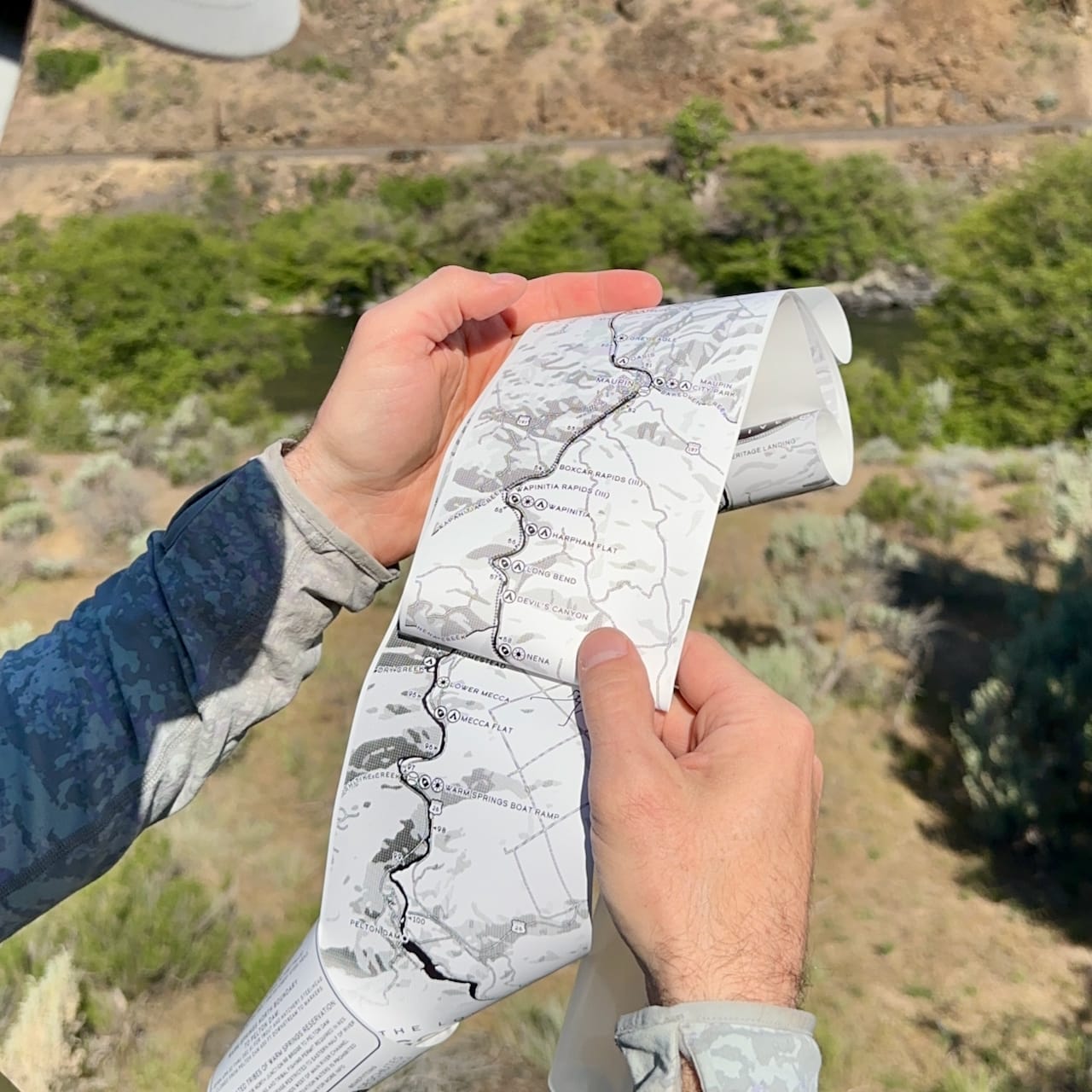
Six feet long, with hundreds of features, the Lower Deschutes Ribbon Map is your passport to adventure on one of Oregon's blue ribbon fisheries.
100% of every map sold goes to benefit the Deschutes River Alliance!
Five Flies with Riverhorse Nakadate
1: First fly
CFS: Do you remember the first fly you fished, or tied? In the book you talk about the seriousness your grandfather brought to angling. What was it like in the early days for you?
Riverhorse: My grandfather was doing a lot of cool steelhead patterns and whatnot, but for me in Texas, I'm not tying steelhead patterns. First and foremost, I was into the Clouser. I thought, "Wow, I can do anything with this fly down here." I can be in the salt marshes, get bass, get it down. The hook rides up so I can take it over lily pads if I fish it slow. It's such a cool pattern to tie. You can tie them tiny, change the bead eyes, tie them big with different hooks.
It's definitely the first fly I tied, and you can take those things around the world. If you had to have just one, I feel like it's the Clouser. Everybody else talks about Woolly Buggers, and I don't agree with that. Buggers are cool, but Clousers, you can make them look like little shrimp, or crab, or baitfish, mullet patterns, even make them look like bluegills. I love that fly.
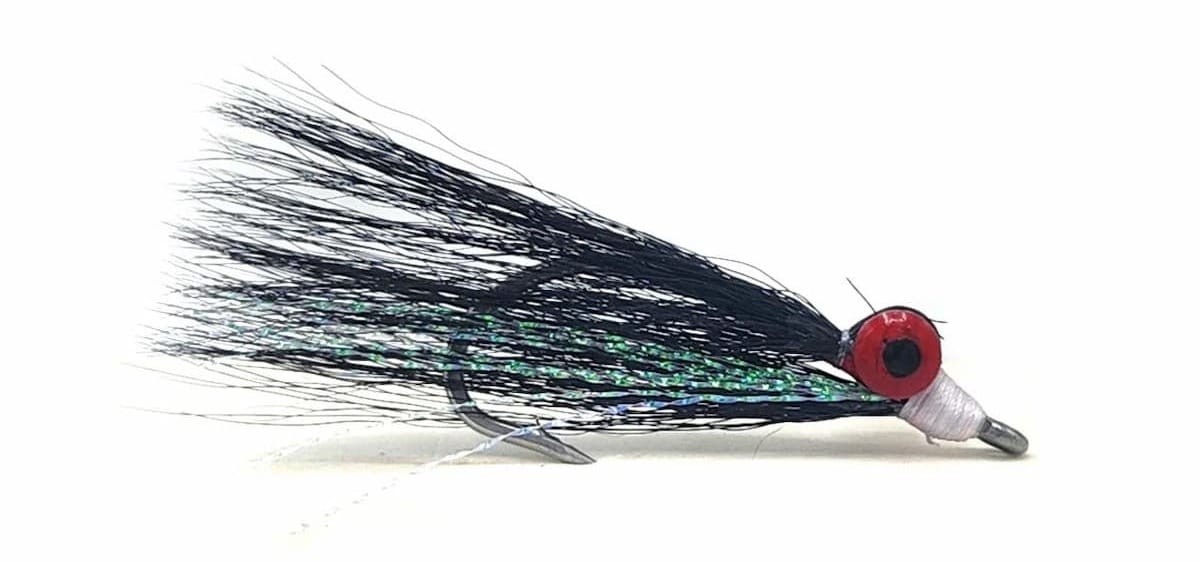
I like size 4 and size 8, but size 4 for sure, with good eyes, and some sparkle flash in them. Chartreuse and white for sure, with a little bit of blue sparkle woven in. I think putting in sparkle, that flash gives the fly that sheen. There's a shimmer with the way light hits their bodies. Like a trout, like any of these fish, if you turn them and watch their gill plates or their flanks, they change, they're iridescent, with different hues and depths. I try to put that in there.
Shrimp colors are definitely cool too, that orange and brown blend. They're so effective, holy moly. I really get a kick out of tying pink ones too, pink Clousers. They're just awake and gaudy. I remember being on the Sauk River with Copi Vojta and his best friend, and we were going out for fish, and I pulled out this big pink streamer, and they just died laughing. "No, we don't recommend that." I said, "I just tied this." Sure enough, I had seven fish within twenty minutes, and they were floored. They said, "Give us some of those." I said, "sure." It could have been a flop, backfired, but it worked lovely that day.
And "The Spring Creek Master," the story in the book, that's pretty definitive as far as me being this ragamuffin, unkempt, boots on the ground lo-fi type, as far as giving the perfect dry-fly presentation. I'm there just hammering big streamers, because I want to find the big fish. I feel those kinds of things create their own moments, when you really step out of the box.
2: Favorite fly
CFS: So would you call the Clouser your favorite fly too? The most fun to fish?
Riverhorse: No. I really love Clousers, but my all-time favorite fly in the world is, of course, the deer-hair frog—topwater. I just love the noises. First, when I was a little boy, I found the Jitterbug, and I fished that thing nonstop. The plopping, that anticipation of what's going to happen, what's below. Jaws had come out about that time, the ultimate topwater-eat movie. Turning the tables on us. It's just that anticipation and wonder. It turned into the frog because I realized the Jitterbug's a pretty strange attempt at mimicking something in their environment, and frogs make sense to bass like no tomorrow. I've taken those same bass frogs into the Arctic Circle, put on 30-pound wire, and caught enormous pike and muskie, and it's just mind-blowing. I get a kick out of that. I know when I'm using that fly, I'm in some really cool woodsy river, or some cool forested lake. It's a total package for me, let alone just that explosion of eats.
Jaws had come out about that time, the ultimate topwater-eat movie.
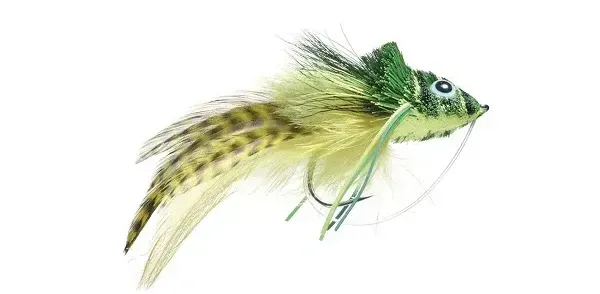
Foam poppers are cool, but something about the deer hair just makes sense to me, it just looks more authentic. The way they take on a little water and swim, they don't pop perfectly. That Umpqua Swimming Frog, it's like 12 dollars, but they last for ages. I could never tie one of those. The talent that goes into keeping all that hair in there, tight, and trimming it, all the colors, more power to you, that's amazing what they do. I'll buy those Umpqua frogs in boxes, blow a bunch of cash for the whole spring, but they're well worth it, even the blockheads. Alvin Dedeaux ties those, often with big, cool ones, with crazy googly eyes. Yeah, those are so fun to fish.
On quivers: Guitars, surfboards, fly rods
CFS: A bit of a digression. I want to talk about fly rods, because you're also a guitar player and surfer, and I feel like there's a sense of, not necessarily acquisitiveness, but a surfer has a quiver of surfboards, a musician has a quiver of guitars, an angler has a quiver of fly rods. What's your relationship like with these tools? Are you always letting some go and taking some on? Have you got a balance?
Riverhorse: I'm definitely in the boat where I've got a good range of old guitars. I'm an editor at large for a guitar magazine called the ToneQuest Report, so through the years I've gotten to play millions of instruments. You've got this piece of wood that's been crafted, and some of these instruments are just on fire. They're awake and vocal, vibrating, there's so many songs in them. When I find those, and they match my style, I do what I can to keep them with me and be inspired by them. I've got a good chunk of guitars. I'm crazy for them. There are four by the bed right now, I played all of them yesterday. I know what each one sounds like, what it feels like in my hands, how it's set up. Same with surfboards. Whether it's a gun-shaped board for serious waves or some cool longboard, how the fins and contours work. Same with fly rods. I'm looking for feel. Response. When I'm holding a fly rod, I want to feel like I'm just fishing the air.
When I'm holding a fly rod, I want to feel like I'm just fishing the air.
I'm a huge fan of very short fly rods that are strong and sweet. That Sage Bluegill Bass rod they discontinued, I talk about it three or four times in the book, and I even make the statement that if I owned the company, I'd make this rod with the new technology, and I still dream of them doing it with that kinetic technology they've got. I forget when the Bluegill came out, maybe sixteen years ago, that's the Sage Bass series, 7'11", four piece model. The lightest one's called the Bluegill, with a perfect 230-grain line that came with it, and it came in a little carrying case. They were $325, and as soon as I got one of those, I was like, "This is it." Especially the way it fits in the canoe. It's really an 8-weight, but it connects to the sweetest 6-weight, so the taper was great. I have three of those, and I even got my dad one.
They made a second generation that's even better, a weird electric parakeet green; the first one was kind of yellow. I have a 3-weight that's 7', a two-piece. I just love the feel of short, tight rods. I feel so much more connected. I do love an incredible old-school 9' 5-weight too. The early Z-Axis from Sage. After the [Sage] One, what a rod, holy moly, especially with the winds and things I deal with out in the marshes, I still throw those Sage Ones like crazy. It just fires such killer loops with serious authority. You can pick it up, lay it down, not false cast, drive the nail up and down banks and lakes and under logs with that thing. I know that rod so well, and wow.
But boy, the rods just got so aggressive, and there's been so much hype. I know you gotta keep companies going, but I don't feel like I need another fly rod the rest of my life unless something comes along that actually met the hype. I have what I need.
3: Confidence fly
CFS: If you're having a rough day, and things aren't working, is there a fly you turn to that feels like one that'll be able to tease a fish, or feed a fish, when others aren't working?
Riverhorse: So the deer-hair popper, in warm water. And cold water, I really love, crystal flash buggers, black, with some mint-green sparkle, size 8. Umpqua makes those too, but I love the ones with the antennas and rubber legs. I pulled one out in Lapland years ago, with this trout master, a cool old guy who'd guided all through there, and I said, "Let's go fish." I pulled it out, and his jaw dropped. "You cannot use that here." The photographer was giggling. I said, "I just like these." And sure enough, the whole river exploded everywhere I was casting that thing, and those guys went nuts. I had to loan those guys some for my stash. What a cool fly.
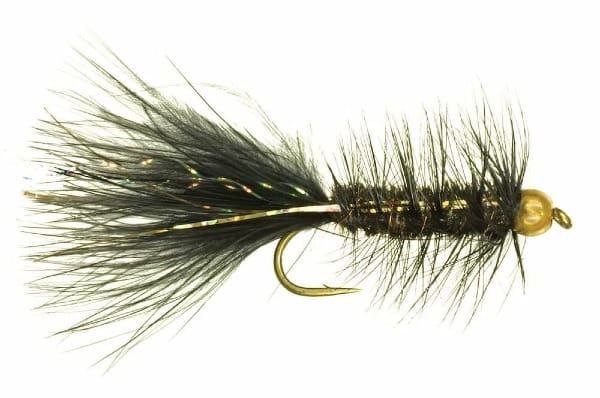
Lately I'm finding that the Kreelex that I wrote about is starting to compete with the crystal flash sparkle bugger for me. Those Kreelexes are really, really cool flies. Do you know the story behind that? I told it in the book.
CFS: Yeah, I saw it in the book, and had read about those maybe last year in George Daniel's Fly Fishing Evolution too, but I didn't realize the story about the chip bag. That's just hilarious.
Riverhorse: Potato chips. The first one was the inside of a potato chip bag. The guy was a 300-pound guy, and he's naked, and he's been skunked for days, in his room, he's probably got some reggae on the radio, who knows what he's been up to. He ties this thing, and names it Kreelex because it's flashy like a Rolex, and there's the chrysalis of that. But I learned about them from Jake Burleson at Umpqua in Colorado. He told me about it and I said, "Send me twelve of the biggest ones you've got." That's what I used in that Minnesota trout piece, and the same thing, Hansi had the same response, he was like "No way," and then he was asking for them.
I have a best friend who's in the book, Larry Pogreba, who builds guitars for really incredible musicians, ands he makes them out of old Cadillac hubcaps and hand-forges everything. He's that same way. There's a John Gierach story, in which they go to one of the famous pay-to-play spring creeks and Larry shows up and uses a saltwater squid and just cleans house, all over. I think it was DePuy's Spring Creek. They're warming up, it's wintertime, and everybody's bemoaning how there's no trout eating, and Larry's like, "I think I got about thirty," and pulls out the squid, and everybody's just like "Whaaaaat?" That's Larry, he's cool. I think he's out of the box, and I'm inspired by people like that.
Speaking of Larry, a crazy story about him is that he and his buddy had a contest where they'd restore old cars from a junkyard, just enough to get them running. They'd find a big old boat car, and just use it for errands, going into town, since they live out in the country. At the time he was in Colorado. And whenever you saw the other friend's junkyard car, you had to run into it a few times to let him know you'd found him.
His wife, Donna, told me this. He had seen his buddy's car parked in front of this really nice Parisian-style breakfast place, people were at this cafe having cortados and coffee and different muffins, and Larry sees the car and says, "I can't believe his car's here, I'm gonna really give it to him this time." So he turns broadside, and he backs up a few times, thirty miles an hour, and he's able to knocks it up onto the curb, really launch it. And the police come from all parts of town and have this big discussion with him. And he says, "No, you can't do anything to me, this is a game we play, there's nothing in your law book about two friends not allowed to smack into each other's cars. You're outta line here, you can't bust me, you can't regulate me." Cops didn't know what to do, but they just asked him to move on. That's a classic Larry story.
There's nothing in your law book about two friends not allowed to smack into each other's cars.
He was friends with Hunter Thompson, and like I said in the book, he'd built that cannon to shoot bowling balls up into the mountains at parties. Yet another unorthodox person who fishes his own way and is really successful, and isn't into the rules of everything. Just like you mentioned punk rock and booking tours. That's what punk rock was to me, not sticking to the mainstream.
4: Forbidden fly
CFS: What about a forbidden fly, one you stay away from, that you're kind of against philosophically or ethically?
Riverhorse: Well, I just think anything double or triple rigs are just baloney. Not fair to the fish. Not ethically cool. Let alone, who wants to cast that? A lot of the joy of fly fishing is the casting, to me. I just love the feel and flow of that. So I disagree on so many levels with those kinds of rigs. And I don't nymph. Nothing wrong with anybody doing their thing. It's so effective, what a way to go. But I'm gonna throw those streamers, or I love hoppers, of course, girdle bugs just running through riffles. I want to have that moment where I feel the fish, I don't want to see a piece of foam or plastic changing depths in the water column. So I'm not into triple or double rigs and nymphing as a whole. And I won't pretend it's not incredibly effective, but I don't agree with it.
I just think anything double or triple rigs are just baloney. Not fair to the fish. Not ethically cool. Let alone, who wants to cast that?
CFS: And setting the hook every five seconds when you're moving through a run isn't a very relaxing way to fish. Maybe things will start moving in a different direction eventually?
Riverhorse: Well, I know I am, and it's almost concerning to me. I care about the fish as creatures, wild creatures, I don't care about catching them as much. I say it in the book: How many fish do you need? Just one. So many days I've been out in these marshes, and on the best of days, not every day, but some days I just find them. We're in these intimate ponds, I can see different fish around, and I already know how the moment's gonna play out. I'll just stop fishing, paddle, and bird watch. It's just not cool to jack up all these fish. Same as in the book, when I find those beautiful brookies in the alpine story. I already know how that moment's gonna play out, I don't need to hook those fish. There's no mystique in that for me.
5: Won't-fish-again fly
CFS: Alright, last one: The "I won't fish again" fly. Is there something you've sent to the Hall of Fame, on the wall or in the headliner of the truck, that did its job and you're just like, "Okay friend, you can go to the great fly box in the sky and not work again," because of the special fish it caught?
Riverhorse: I don't have a fly Hall of Fame or anything like that, but there does happen to be a rabbit-fur fly that Todd Platt gave me, in the Yucatan story ("Yucatán Teeth"). I've never tied anything like that. He had talked me through that whole moment, that giant snook, what I was gonna have to do to wake it up and maybe get that fish to eat.
That fly, afterwards, he sent it to me. And it's in the cupboard by the coffee cups, just sitting there with the leader still on it. I didn't intentionally mean to retire it, but I wouldn't use it anywhere else, just cause I don't fish those environs. That thing's sitting in there. You know, I almost died. We do both feel that was a world-record snook. We guesstimated it at 28 pounds. Who knows what the biggest snook in the world was, but on a little bass rod. Everything that happens in there, that story, having that fly sit there by the coffee cups in my bungalow kitchen cupboard is kind of hilarious to see, and kind of awe inspiring, knowing how close I was to being chewed up by that big ole 24-foot croc.
I almost died. We do both feel that was a world-record snook. We guesstimated it at 28 pounds.
CFS: That was intense. I think that was definitely the most adventure-intense story in the collection. I remember thinking, as I was reading it, what kind of insurance does Todd have, to say to a guest, "Hey, let's go do something incredibly sketchy and dangerous. The last time it happened, it didn't work out."
Riverhorse: Yeah, the first editor, Matt Samet, who's a rock-climbing legend, said it's the most terrifying thing he's read in ages. I was like, "Matt, imagine sitting there in that sinking canoe with 24 feet of monster in the dragon pose, his mouth was so wide open, his eyes were locked to me, Todd freaking out back there." And then to even move the fly rod to make that little roll cast for the tarpon, which I thought might set it off, and he would just plunge down and crunch down on me. What a trip. And there's that fly sitting by the coffee cup.
But that was a bad deal, a bad scene. There's no insurance for that, nobody's gonna bail us out. Todd came to Texas last spring, I hadn't seen him since. It took us three days of talking about it to decompress. We talked about it all day for three days, just kept taking ourselves through the moment. It was really therapeutic.
At the Bellingham, Washington gig, this cool woman showed up, really stylin', she walked up, and said, "I'm so excited to meet you, I'm Todd's mom." I thought, "Todd's mom? What are you doing here?" She said, "Yea, Todd told me about you," and she'd driven from Seattle. She was up in the front row for the reading. And I said "You know what all happened, right?" And she said, "Yeah. That was wild." I said, "Yeah, it must have been something raising that boy." And she just laughed and laughed.
CFS: I feel like we could do this for hours. but that's an amazing way to conclude, with another character, another joyful encounter in the travels of Riverhorse, another connection.
Riverhorse: Yep. Good stuff.
You can follow Riverhorse's adventures through Instagram, or his site. Go say hi, and hear stories from the book at one of his remaining tour dates. And pick up a copy of "Water Lines" and let us know how you like it!