CFS Q&A: How fly fishing therapist Tony Parmenter integrates tenkara and EMDR therapy
For the second installment of our series on fly fishing and mental health, we go deep with a therapist working at the forefront of nature-based therapy
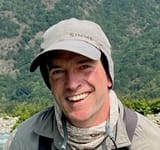
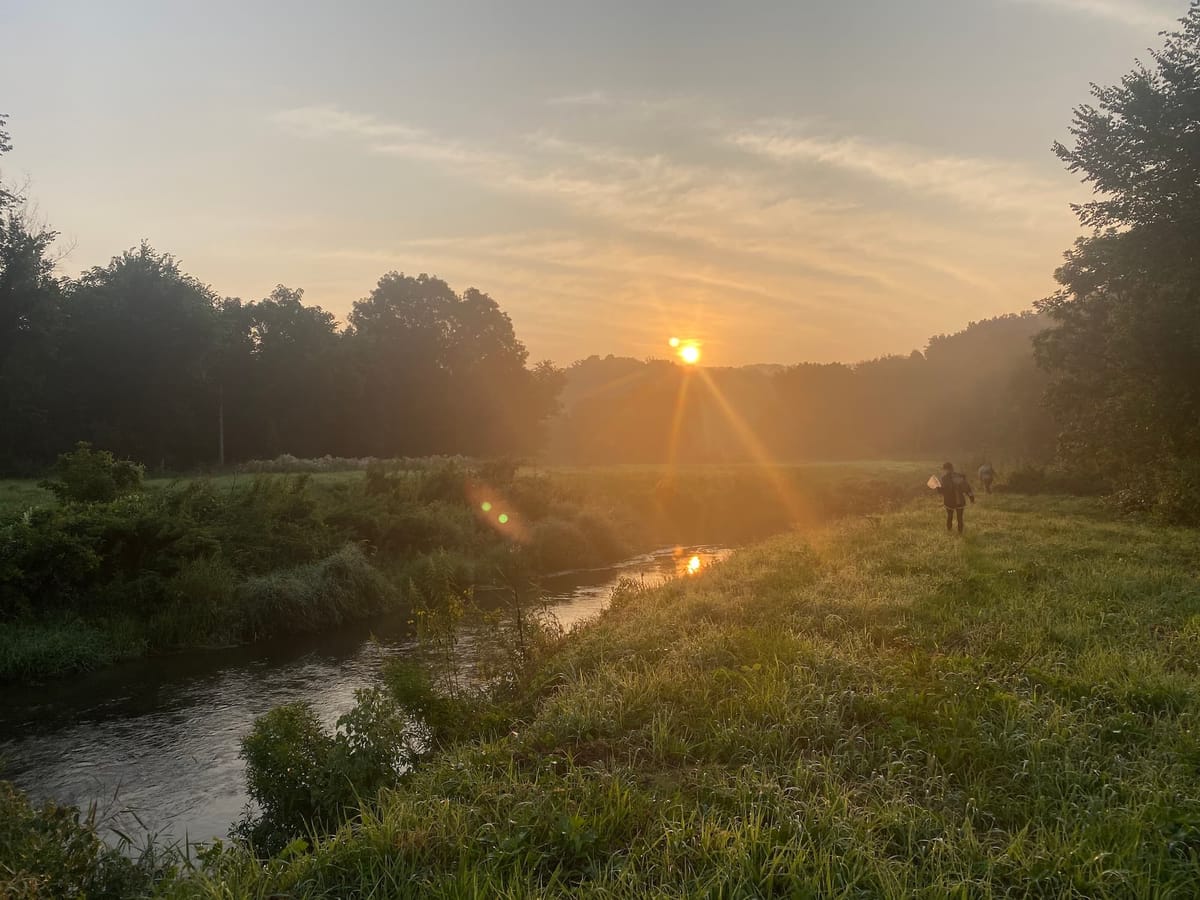
Tony Parmenter is a Vermont-based EMDR therapist who has developed a practice integrating fly fishing—and tenkara in particular—into treatment through his organization, the Seiyu Institute for Health and Training.
I learned about his practice from a therapist I know, who's also a fly angler, and got in touch with him to learn more about how fly fishing factors in to his particular practice of EMDR (Eye Movement Desensitization and Reprocessing) therapy.
Parmenter didn't take up fly fishing until later, as a therapist. But when he did, he recognized its therapeutic potential. He started developing and sharing an applied methodology to use EMDR therapy in fishing.
Practitioners say EMDR is used to help patients re-process trauma outside of a traumatic event, with devices and methods to induce "bilateral stimulation". This essentially pushes the trauma out of the fight-or-flight parts of the brain, into the emotional processing zones, and theoretically help alleviate it. Parmenter wrote about his in a paper published in the Journal of Military and Veterans' Health in early 2022.
Tony's work is at the clinical end of what most of us do intuitively. But the principles he describes—co-regulation casting and nervous system attunement to the healing frequency of moving water—are happening to you every time you wade in. You don't need special tools to benefit. As Tony says: You just need to show up.
In this series on fly fishing and mental health
- Hearing "Fishing is my therapy" bothers me
- What the research actually says
- Inside a fly fishing therapy session (we're here)
- Why tying flies is good for your brain (up next)
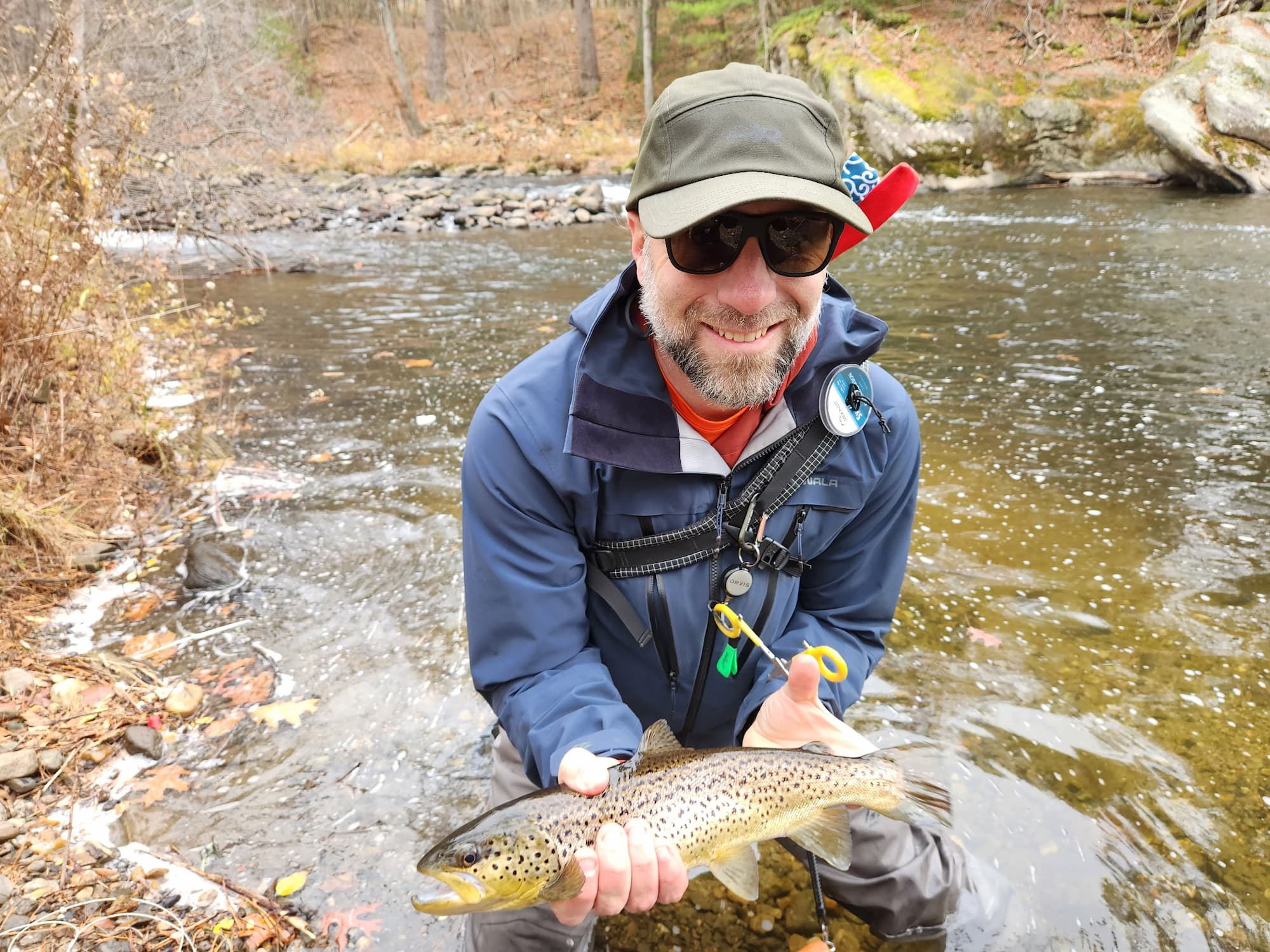
Hi Tony! How did you first get involved with fly fishing?
I stumbled into it twice. The first time I didn't even know what it was. I went camping in Japan with some friends and we went to this fishing campground. It was really lame. Very manufactured. They came and dumped the fish in. But I was fishing with just a rod and a fly on it. I didn't have a name for it at the time, but it was tenkara.
The second time was working in a mental health program, about 15 or 16 years ago. I was there both before and after I became a therapist. One of our staff members was a guide, and we were doing mindfulness-based work with police, fire, and veterans. He came up with fly fishing as a way to make that work accessible to them. (It has to look like what guys do, you know?) So in 2014, that's when I actually learned to fly fish. And then I left that job, COVID happened, and I was going crazy needing to get outside. So I finally got my own gear and got back out.
So I had both things running in parallel: I was doing psychotherapy with clients, and I was learning to fly fish in the context of mindfulness work with vets. And then later, after I learned EMDR therapy, at some point standing there casting, I thought: What I'm doing right now looks a lot like one of the core things we do in EMDR. And the question became, Why can't I just do that?
How did tenkara become part of the effort?
I was getting back into fishing and practicing these weird casting styles on my own, bow-and-arrow casts, things like that. A friend watched me and said, "That's actually a thing, you should look it up." So I did. I got a tenkara rod and immediately it answered all my questions about how to make fly fishing work better for therapy.
People come into therapy already carrying a lot of self-doubt. They feel bad about themselves. They get frustrated easily. The last thing you want is a big learning curve getting in the way of the work. The reel, all that line, it creates friction, and that friction becomes another reason for someone to feel like they're failing. Taking the reel out of the equation removes a whole layer of that. It lets the therapy happen.
"The last thing you want is a big learning curve getting in the way of the work."
I teach my trainings using tenkara first, specifically because of the lower barrier. If someone is brand new to fly fishing and doing this as a therapist, I want as few obstacles as possible between them and the work. A lot of people have gone back to their five-weights afterward and that's completely fine. But starting with tenkara lets everyone, beginner or experienced, understand what a lower-barrier approach to this work can look like.
There's also a personal dimension for me. I lived near the mountains in Japan for a period of time, spent a lot of time in those streams. And when I started fishing tenkara here I felt reconnected to something that had been spiritually meaningful to me there. The simplicity of it kept bringing me back. So I tend toward tenkara not just for therapeutic reasons but because it feels very personal.
The tenkara community has been part of it too. There's a bro-culture drift that's happened in mainstream fly fishing. I think a lot of people have noticed it and felt less at home. The tenkara community is smaller, newer, and hasn't gone there yet. It's been very tight and supportive of this kind of work in a way I'm really grateful for.
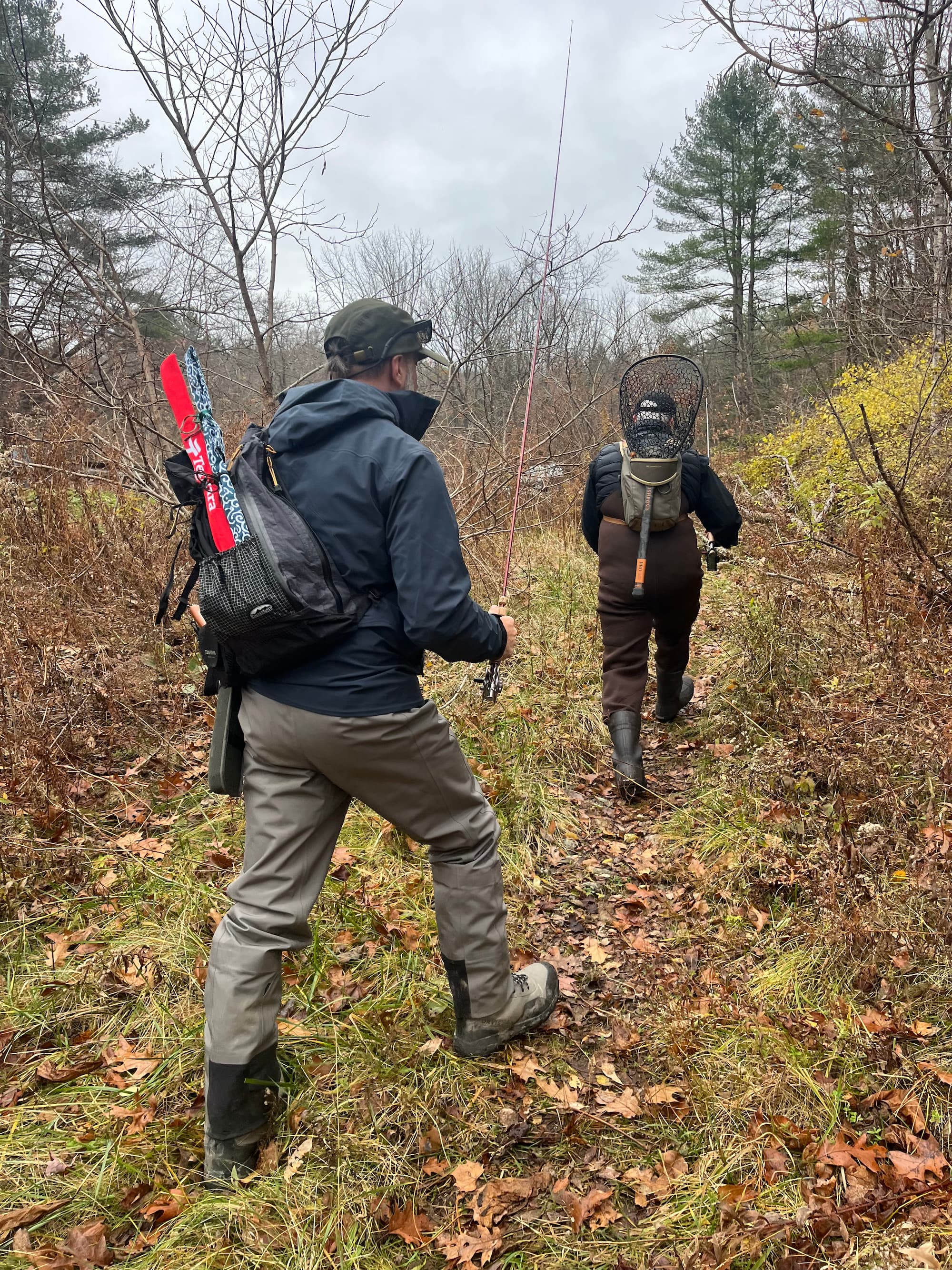
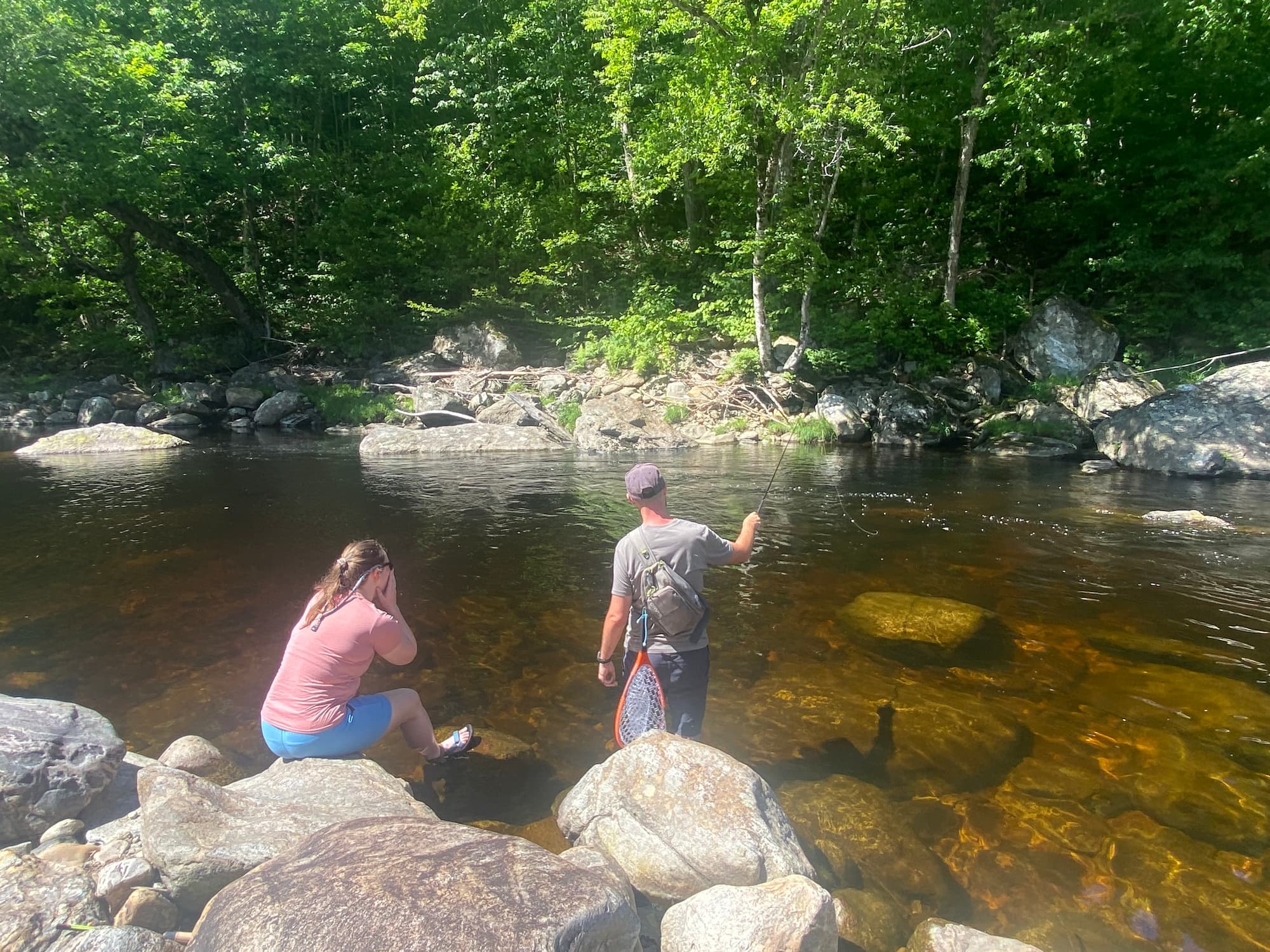
📷 courtesy Tony Parmenter
Can you take us inside the moment of making the connection between fly fishing and EMDR?
It started on the water recognizing casting has a bilateral quality to it, a back-and-forth physical movement that mirrors what we do in the therapy room. I started experimenting. I wrote it down as I went, and it eventually became a paper. That was published a couple of years in, and a lot has developed since then.
At the time, the paper was really about using fly fishing to facilitate the traditional EMDR process. But my thinking has evolved. Now it's less about the specific mechanics of fly fishing as a delivery system for bilateral stimulation, and more about the environment itself: Being in a place where healing can naturally happen, and then using everything that occurs while fishing as material to support and reinforce the process. The fish, the trees, the eagles overhead, anything can become a metaphor or an anchor.
Can you describe for a layperson what happens in our brains when EMDR takes place?
EMDR uses eye movements and physical movements, we call them bilateral stimulation. They do a couple of things. One is to stimulate the left and right hemispheres of the brain, your left brain controls your right side, and vice versa.
"When we're doing EMDR, we're first trying to let the brain talk to itself."
One reason we use back-and-forth physical movement is so the left and right brain will talk to each other. Trauma information, fight-or-flight, get out of here as fast as you can, is a predominantly left-brain process. Your creative centers, your emotional centers, they get sidelined, because you don't need to be creative or fully feeling your emotions to escape a threat. So when we're doing EMDR, we're first trying to let the brain talk to itself. You're also doing something physical, which keeps you grounded in the present moment.
Staying present matters because in EMDR we're bringing up something from a person's past. What the body remembers—when something in the environment triggers it—isn't processed the way ordinary memory is. If you and I are talking about something from 30 years ago, we know it happened 30 years ago and we can laugh about it. We have distance. But when a traumatic memory is triggered, the body reacts as if it's happening right now.
So in EMDR we bring in some components of that memory. We don't want the person to re-experience it. But we bring in enough that the body surfaces it from long-term memory into the present. And then we want the person to free-associate in a way that lets healthier material integrate with it. The therapist's role is to keep that process contained, and on a pathway—not letting it scatter in every direction—so that at the end, the person has not only integrated that old material with new, also-true information, but their body also feels more grounded, their anxiety has lowered, and the thing that felt so dangerous feels less so.
When you take that outside, a lot changes. Your five senses are doing grounding work constantly and automatically. And this is where it gets into science: There's a significant body of research on how different sound frequencies affect the nervous system. Low-frequency sounds trigger fight-or-flight: That's the frequency of predators. Mid-to-high frequency sounds signal safety: That's the frequency of human communication. This is the core of polyvagal theory.
The sound of moving water in a place where you'd go fly fishing falls within that same mid-range frequency as human voices. There are medical tools that use sound specifically to help regulate the nervous system and lower a person's baseline arousal. That's essentially what standing beside a trout stream is doing to your body, whether you know it or not.
"The sound of moving water in a place where you'd go fly fishing falls within the same mid-range frequency as human voices."
I didn't know any of this when I wrote the paper. But it's become central to how I think about this work now. The environment itself creates the conditions for healing. Whatever you're doing while you're in it—fly fishing, tenkara, hiking, anything—that activity supports and extends the process. And then everything that happens—how a person responds when they catch a fish, whether they feel compassion when they release it, what they notice in the trees—all of it becomes material you can use.
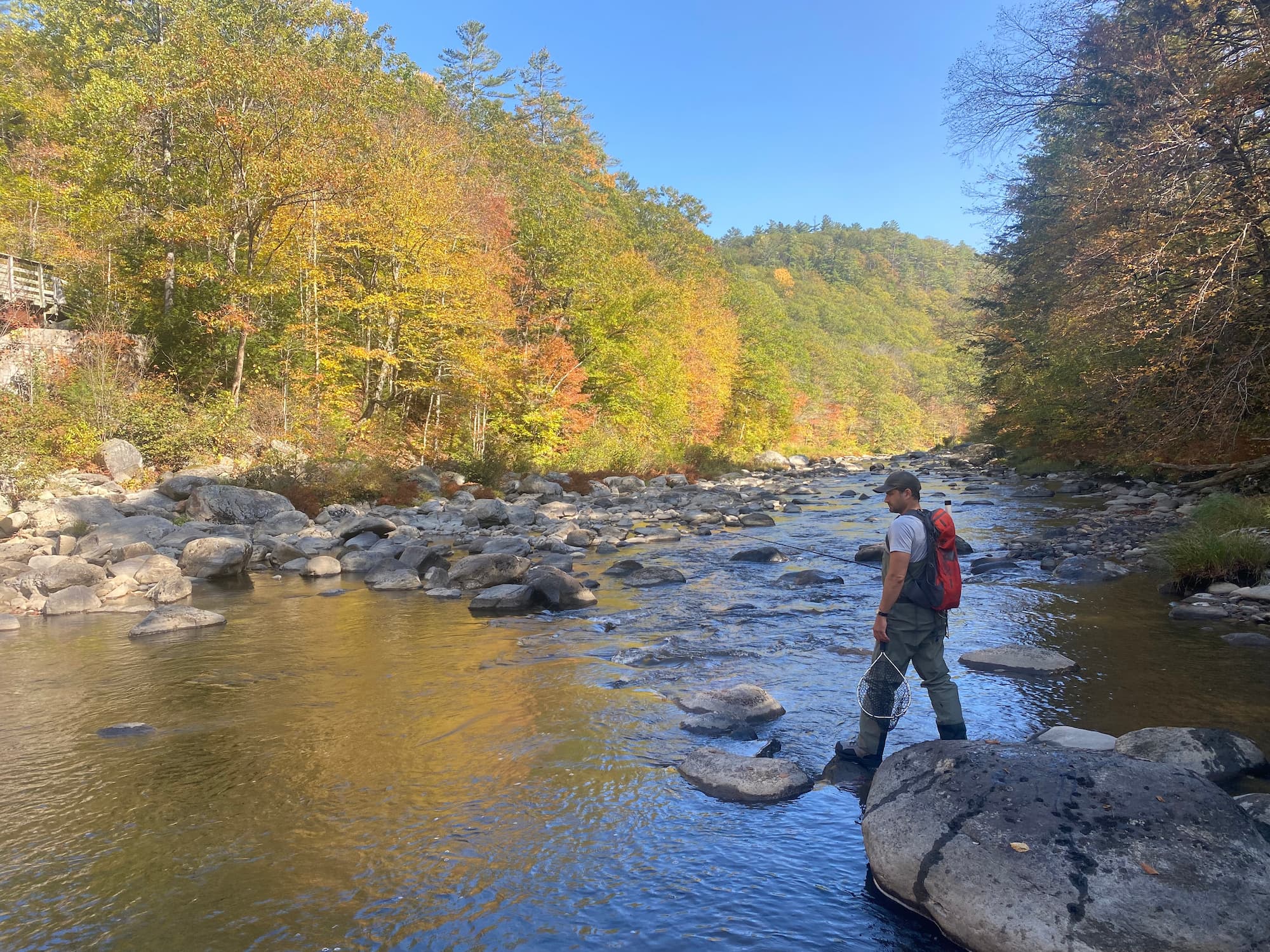
📷 courtesy Tony Parmenter
You mention surfacing already-known traumatic memories. What does the preparation, identifying those memories, etc. look like before you ever get to the river with a client? How long do you need to be working together before you go fish?
Every therapist will do this differently. Some therapists want to get a timeline during history-taking but it's really just the intake and getting to know a client.
I don't do it that way. My initial training in EMDR was within the framework of learning how to work with complex trauma, and when you're working with complex trauma, most of the time the body can't tell a story like that. The parts of the story the body can tell are the parts it's always been able to tell. The body has determined that's its shield to explain what happened. The rest of it, we don't want to get hurt again, we're not going to experience that. So oftentimes the person won't be able to tell their whole story, because they might not know it.
I try not to work against that. When you're doing therapy for complex trauma with EMDR, you start from the bottom up; not necessarily with the information the person already knows about, but more with the body. You do a lot of work with the nervous system, with the parts of a person that maybe weren't developed because of growing up in a chaotic household, where parents weren't attuned to them, or it was abusive. So maybe they didn't grow up knowing what calm feels like, or what nurturing feels like.
It's like if your parents never taught you how to use a spoon. If you're Mowgli, and you grew up in the woods, you ate like an animal. You're not gonna know how to use a spoon; you won't even know what that word is. So how can you be expected to go to a dinner party when you get brought to the city? The same way, when kids grow up not being shown how to be nurtured through experience, not being given an environment to understand calm, when they become an adult, their body still might not know how to do those things, or has learned to accommodate around them. That's why people sometimes develop addictions, or personality issues, codependency. Their body is compensating, trying to fill those holes.
So in the beginning of EMDR therapy for complex trauma, you're actually starting to help the person experience a calm state on their own. You're working with the nervous system to lower their baseline, which is probably set at very high arousal—very much looking out for danger—so that the body, in a sense, will trust you as the therapist to do the work.
The trauma they know about probably isn't where it started. There's probably something earlier. So we're going to start with just the body experiencing calm, and by the time we do that, when we get to the river, they've probably already told me what they want to work on. And it's usually not so much the traumatic event itself. That event is important, but the reason they want to address it is because it's affecting their life right now. So we start with like How are you experiencing life right now? How is that troublesome? And what do you want to be different?
They might reflect it back to something like, I was sexually abused, or I was in Iraq and a bomb exploded and now I can't sit in a restaurant. But the reality is the way it shows up in their life: I can't have intimacy with my partner, I've got hypervigilance all the time.
By the time we get to the river they're usually primed to go backwards. You fall back to find a memory that may be associated with the present, maybe somewhere you didn't know about, an event you weren't always thinking about.
I had a client once who had left her husband, but the person who helped her out of that relationship turned out to be a serious narcissist who coerced her out, even though she wanted to leave anyway. We worked together to build her capacity to leave that person. She left, but still felt a lot of pain trying to set boundaries with him.
When we looked at how that wound was showing up and went back as far as we could, we ended up at a memory of her being three years old, coming back to the playground where she'd left her doll, and finding that some other kids had destroyed it. It doesn't necessarily line up with the story she knew about, but that was the original wound that never healed. We healed that, and she was able to never speak to him again. She got a new job, went back to school, and within a month all of these things had shifted.
What does this actually look like on the water? In your paper you describe a specific "ships passing in the night" stance where therapist and client are positioned in a certain way. When I picture a guide and an angler on the water, I'm imagining a lot of active coaching: Set the hook, cast here. What's actually being conveyed between the angler and the therapist out there?
In regular EMDR therapy in the office, you'd be sitting here, I'd be here. If I'm doing eye movements, I want to be out of your view so I don't distract you. I'm off to the side, moving my fingers so you can move your eyes. I'm staying as far out of the way as I can. On the water, if I'm standing next to someone I'm either getting hit with the rod or I'm in their way, so I've got to stand some distance away.
That's how I started, because I wanted to watch the body language. But clients would often ask me to just fish with them. Either the watching wasn't comfortable, or they just wanted company. So I'd go downstream and watch while casting upstream, or go upstream and watch down.
There's something in polyvagal theory called co-regulation: My nervous system is in a safe, regulated state, and that influences yours through a process called neuroception. I could feel the shift between me and my client even when I was 30 feet away fishing. I call that co-regulation casting; it's something I teach.
A big difference between doing EMDR on the water versus in the office is there's far less speaking. Most of the time, once we get to that point, we might go 15 minutes without saying anything. I'll fish for a bit, pay attention to them, then slowly make my way over and check in. But way less formally than in the office. In the office you'd say something like, "What's showing up for you now?" Out there I'm just like, "Hey man, how you doing?" Keeping it buddy talk-ish. We're outside, it already has that relaxed feeling. If they hook a fish or get stuck, I'm there to help. But honestly, the point's not to catch the fish.
"The whole point of being out here is for what you get from fishing. If we catch a fish, great. We're just going to do this together."
I will help with a fish if one is caught, but my goal isn't to help them catch fish. If they catch one, that's a welcome experience. We'll use it as a metaphor, check in with how they feel toward the fish. But I describe it to people this way: The whole point of being out here is for what you get from fishing. If we catch a fish, great. We're just going to do this together.
How frequently does this kind of work happen? Most people think of therapy as a weekly appointment. Is this practiced that way, or do people come for extended immersive stretches?
For me, as often as anybody wants to do it. I'd rather be outside in the summer. Everyone I know who does this has their own approach. In the summer I have clients who come every week and we fish together. This year I'm going to be doing some groups.
I have a truck with a big backseat that serves as my mobile office. If I don't have a fishing client, I'm in the backseat seeing virtual clients. This year I have a Casita I'm going to park at a state park near me that sits on a trout river, so if it's raining people can go inside. I sometimes do all-day appointments.
Other practitioners have different models. I know someone in Illinois who lives in farmland (warm water, no trout rivers) but they have a pond out back and incorporate fishing into three-hour sessions with hiking. Someone in Wyoming hikes up a mountain and fishes with people, and in the winter does cross-country skiing. You can incorporate EMDR with almost any nature-based activity. When I train people I let them know: We're using fly fishing as a very direct entry point into nature-based therapy, but you can apply these principles to almost anything.
Once a client has worked with you, are they able to bring that same practice of awareness to their own fishing afterward without you?
I hope people can take this home, that's the whole point. They're practicing nervous system regulation. In the therapy session we're adding in trauma processing. They shouldn't be going home and trying to process their trauma on their own. What they are doing is learning through experience how fly fishing and being outside helps regulate their nervous system.
What kind of response have you seen from the broader EMDR community?
Most people are pretty positive: "I never thought of doing that," or "that's such a great way to do EMDR." EMDR therapists tend to be the weird therapists, always looking for creative ways to practice, so I've been pretty encouraged.
The only times therapists have struggled with what I'm doing is when they think about me using animals to heal trauma, and potentially traumatizing the fish. Usually they don't fish, so I have to explain what it's all about: How we treat the fish, the use of barbless hooks, the conservation ethic behind fishing. I still wrestle with it myself, honestly. Philosophically I think like a Buddhist. I care about animals. I've had people come through trainings who didn't want to use a hook at all, so we found ways to fish without piercing the fish. You can play with fish on a hookless fly. They'll still bite it, and they get off. It's really not about catching the fish.
I actually know an EMDR therapist down in the Appalachians—Tennessee or Georgia—who takes tiny pine cones and treats them like mouse flies. He ties a piece of string on the end and fishes for brook trout with them. They'll bite on the pinecone and get off. Because of the shape, you can sometimes even lift them out of the water. You don't have to pierce the fish at all.
Can you quantify outcomes at all? Do you see better results with nature-based EMDR compared to in-office work?
I observe it rather than research it. I observe that there are better results, but I can't quantify it. What I notice is that when I go outside with people, they get through things much faster. If it's been taking a long time in the office, once we go outside it just doesn't take long to resolve what we're working through.
It would be fun to research. EMDR already has a ton of research behind it. I've reached out to colleagues and gone down the research path a couple of times, but it's been difficult to find someone at a university willing to take it on. For me, I'm just treating this as EMDR done in a different place.
For someone who can't access this kind of therapy, are there things they could bring to their own fishing right now?
I think the most important thing is just getting there. This comes from polyvagal theory. Just being at the water with the consistent rushing sound at that mid-frequency forces your nervous system into a regulated state. Just showing up is one of the most important things you can do, whether you're in the water or just sitting beside it.
"Just showing up is one of the most important things you can do."
When you're fishing, try to fish with the intention of just being there. People sometimes fish really tactically, and that might be right for them. But to be more calming for the nervous system, try letting go of expectations, being present, noticing the water and the trees. Let your five senses be open. Practice letting go of other thoughts, which I think naturally happens to a lot of us out there; we just forget about our problems because we're present.
It almost feels like the advice is: Do what a lot of people already do when they fish, but take it a little slower. Approach the water slower. Really plug in, so your body can soak it all in, rather than being stuck in your head and only seeing what's right in front of you.
What we're talking about, doing EMDR as fly fishing, sounds technical, but really for the most part I'm just helping a person experience something slow on the water so their body can be in a healthy state. Then when it comes time to work on whatever we're working on, they're already ready. It's almost like they just do it on their own.
Tony's observation about co-regulation—that a regulated nervous system nearby influences your own nervous system—works even without a therapist. Fish with someone whose presence feels calm.
Are you working on more research or writing, or are you focused on training right now?
Mostly training at this point. I like helping people learn. I did a couple of one-person trainings last year and we fished outside together for two days straight. That was really satisfying. I could give so much more attention than in a larger group.
I've got one training scheduled for this summer in Colorado and one in Vermont in September. I'm also set up in Vermont to accept grant funding through a nonprofit that funds career advancement education. They approved my course, meaning therapists in Vermont can potentially get the whole thing paid for. Almost any new therapist whose income was low two years ago while in school would qualify. I'm hoping to train a lot of new folks, especially people working for community agencies.
There's also a brand new retreat center in Maine that's offered me basically free space for trainings or retreats. I'm hoping to organize some veteran retreats up there in the fall.
Thanks Tony!
You can get in touch with Tony and the Seiyu Institute via its website or Instagram
Tony is actively training practitioners to bring this healing work to more people. If you know someone who might benefit from his efforts, or want to share this piece with someone who needs permission to take their fishing seriously, this is worth forwarding!
Feel the flow this May in Maupin
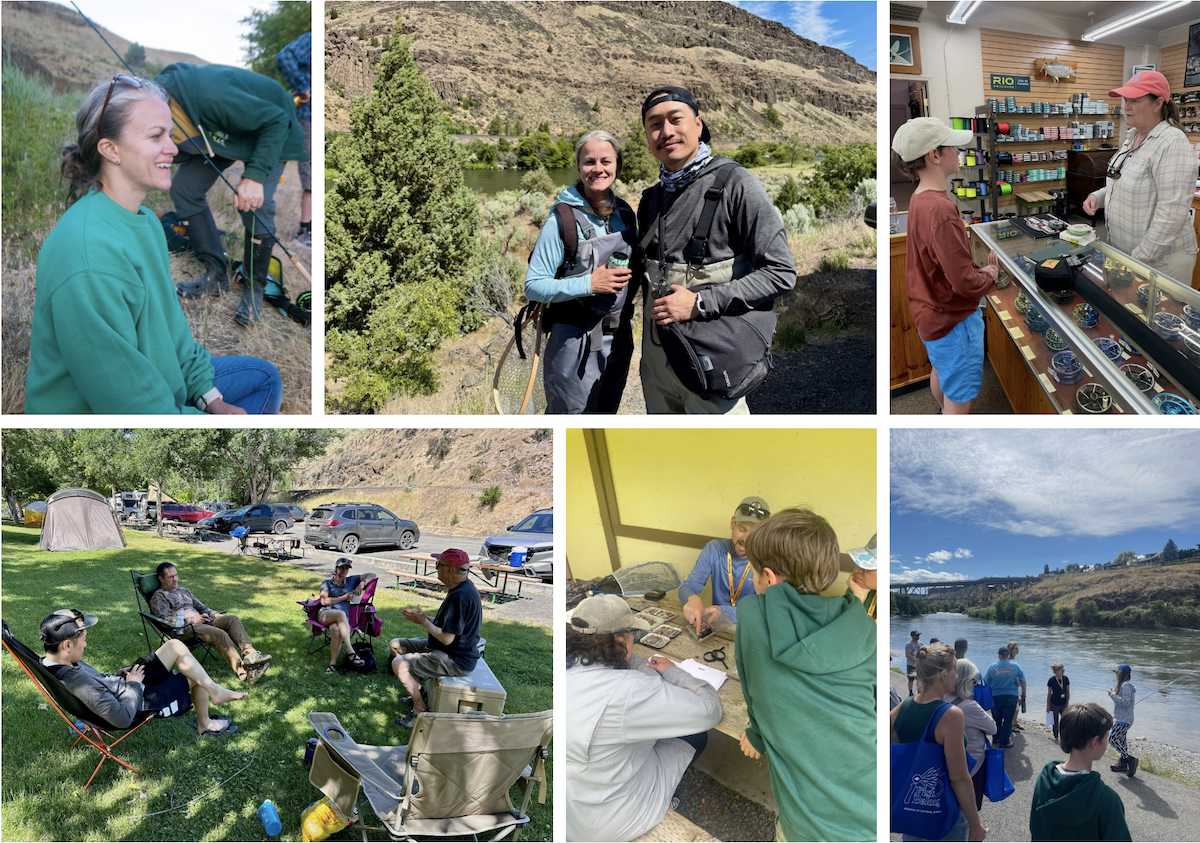
Spend some river time with the CFS crew
The salmonfly hatch and all the beauty of late spring in the high desert will be upon us soon. Join CFS May 28-31 in Maupin, Oregon, for some classic big bug fishing and the DRA's TroutFest celebration.