CFS Q&A: Rewiring our brains with animal migrations
Take a peek inside the Live Migrations project with creator Tucker Malarkey and discover how it's convening livestream audiences around a digital campfire to help them reconnect with natural rhythms.
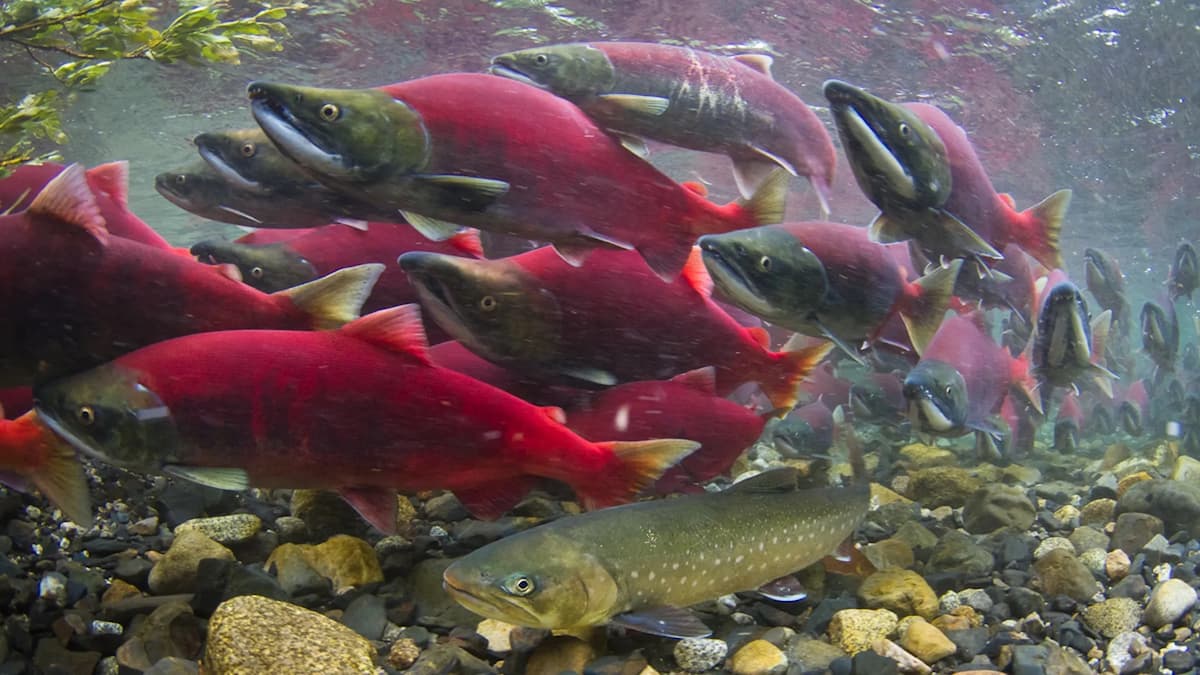
What if we had a front seat view of the world's great migrations, as species moved across the earth, driven by the most primal forces? Would it help us reconnect parts of ourselves that have been pushed aside by modern live? Those are just some of the big questions posed by Live Migrations, a new initiative launching last week with a livestream taking viewers inside this year's Bristol Bay sockeye salmon run in Alaska.
Part slow television (inspired by Sweden's Great Moose Migration), part conservation mission, Live Migrations joins efforts as varied as Cornell Lab's Bird Cast and the Katamai Conservancy's Fat Bear Week in making the natural rhythms of wild creatures more vivid for folks watching from afar. If you've ever spent time watching fish spawning on a redd, or salmon moving up a stream, you know it's uniquely captivating. Live Migrations is attempting to transmit that same magic across a broader array of species, to anyone with an internet connection.
Live Migrations was created by bestselling author and producer Tucker Malarkey, alongside director of photography Jason S. Ching and eleven-time Emmy Award-winning executive producer David E. Kelley.
I first became aware of Malarkey's work when I read her book Stronghold: One Man's Quest to Save the World's Wild Salmon, a biography of adventurer and conservationist Guido Rahr, who founded the Wild Salmon Center. She was cool enough to jump into a conversation with me after arriving home from Alaska. Our conversation has been lightly condensed for clarity.
CFS: Migrating creatures. We've been captivated by them as a species for so long, and they've always been a big topic in nature documentaries. What was it about right now that made you want to initiate this?
Tucker Malarkey: In April, a friend in Sweden sent me a link to the Great Swedish Moose Migration and I immediately clicked on it because I thought, how fabulous. At first, there was nothing happening—just some water on a river, sunlight on a river, a patch of ice, and a duck—but I was captivated. I was thinking, this is happening in Sweden, now, in realtime, and these moose are migrating. I saw some moose later, but even before that I felt a shift in my nervous system.
Our brains are in a certain mode with screens. It's not rest and restoration, it's kind of high-output stress, fight or flight. Watching that migration brought me back down. It slowed my brain down, and it felt good. That night I thought, "This country needs this." Then I found out there are 10 million viewers of the Swedish moose migration worldwide.
A live migration is special because it's like a sports event: It has a beginning, middle, and end, and there's drama. When you put up cameras with no human interference, you don't know what's going to happen. There's no AI manipulation, no editing. It was perfectly imperfect. You saw the bear come and smash the camera off angle—of course we corrected it—and that's all fun for viewers. Because there's no narration and no packaged story, people are making their own narrative. They're invited in, and they're curious: What are the salmon doing, scuttling around in the sand? Why are they opening their mouths? Why are they red? All these questions.
CFS: In the fly fishing filmmaking world, it feels like we're at an apex moment where everything is very Michael Bay: Overproduced, smash cuts of the cooler, the outboard motor, the line ripping off the reel, all super stylized. One of my big critiques of the Fly Fishing Film Tour this year was that the films were all just too loud and too fast. What I love about a livestream is the idea that you are on a screen, which isn't itself neutral, it's got all these emotional and technological gimmicks built in, which push filmmakers toward the maximalist, and nullify those tricks just by letting soothing thing that's happening out in the world we're all living on unfold. There's something really poetic about that.
Tucker Malarkey: I think we've had enough of highlight reels. You get desensitized. And now anyone can make gorgeous, beautiful images, but you don't know if they're real or not. With a livestream, you know it's real. There's something about the sounds—the gulls, the wind in the trees, the bears splashing in the water—that adds this total sensory element and activates our brains differently. You think, something could happen here that might surprise me. A wolf showed up, and it's so rare to see wolves, and it was with our cameras all day. At one point it came up to the camera and did a downward dog right in front of it. It was wonderful, and on our chat, people were so into it. There's been no snarkiness in our chat, just love and gratitude.
CFS: I saw this audience behavior in your livestreams, and in other nature livestreams I've watched in the past, where people started to develop little friendships. They're like, "Hey, I'm back, just got a banana for breakfast, here we go. How's our old friend Wolfie today?" Or, "Not so many salmon today, how's the weather by you?" People are socializing in really interesting ways in those spaces, around the main event of these animals.
Tucker Malarkey: It's almost like a campfire. People are like, "Hey, good morning"—there are a lot of viewers from Sweden—and one of them said, "Thank you so much, you filled a moose-shaped hole in my heart," because they missed their moose migration. I was monitoring the chat, and we were able to ask questions and interact, and it was fun for everyone—including the filmmakers, who are amazing. These filmmakers do a lot of very remote wilderness work, and a lot of their work they don't see until three years later, with a very select audience, where some local community sees it. For them to get immediate feedback, they were high as kites.
People love it. We're involving locals, and we have an educational branch. UCLA and Clemson University are doing studies, and ran the livestream on campus with a prompt asking students to slow down for a minute and watch, then scan a QR code to fill out a questionnaire asking if they felt calmer or changed.
The natural world is fascinating, beautiful, intelligent, interconnected, and we're a part of it!
There's a whole new discipline popping up called ecological medicine. I think a lot of people take it for granted that you feel better in nature, but a lot of modern life doesn't really allow for that. Our connection, that awareness, is fraying. Most people don't know salmon off a menu, to be honest. It's sad, because the natural world is fascinating, beautiful, intelligent, interconnected, and we're a part of it! We actually need the same things the natural world needs. A salmon needs cold, clear, connected water, and we need similar things: Connection with people, connection with ourselves, connection with the planet. I feel like this is a stealth way in for people to have connection with the planet, a kind of an invitation.
 Nick Parish
CFS: Growing up on David Attenborough or National Geographic, you'd learn at the end, in the behind the scenes, that they had to wait six months to get that photo or that video. But now we have wireless trail cams. In the same way that dash cams on cars created an entirely rich new vein of funny internet videos, because of how wild day-to-day life is, I wonder if there's a similar metaphor for trail cams, these small, portable, long-battery-life cameras that can expose parts of the natural world that were still very hidden. Which leads to the actual question: What feels different now, technically speaking, that makes this more possible? Is it smaller cameras, is it battery life, is it satellite connectivity to get that footage out immediately as it's happening?
Tucker Malarkey: Starlink was huge. Batteries are still complicated. We had to haul massive batteries up there and change them out every day and a half, which was tricky for the crew. We had a few underwater cameras and above-ground cameras, and a drone. The drone footage popped in the last day and a half, it was phenomenal. We saw seals chasing the fish as they scurried away, making these incredible patterns in that clear water.
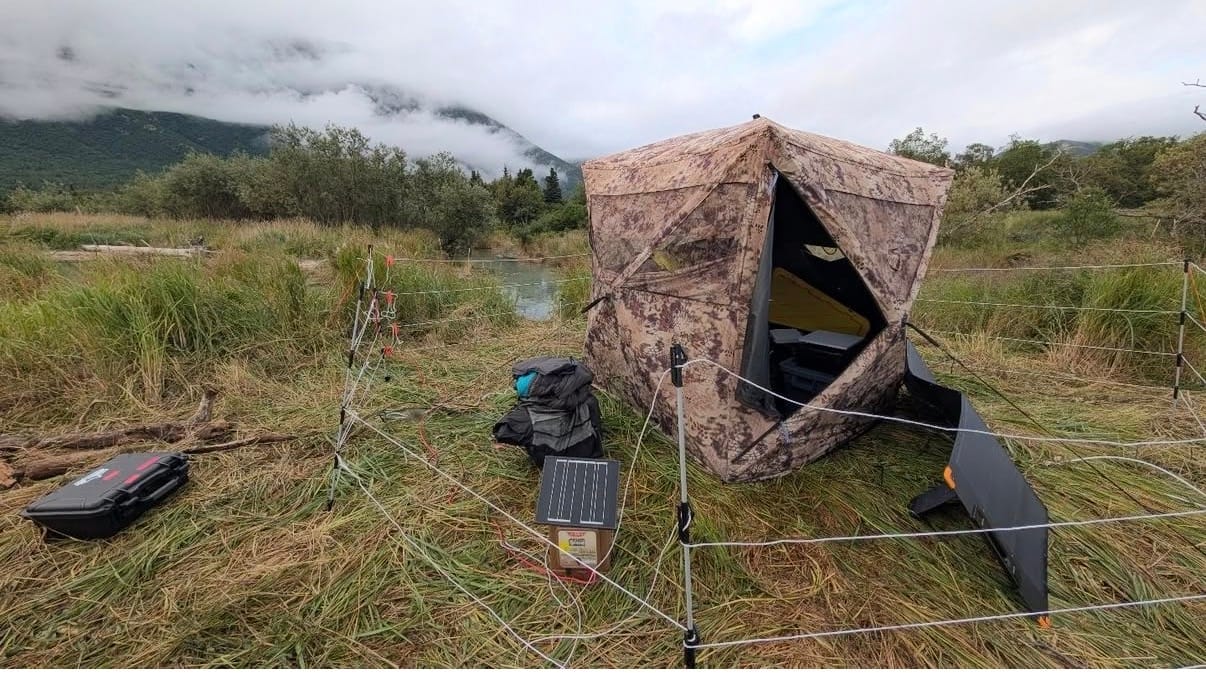
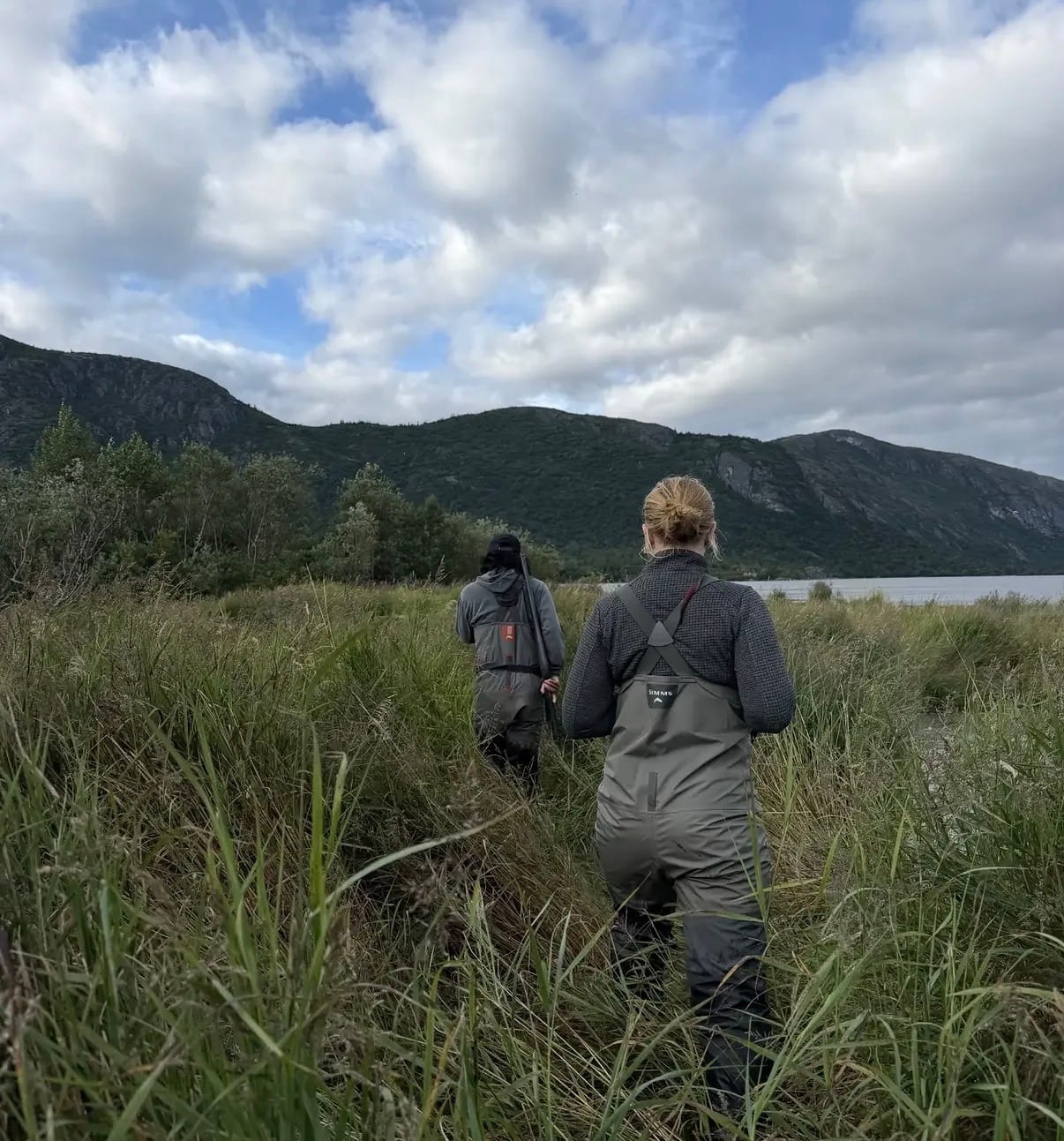
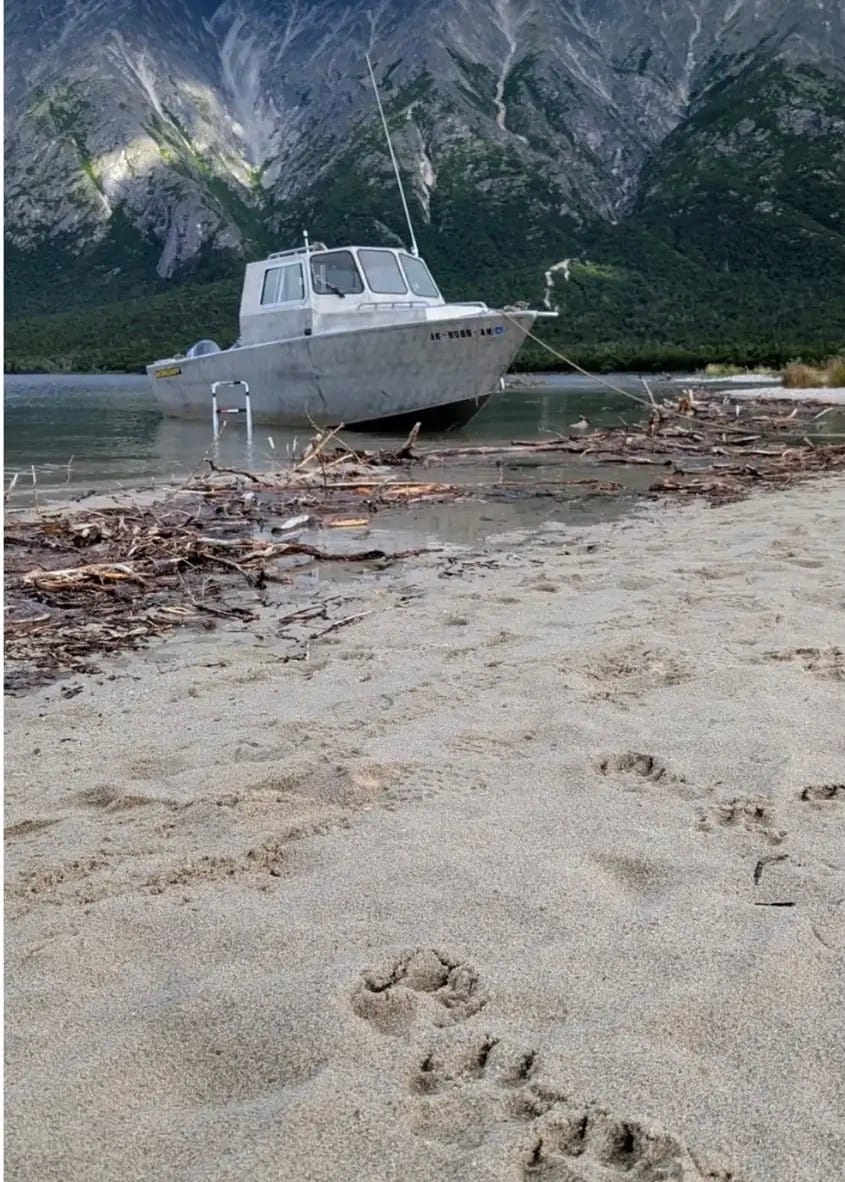
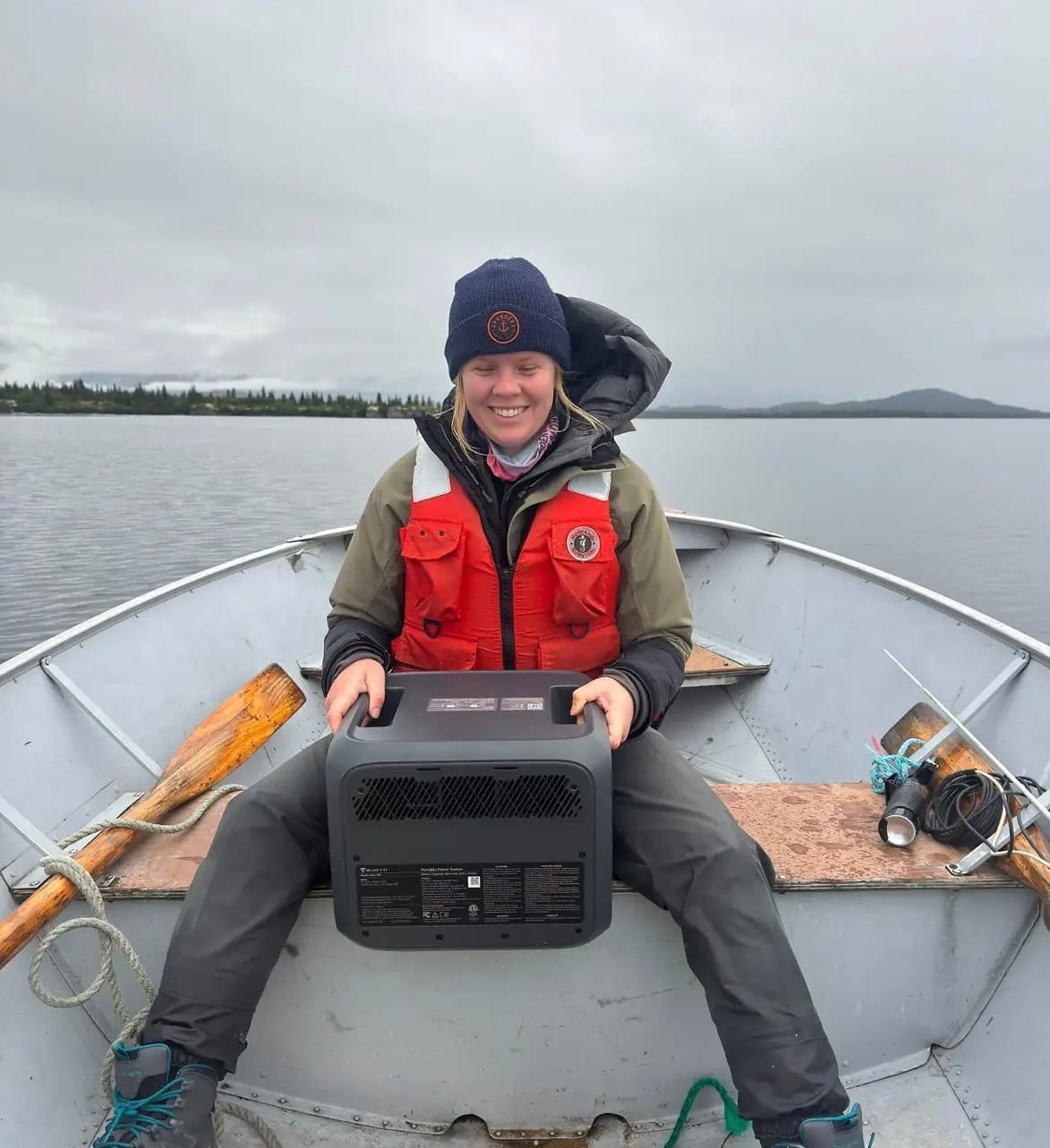
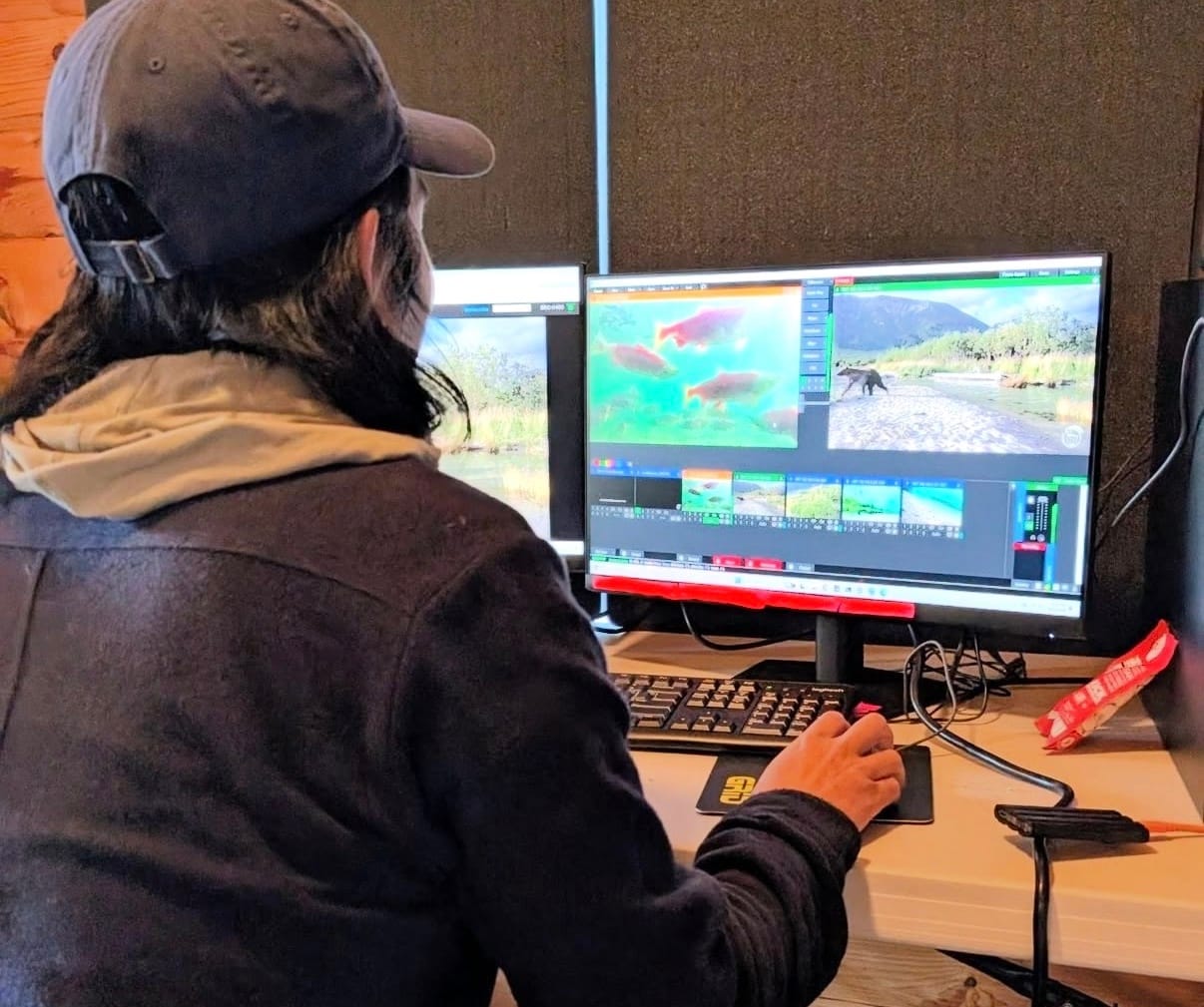
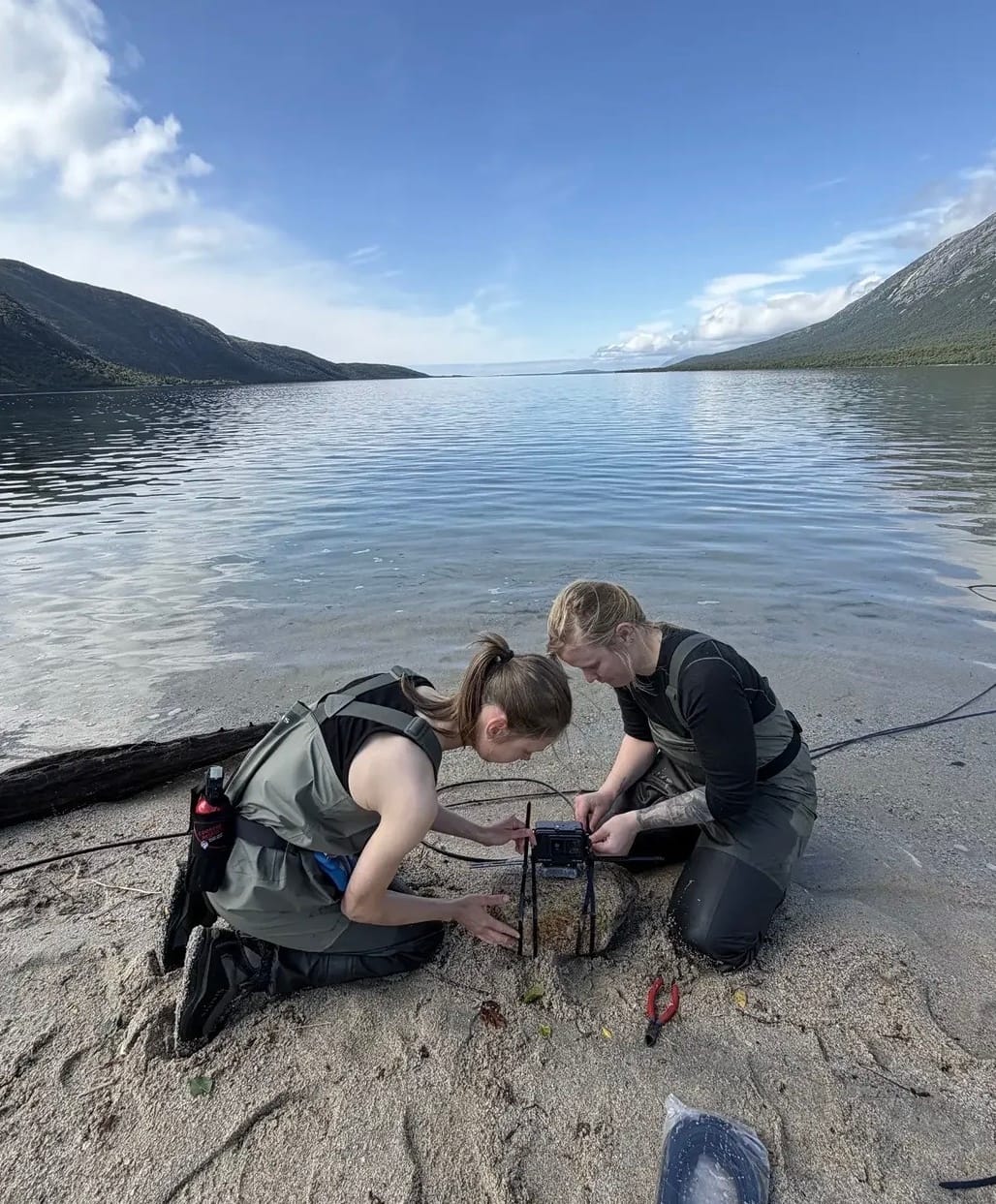
The Live Migrations crew at work in the field | 📷 by Jason S Ching, Erin Ranney, Jackie Stearns, and Janne Bruhns
CFS: Going back to audience stuff, we're in a post-TV world now. Entertainment is 24/7, 365, and migrations certainly don't conform to prime time, even in a world where prime time still existed. The Swedes had their moose, the Norwegians had their super-long train journey , the original slow TV program. The fact that those aired on their national broadcaster is super cool. But they're culturally very different than the US. How are you thinking about aligning people's behaviors and habits with animal schedules, and packaging materials so people are enticed to tune in to the livestreams?
Tucker Malarkey: My first vision was to get a major news platform interested, and The New York Times almost took it. Next year we're going to talk to them about streaming for a week. I'm super interested in preaching to the unconverted, the people who have never seen something like this. Second-screening is also a huge thing for people. Schools, like in Sweden, have these screens on in the background in offices, senior centers, and schools. It has a calming effect, and the human mind just watches because it's still wired to it. In a way, it doesn't demand your attention. It's not like a Netflix show where you have to follow the plot.
It's definitely word of mouth. There are a lot of people who just love this stuff anyway, but I think getting the word out with younger people is key. The young people I've talked to about this say, 'Oh my god, we need this so badly, I'm so in.' You'd think they'd say 'No way,' but they're like, 'Bring it.' We're exploring airports in the Pacific Northwest, that kind of thing, which would be cool.
We started an Instagram account two weeks ago and already have more than twelve thousand followers, which is kind of crazy for that amount of time. People are definitely tuning in, and we have a bit of a brand with our visuals, because our director of photography, Jason S. Ching, is a magician. He's a science researcher who really knows this space and was able to tell a story with just the camera positioning.
It has a calming effect, and the human mind just watches because it's still wired to it.
Sockeye are the only salmon species that spawn in still water, so they gather in these ponds and pools in Bristol Bay, which is literally full of them. About 60 million sockeye come home to this region, back to their natal streams. They pool in lakes and gather before they go up the stream, pair off, and spawn. We filmed them at different stages during the migration, so you could tell whether they were coupling off or still schooling in the lake, and also watch the predators pouncing on them. It's not just having a live cam; we were moving the cameras remotely from a research station a 15-minute boat ride away, monitoring the screens and rotating for action, keeping it moving, not letting it sit on one thing all day.
We also have extended views on our YouTube channel and our website, and highlight reels. We're going to have wolf highlights, that kind of thing, because there's an enormous versatility to the assets once the livestreaming is over.
CFS: I read the Deadline article, and it talked about how you're thinking about sandhill cranes, whales, wildebeest, monarchs, all those creatures. It feels like compared to some of those species, salmon are easy. They're not in the air, they're not in the massive ocean, they're in a very specific, set place. How do you expect the team to adapt across these different terrain types and environments?
Tucker Malarkey: We're already populating our crane migration team, which will hopefully be in March. In a way, salmon are the hardest, because of the logistics. Up in Alaska, there are no roads, it's boats and planes, and you really need help and connectivity. We had bear fences around everything. Whales will be really hard. Knock wood, I feel like sandhill cranes will be easier—we're just looking for the best location and trying to find the best story. There's obviously a mating story, a feeding story, a flying story. I know there are predators, and it's kind of okay to watch salmon get killed and eaten, but maybe not baby sandhill cranes.
CFS: Yeah, there's less of a sushi joke in there.
Tucker Malarkey: Every migration will present its own challenges, and we won't know exactly what they are until we're there. It was incredibly stormy and windy for most of the week in Alaska, and I thought it couldn't be worse, and then it cleared up and was fine. You couldn't even tell there were storms underwater; you could see the raindrops on the top, which was cool, and hear it. But for the most part, nature proceeds as normal.
CFS: I love the idea of a migrations network. getting back in tune with seasonality around the world. Okay, it's the end of August, let's tune into the sockeye. It's March, sandhill cranes are flying. We've always seen this here in Portland, and you've probably seen it in California too—the great Pacific Flyway, turn your lights out because all the birds are moving around. It'd be interesting to think about how people can start to internalize, or relearn, these rhythms that our ancestors maybe knew about, the ones that happened here. Someone a thousand years ago in the Pacific Northwest probably wasn't thinking about wildebeest or whales, but we can have a sort of global nervous system, a connection to some of these ideas now.
Tucker Malarkey: I see this as a global movement—I see us going to Africa, probably Mexico, who knows where else. Sandhill cranes will be domestic, but we want to build a robust offering so people can tune in and see these stories happening everywhere. I partnered with the Swedes who produced the moose migration, and they came over to help us and to be a part of it, because it really came from them, I didn't want to just cut them out of it. We hope to have maps and educational resources available too, because it's the perfect place for curious people to learn. Once you start asking questions about what's happening, you want to know.
CFS: Ben Goldfarb wrote a book called Crossings, which has been influential in helping shift policy toward wildlife crossings, building infrastructure around human-made stuff so animals can do their thing. I saw a story the other day about these rope-bridge monkey highways in Amazonia, bridges above major roads so monkeys can stay in the trees instead of crossing on the ground. It's interesting to think about this as a sort of detection system, or awareness-raising system, that leads to greater tangible cooperation with these other species we're sharing the planet with, hopefully more equitably in the future.
Tucker Malarkey: Every species has this. Up here in the state park, there's a newt migration, and they close down the road for weeks because they walk so slowly across it.
CFS: I feel like humans are a really restless species, especially homo sapiens sapiens Americanus. What is it that you think makes these migrations resonate beyond the beauty? Is it the sheer quantity of life forms, the endurance?
Tucker Malarkey: Honestly, I feel like there's this ancient wiring. We've been co-evolving with this planet and its life forms for a long time, and it's been a relatively short period that we've been separated from them. When you go up and hang out with the Alaska Natives, they're so connected. They know when they go out in the morning if the elk are coming down, or when the fish are coming in. It's almost in their DNA, and we're evolving away from that, which I think is a shame. Now we have iPhones guiding us everywhere, when we used to have senses of direction. There was a study on London cab drivers where a part of their brain was so much bigger because of the Knowledge.
I feel like people, in general, are happier when their brains are activated, when we grow and learn. Nature is like that too: It's always changing, responding, reorganizing. We're like that, but we're getting very lazy, and as you say, we're missing something. We're restless for a reason. If we were living on the planet the way we used to, we'd be tired at the end of the day, we'd feel connected, we'd feel peaceful. That's why people like going fishing and being in the river all day, because they've connected, and there's this indescribable sense of peace and belonging. You sort of feel put in your place as a human. When we're in the urban landscape, we get very in our heads, and I don't think that's the happiest place for humans to be, much less Mars or the Moon.
That's why people like going fishing and being in the river all day, because they've connected, and there's this indescribable sense of peace and connection.
I've done a lot of teaching over the years, teaching writing, among other things, and my favorite feeling is seeing a switch go up in a student's brain, when they're making a new neural connection: 'Oh, I get it, I get how to tell a story, I get what a story is.' And then they're alive in a way they weren't before. I feel like we all want to feel more alive, and nature does that for us, even more so, apparently.
CFS: Tucker, thank you so much. It's been a joy to chat, and I'm looking forward to following many migrations in the future. What's the best way for people to support this effort? To share it, follow, subscribe?
Tucker Malarkey: Follow us on Instagram, go to our YouTube channel and subscribe, check out the videos, share them. You can go to our web page, LiveMigrations.com. We're raising funds now, because this was a pilot project and we need to build it out. There's a tax-free donation page. But I think just talking and sharing is great.
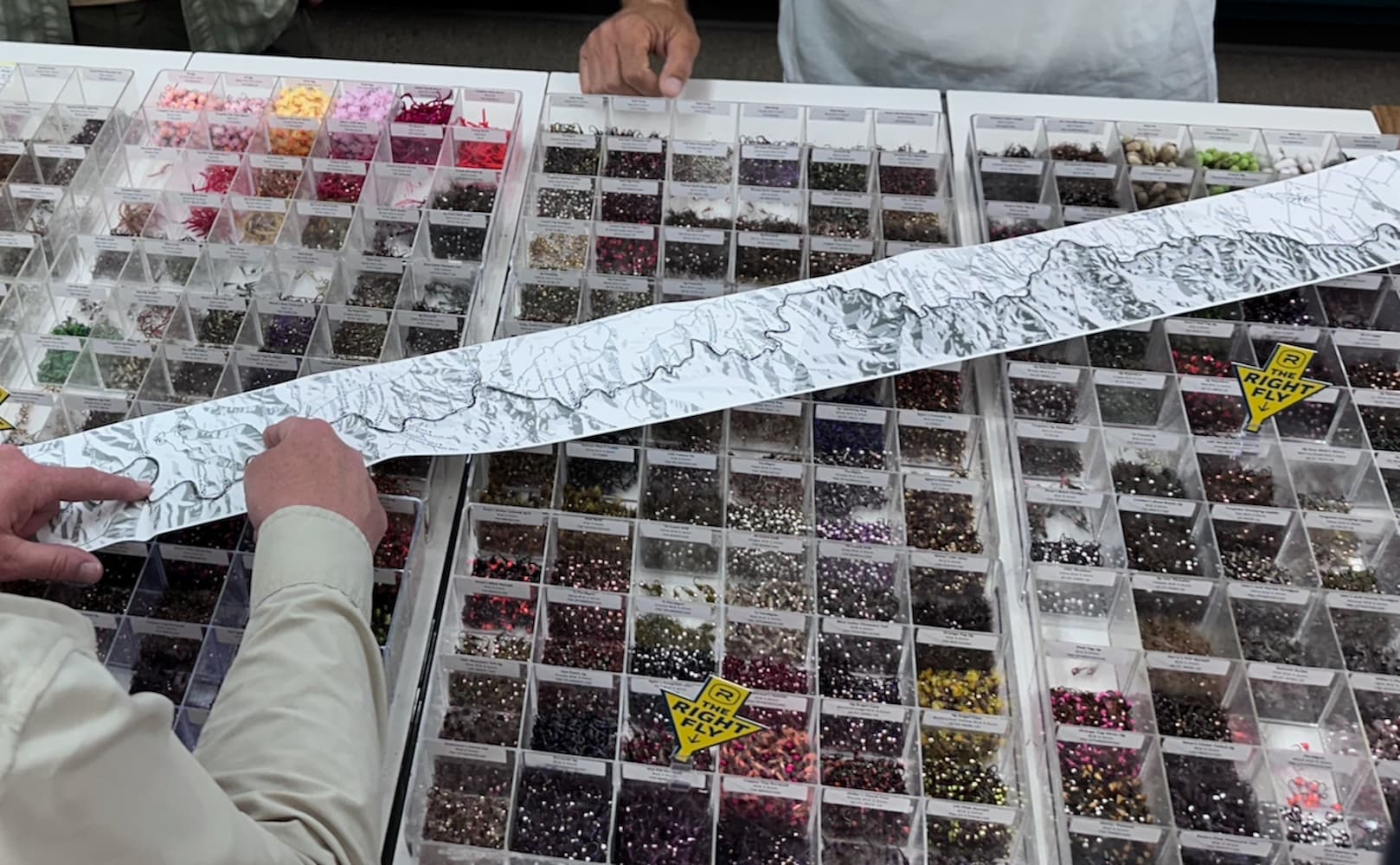
We've raised over $10,000 for the Deschutes River Alliance and sent ribbon maps to supporters in over 14 states! Have you got yours yet?