Nymphing won't get you the Perfect Eat
On Euro nymphing, the perfect eat, and committing to ‘DFO’.


If you thought this summer’s FIFA World Cup was your only chance to see visitors to the USA displaying athletic prowess under a banner of global friendliness, well, you’d be wrong. The World Fly Fishing Championship is happening here this week.
118 of the world’s most accomplished fly fishermen from 21 nations are gathered around Idaho Falls, ID for the 45th annual contest, organized by FIPS Mouche, fly angling’s main competitive international governing body (Fédération Internationale de Peche Sportive Mouche, if you must).
This week the anglers have been rotating across sections of lakes and rivers in the greater Yellowstone area, in Montana, Idaho, and Wyoming, including the famed Henry’s Fork of the Snake River and Hebgen Lake on the Madison. Points are scored based on number and length of fish caught. (All are released immediately, and special barbless hooks are used to cause them less harm.) The event features all of the pomp and circumstance you might expect: an opening parade of participants in uniform, medals, trophies, and likely a raucous closing banquet. (But not too raucous; anti-doping rules are in effect.)
I know what you’re thinking: Is nothing sacred? Not even fly fishing—that precious gift of countercultural stillness, that chance to slide briefly under the skin of the universe, that opportunity to dream of a connection with pure potentiality—not even that can escape the cold grasp of mammon and shine of ego.
Honestly, as a fly angler, I’m not stressed. You won’t be seeing competitive fly fishing on The Ocho any time soon. It’s missing one crucial thing: The perfect eat.
Why is this interesting?
While most consider fly fishing to be a solo, contemplative affair, where most of the achievements are fibs anyway (“he was THIS big”) competitive fly fishing has had significant influence on the pursuit over the last several decades.
The ultra-effective tactics honed by national teams on the global stage have moved the industry, and influenced a vast number of anglers now practicing techniques known collectively as “Euro nymphing,” an incredibly efficient style of fishing. Indeed, after two sessions, the five anglers on Team USA lead the standings with 206 fish caught, and Tomas Langer of the Czech Republic tops the individual leaderboard with 66 fish caught. Sessions last three hours, making that an average of 10 fish an hour for Mr. Langer, an impressive feat.
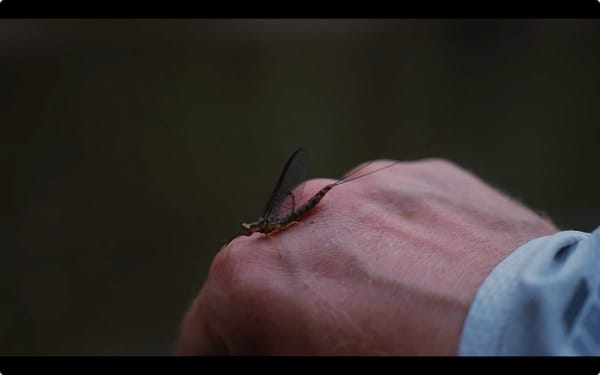
By presenting nymphs, which imitate insects still in their subsurface phase, rather than traditional dry flies that have hatched onto the surface, fly anglers are able to catch fish more consistently, even if the fish aren’t actively feeding on the surface. Trout, after all, are more apt to put their mouths on anything vaguely interesting at their holding level, safe underwater, instead of risking the trip to the surface for anything they can’t fully deem the genuine article.
The industry and individual anglers have paid attention, embracing products with more technical pizzazz than the tried-and-tested floating dry fly technique, which has only slightly evolved over the past century. Today, nymphs outsell dry flies “fifty to one,” according to Mark Raisler, a fly shop owner in Craig, Montana. Several years ago Raisler took a stand in the name of education and craft, committing to “DFO”—dry fly only—on all of his guide trips.
Critics say the competitive technique is mechanical and soulless. It’s an approach that has quantity as a goal, an industrialization of a pastime that is deliberately anachronistic. To me, it’s much simpler: I love to see the fish eat the fly.
When you’re nymphing ‘em up, everything happens underwater. You feel the fly pause, maybe a twitch, maybe see a distant flash, you set the hook, and there’s the fish. With a dry fly, though, you see the fish rise, and time stands still. It could be a maniac charge from the depths to a fast-moving fly, or, even more painful, a slow, leisurely sip from a hog finning inches off the bank. The fish choosing to move to the water-air interface, and pierce it with its mouth, to put its water-dwelling self into our world, is something magical.
I’ve waited on the steep rocky banks of Hebgen Lake with my dad for the “gulpers“, as they’re known locally, massive, cruising rainbows, sliding shadows that surface through dawn’s glare to vacuum up bugs from the glassy lake. After abseiling down a steep shoreline of broken boulders on a tattered, knotted rope, we raced against the rising sun, trying to huck steep enough backcasts to clear the rocky pile behind us, while casting out far enough. Timed properly, we’d tempt the fish prowling the shoreline with dry flies so small that three could fit on a dime without touching.
And I’ve sat along the Henry’s Fork, the Shrine of the Green Drake, perplexed, flummoxed, and exasperated as the choosiest of fish passed on our flies while still dining uninterrupted on a steady stream of naturals, wondering whether it was skill or karma or just bad luck as the river resonated with eats all around.
That shared audiovisual joy is something nymphing, and competitive fly fishing by extension, lacks. Your fishing buddy doing their best DJ Khaled impression, bellowing “ANOTHER ONE,” is unlikely to stir the soul.
Don’t get me wrong—all the anglers that make their nations’ teams are really, really talented. And it's fun to ollow along on Instagram as Team USA competes at the World Championships. Representing their country and catching as many fish as they can is totally cool. And nymphing under an indicator remains the style best suited to get a complete beginner without much casting experience onto a fish for the first time.
But for me, that perfect eat will always be on the top.
This essay was originally published by my pals at Why Is This Interesting?
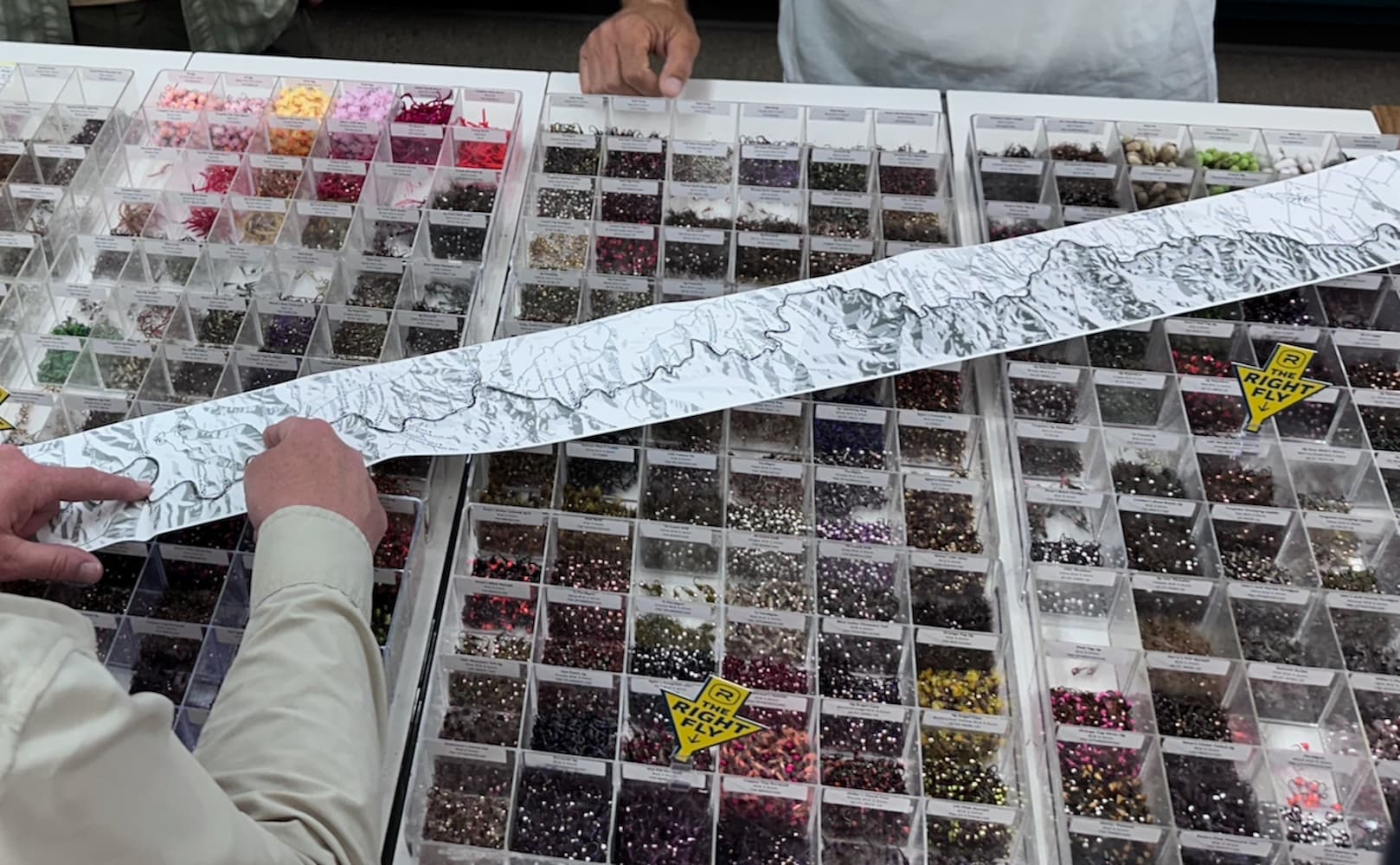
We've raised over $10,000 for the Deschutes River Alliance and sent ribbon maps to supporters in over 14 states! Have you got yours yet?