A Ravaged Fly Mystery
No, it's not the latest in a pulp paperback series, rather the process of figuring out the pattern behind a fly that's beat up beyond recognition

CFStrians,
We had our third monthly community meetup at Snow Peak's USA headquarters and flagship here in PDX on Tuesday. It was rad so many of you could come out.
The agenda included me giving a little talk and answering some questions around one of the biggest topics in fly fishing: flies.
I prepared in the tried-and-true fashion of all great public speakers: procrastinating.
Here's how the devious logic went. Since the topic was flies, why not take another big chunk out of the never-ending quest to re-organize my fly boxes? After all, I was still in the midst of my migration to C&F Design, and had recently been given several hundred flies. (More on that in another episode.) And, with the close of the general trout season here in Oregon, it made seasonal sense.
While I frittered precious prep time tweezing flies into slightly different arrangements, I came across a special fly. I dare even to dub it a magic fly.
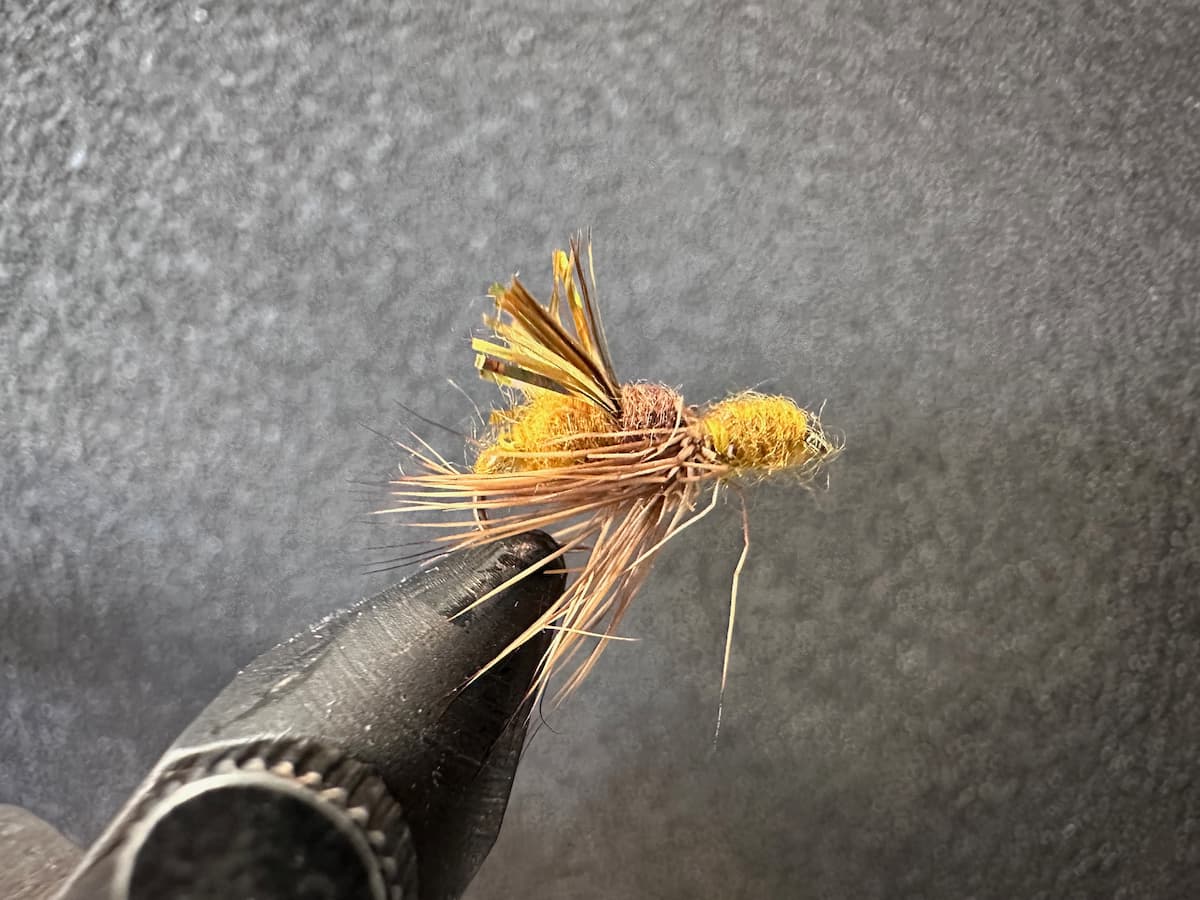
Fish long enough and you'll be granted a magic fly. A magic fly is one step above a confidence fly. A fly that seems to work everywhere, but you're not quite sure where it came from, or what it is, and you don't have any others like it.
This one caught me fish in rivers. It worked in lakes. It was even dynamite in ponds, especially with beginners at our class location at St. Louis Ponds, where smallmouth bass, trout, and bluegill all hammered it. It was the fly that I proffered on when a student was having a tough day and I could tell they really needed a fish. And every time I pulled it out of the box, I thought, wow. This fly's still around. I can't believe we haven't lost it yet.
A magic fly is one step above a confidence fly. A fly that seems to work everywhere, but you're not quite sure where it came from, or what it is, and you don't have any others like it.
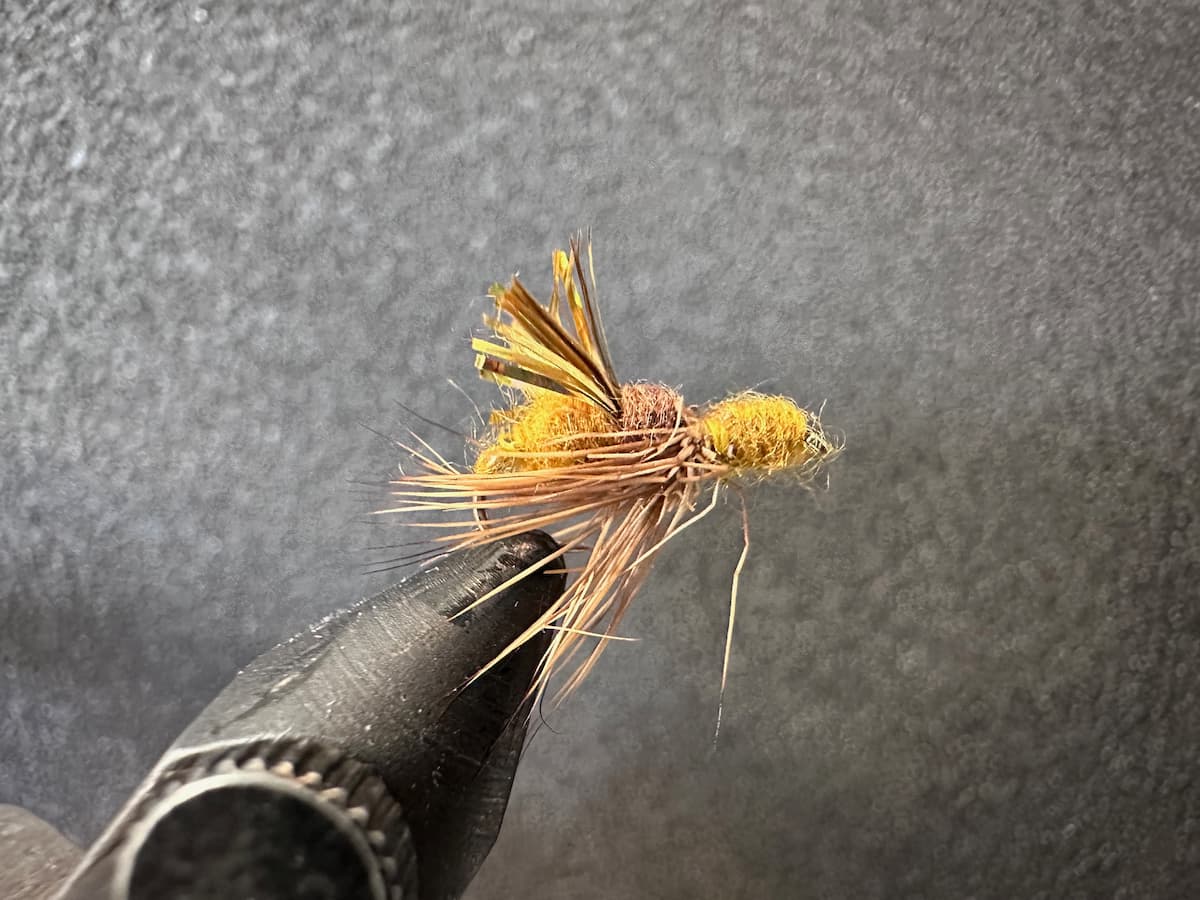
As you can tell, this one's beat up beyond recognition. It lived in my terrestrial box, and I knew at one point it had rubber legs. Was it a super-small yellow stonefly imitation? Some kind of bee pattern?
Ironically, it became an even better fly at the Ponds after the legs had been chewed off. It morphed into an amazing imitation of a damselfly nymph that would drive smallmouth nuts when slowly stripped towards shore.
As I remembered all the good times this fly and I had been through, I paused my organization and made a concerted effort to figure out what pattern it actually was. My luck was bound to change soon, and it would wind up in a bush too high to reach, or broken off on a fish.
I spent a good hour trying to figure out the pattern. The upside down hackle threw me. Weren't those on the top at some point, with a foil underwing? I Googled. I Binged. I Duck Duck Go'd. Hell, I even queried an LLM. It immediately invented a pattern called the "LaFontaine's Underhackle Stone (Modernized)" and pretended the twisted hair wing was intentional, invented by Gary LaFontaine. That last effort was a great big pile of bullshit, maybe even enough to befit an angling story. But nothing that got me any further toward an answer. Bringing it into a fly shop would have worked, but where's the fun in that?
I was stuck until I resumed organizing and reached the last row of my old terrestrial box. There, wedged between two hoppers, crowded out of sight, was a virgin original with a slight color difference. My mind immediately connected the dots, and my palm immediately connected with my forehead. It was a yellow and cinnamon Ant Acid from Kelly Galloup. An incredibly popular pattern that many of you had probably figured out paragraphs ago.
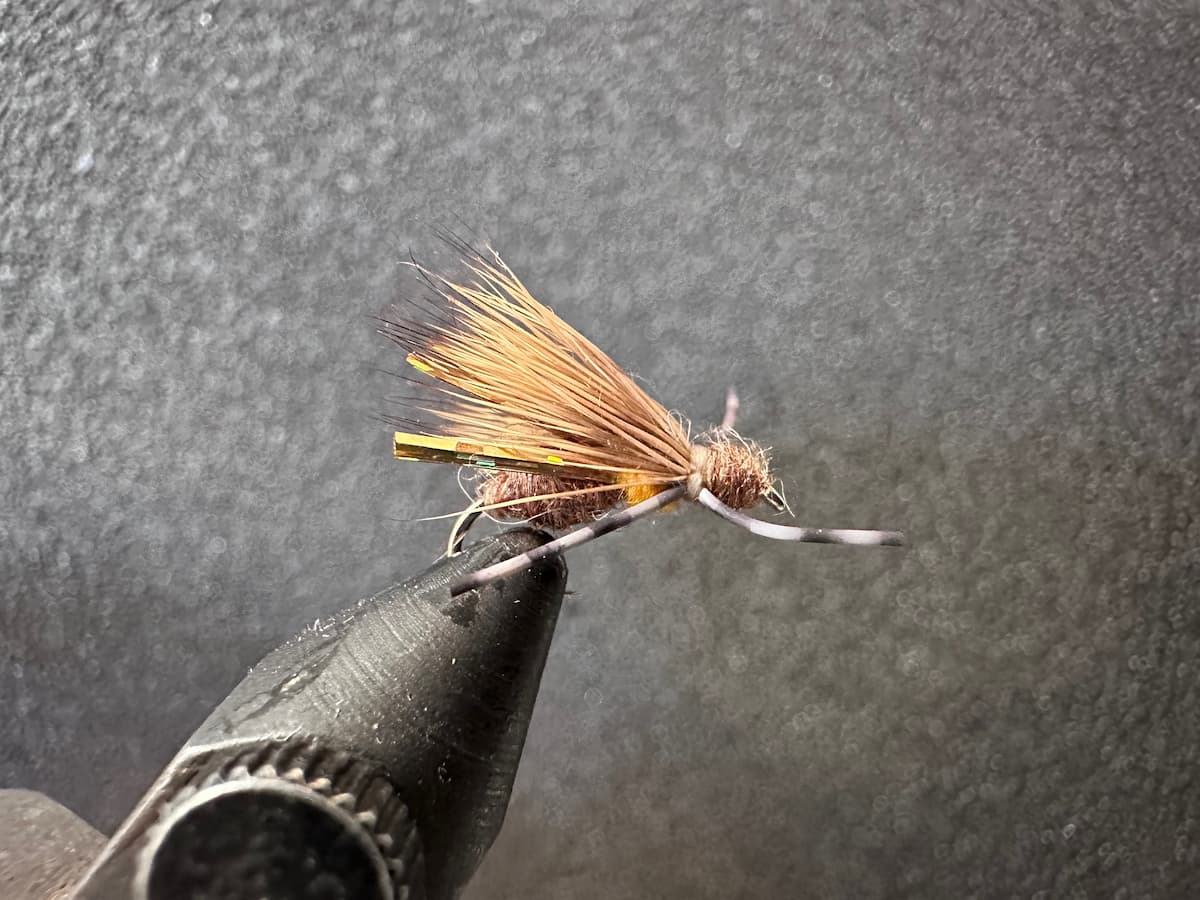
Is there something to learn from my foolishness?
Perhaps. Perhaps not.
You might want to know your flies. When you go to the shop, maybe write the names down in your fishing notebook. Or make little paper toe tags with the pattern name and size and poke the hook point through so you have a reference. Spend time looking at them when you're not fishing. Make a pencil sketch, or take a photo. Do a little research into where and how they were invented, and started being fished.
Or, you could just wait for the flies to accumulate their own stories, stories that have special meaning for you. Let the memory make the meaning, and sear it into your brain. And then it doesn't matter what they mean for everybody else.
Like a lot of stuff in this fishing life, it's entirely up to you.
I'm not the only one in an organizing mood lately. The folks at Skwala also love a good tidy up of the old fly box and have a great rundown on why a re-org feels so good.
 Rich Hohne
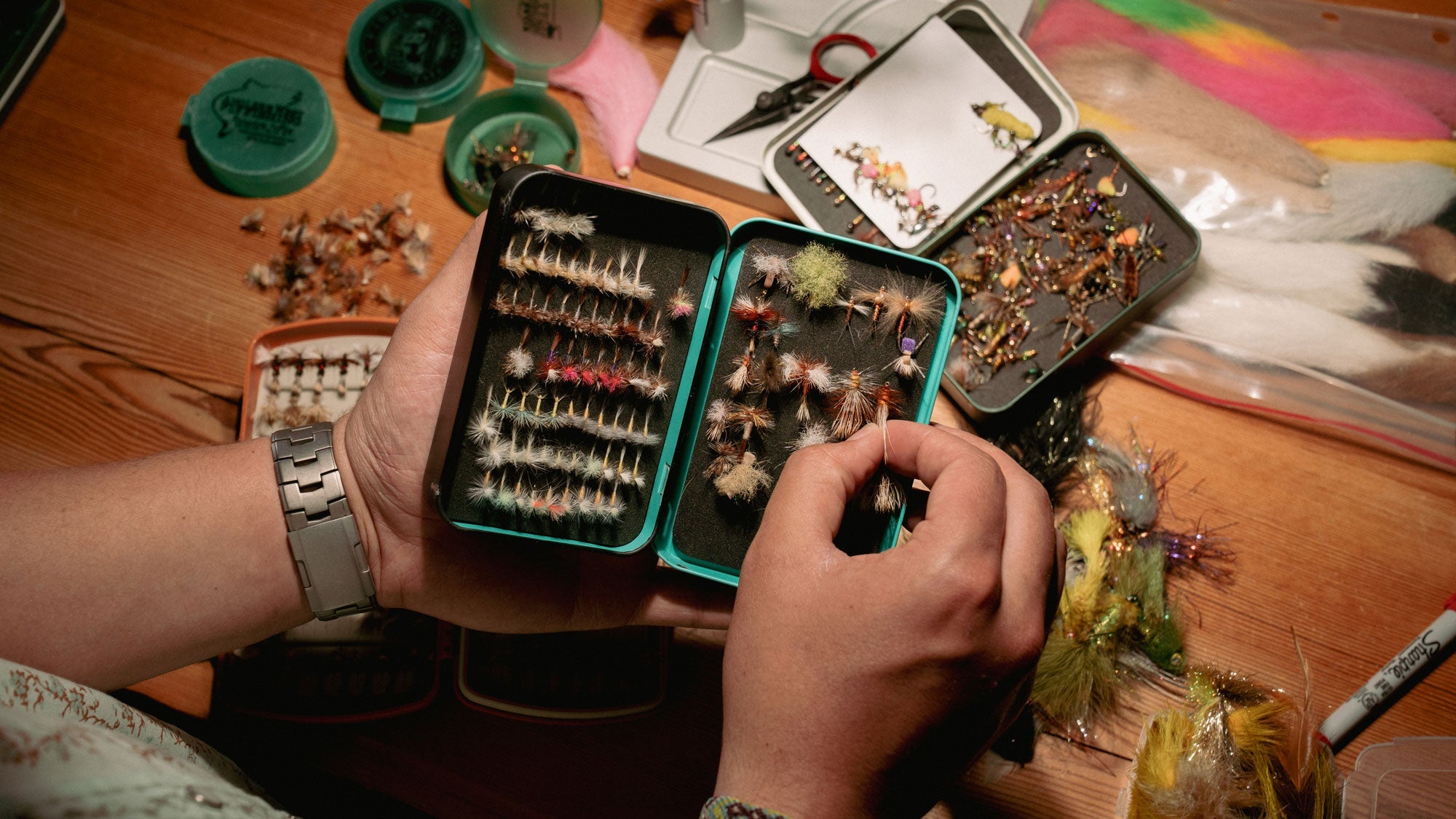
How do you organize your flies?
Tell me how you sort your flies in this little poll.
If it's too sophisticated a universe to be reduced to these simple mortal categories, I'd love to get the full story. Just reply to this email!
Elsewhere on Current Flow State
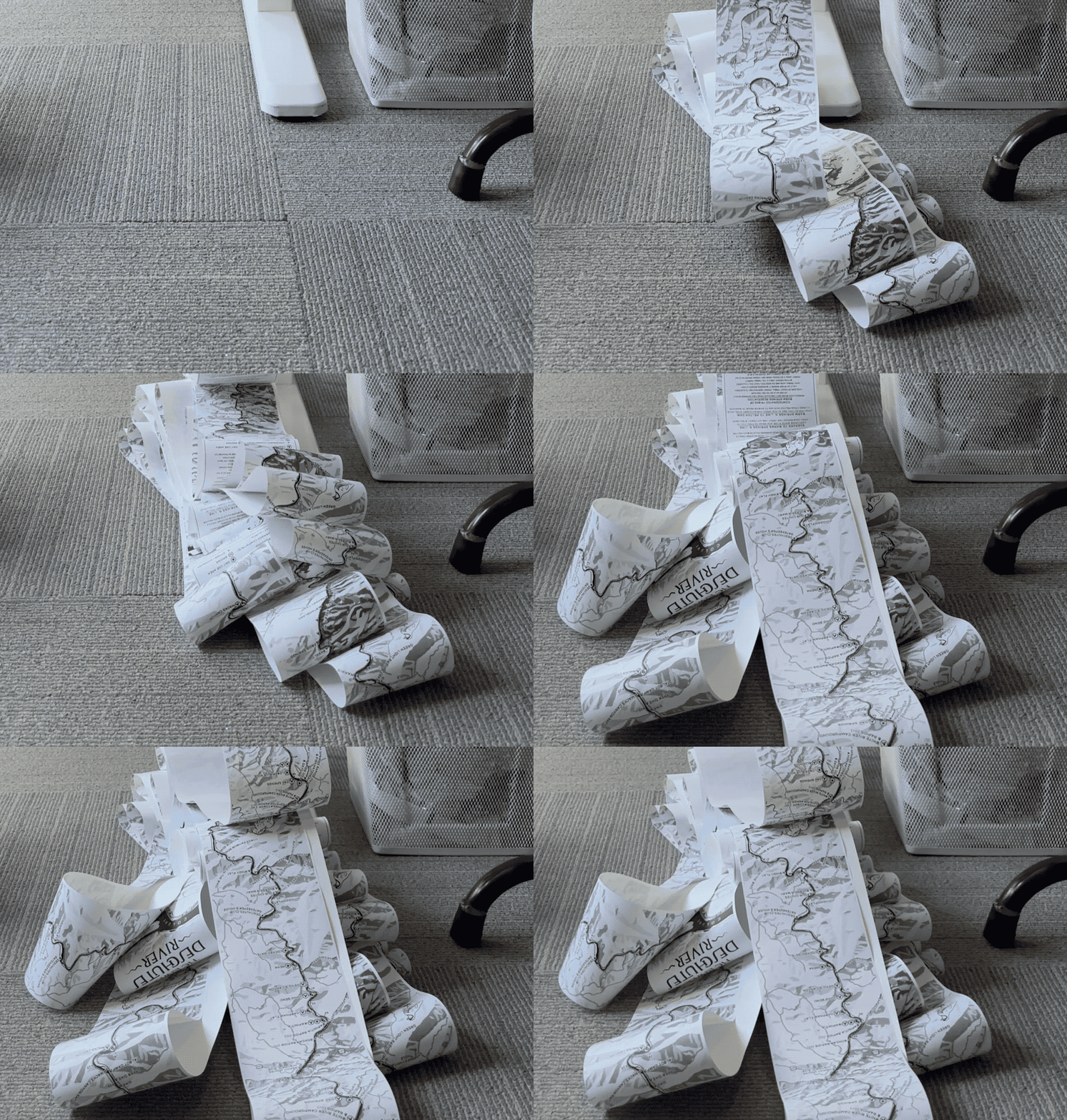
How to print your favorite river on a receipt
A behind-the-scenes look at production of the Lower Deschutes Ribbon Map conservation benefit project, and a little pep talk on the pleasures of making things.
Upcoming events

November 8: Casual Casting
Winter's coming! Bust off that two-handed rust, or just keep those summer skills alive with a free Sunday casting jam co-hosted with fellow casting-instructor-in-training Lisa Amato.
All are welcome, and if you don't have a rod, we can loan you one.
Got an event you want the community to know about? Send it over and I'll include it here. You can find and register for all of our upcoming CFS-led events on Luma.
That's it that's all! Current Flow State is a weekly newsletter from me, Nick Parish. You can also find CFS on Bluesky 🦋, Instagram 📸, YouTube 🎥, or the Fishcord 💬
If you enjoyed this, please share it with a friend. We all need more fishing buddies. 💌
Read our editorial policy or browse the newsletter archives.
CFS members support and sustain the site, and our community. Learn more about membership benefits. If you're getting value from this work, consider becoming a member and helping support our efforts.