How to buy a used fly rod: Six steps to get started
Secondhand is all the rage. And buying a used fly rod can be a great way to get into a better fly rod, faster. But there are plenty of caveats. Here are our tips, some sources, and a checklist to follow.

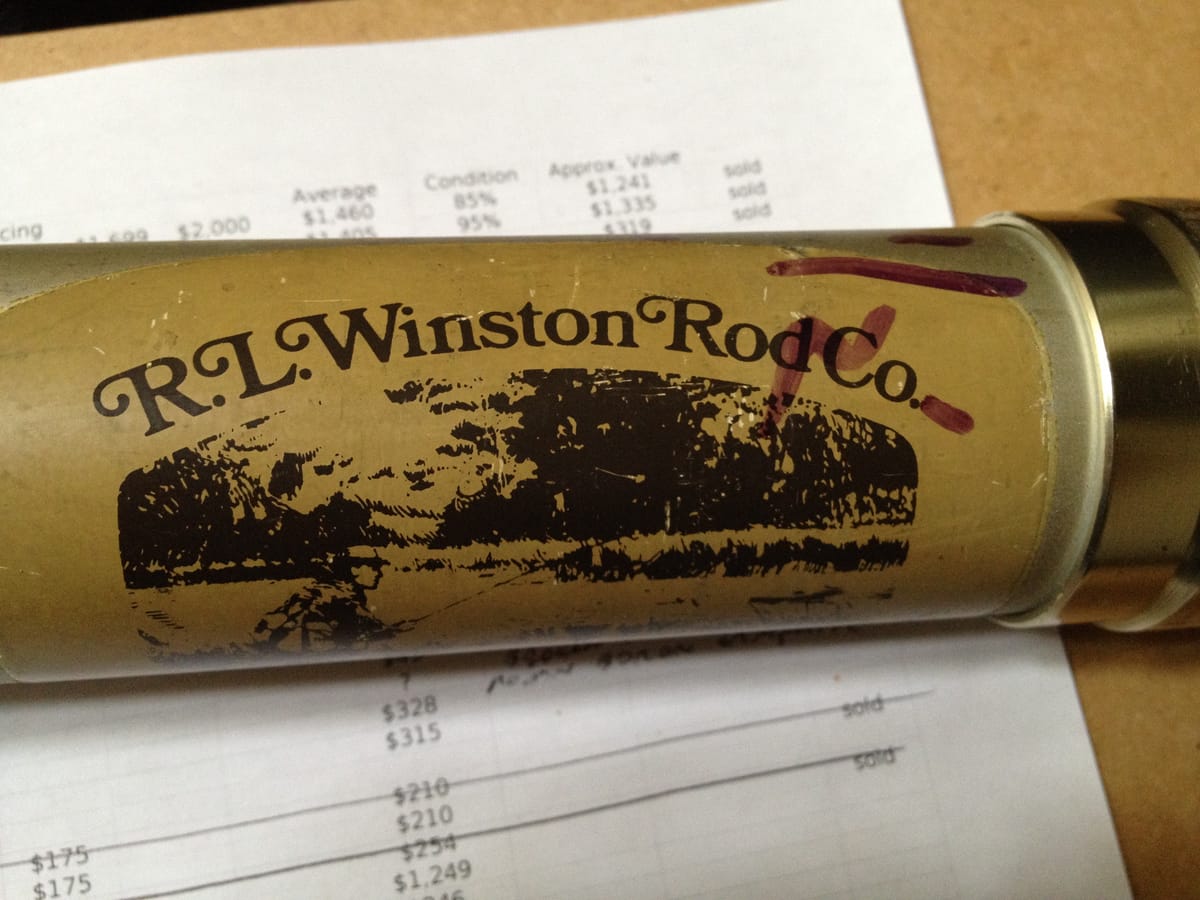
If you're getting started fly fishing, and not sure if you're so into the sport that you want to spring for a full-priced rod (let alone one that costs $1500), buying a used fly rod can make a lot of sense.
Buying a used fly rod is not without its challenges, though. You're never sure how well its previous owners took care of it. And, if you haven't done a bit of research on brands and manufacturers, it can be hard to tell if you're getting a decent modern rod, or something that was cutting-edge in the 1950's.
Certified pre-owned fly fishing apparel
Whether it's rising prices, or declining quality, people are starting realize they don't always need a new item to meet their needs. Whether it's fashion on a site like Poshmark or just your neighborhood vintage or consignment shop, or even the neighborhood Buy Nothing group, hand-me-down items have lost a lot of their previous stigma.
OfferUp, one such platform for buying and selling, commissioned some (sliiiightly self-serving) research from retail analytics firm GlobalData last year for its RecommerceReport. It found 93% of Americans bought something secondhand in the past year, and over half (54%) sold an item to someone else. "Recommerce," the report contends, is a $200B facet of the U.S. economy.
In the sports apparel market, we've seen both niche and mainstream groups approach building platforms to give products a second life. In 2013, Patagonia debuted its Worn Wear platform. Arcteryx has its ReBird Resale. Even fly fishing-specific manufacturer Simms has its Recast platform.
Not all platforms are equal
Not all platforms offer a legitimate peer-exchange. And as the resale market matures it's worth asking, "Is it a legitimate used marketplace, or a trendy way to dump excess, a digital outlet mall?"
A firm called Archive offers resale as a service, creating a whitelabel resale platform for brands like YETI (Rescues) and North Face (Renewed), so most big brands now have an easy way to offload styles or designs that didn't hit, without having to work with third-party outlets, or have their own retail outlet stores.
Amidst the preponderance of Re-named platforms (Reduce, Reuse, Recycle, get it?) there hasn't been anything specifically for fly rods and fly fishing equipment. Yet. Two friends from Michigan are trying to change that.
How to buy your first used fly rod
There are a six tips to get started when you're buying your first used fly rod.
Step 1: Figure out how you're going to use the rod
What are you going to use the rod for? Answering that one question will do a ton of work in narrowing down the size, weight, and action.
If it's your first-ever fly rod, and you're going to be using it for typical stuff, you're likely going to want to go with a 9' five weight. Maybe slightly shorter (8'6") and a size smaller if you're fishing small streams, or accuracy is top-of-mind.
Knowing a little bit about rod action will help here too. Do you prefer a faster-action rod, that's going to be stiffer, or something slower, that'll have a softer presentation? "The big thing for me was understanding a rod's action," says Justin Sivils, co-founder of used rod marketplace Castback.com "What I like in a rod is probably not what you like in a rod. I know a lot of them are fast action. The big thing for me, I like a medium action. And again I didn't realize it until I had cast it, and I was like 'Holy shit this is a different ballgame.'"
Step 2: Establish your price range
Second, decide how much you're comfortable spending. Do you want to spend a little more for a rod that has a solid repair program backing it? Is it worth spending a little less on a rod that's older? Knowing where you stand before you look around can help prevent falling in love with a rod that's too expensive, or jumping at the first serviceable rod you come across.
"For your first rod, anything over $500 is kind of ambitious," Sivil says. "You don't know if you're really gonna connect with that [rod]. It might feel different from what you expect. So you want to be able to have some flexibility and get it, try it out, and not feel like you're broke. So be comfortable at your price point."
Sivil says he's aligned with streamer innovator Kelly Galloup. (Hard same.) "Personally, I think a thousand-dollar rod is bullshit," Galloup says in a video "fireside chat." "I've got lots of them and it doesn't mean I think they're bad rods, but in today's market, it's kinda hard to justify."
Step 3: Start your search
Now that you've got a fishing scenario and price range in mind, it's time to start beating the bushes.
If you're in a place where fly fishing is culturally prevalent, you might have some chances to find a used rod near you offline, in brick and mortar secondhand retailers. If there aren't a ton of fly anglers near you, your search might be better off starting on the internet.
Where to buy used fly rods on the internet
Buying just about anything niche got way easier when the internet came along. Fly rods are no exception. There are all manner of places to find used fly rods online.
Let's start with auction sites. eBay is probably the most obvious place. But did you know Goodwill has an e-commerce auction site? It does. And right now there is a lot of three Sage RPLX 9' nine-weights and a travel case on there with a current high bid of $552. Here's an older two-piece 5-weight Sage that went for $156.
Fly fishing forums are also a great place to find used rod deals. And while there are any number of new and inventive scams happening in forum classifieds, you can easily do a little bit of research on frequent posters to determine they're kosher.
Here's probably the best possible place to mention the site Sivils co-founded, Castback.com. It combines the best of both worlds, with the enthusiast passion you'd get from a forum and the concentration of a niche pursuit you'd find on eBay. Check it out and see if there are any rods there that strike your fancy.
The third, and maybe least valuable category of places, are local marketplaces. The good old classifieds. Craigslist, Facebook Marketplace, the aforementioned OfferUp. Sure, you can find rods there. Your mileage will vary according to how prevalent fly fishing is in your region.
A couple factors make local marketplaces my least favorite place to look for used fly rods (above and beyond the general weirdness of interactions these platforms tend to foster):
- Someone selling a rod who isn't an angler won't have much to tell you beyond what they've learned from a search engine, and will likely overestimate its value.
- Someone selling a rod who is an angler isn't trying to sell it to another angler, on, for instance, an angling forum, so they may be passing off a rod that's got some issues.
Places to buy used fly rods in real life
If you have options to find fly rods in the flesh, to me, it's a more preferable way to go. The biggest advantage? You can actually test the rod out.
The top of the stack here are fly shops and outfitters. A lot of shops have a rack of "shop rods" that clients can take out on guided trips, or demo rods that they let customers cast. These occasionally get banged up, or they need to be swapped out for newer models.
Monitor shop email newsletters and they occasionally announce the shop fleet needs to find new homes. These tend to be decent deals. Big Sky Anglers is a fly shop that offers demo rods. 30% off a Helios D? Not bad. (And I bet they'd make you an even better deal if you ask nice and pay cash.)
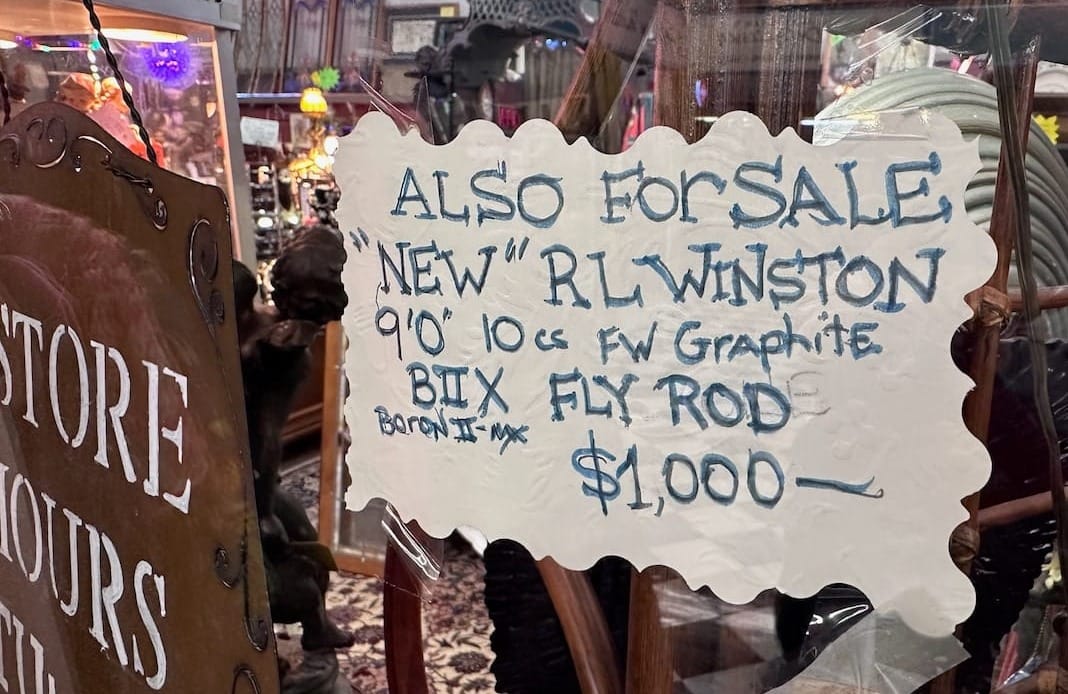
Another under-explored used fly rod market in fishy towns comes via pawn shops. I always stop in at least one pawn shop when I'm in Bozeman or Missoula. (Third Street Pawn is great.)
Last, and maybe least: Antique shops and garage sales. The former is likely to only feature antiques, not actual quality fishing gear. The latter tends to have too much personal crap, for lack of a better term: nasty old gear and rusty tackle.
If you find a rod you like out in the world, don't be afraid to ask to attach a reel (bring your own!) and cast it. Rods are incredibly subjective, and how it feels to you should be a huge part of the decision process.
Step 4: Look closely for quality cues
Probably the most important tip is to scrutinize any would-be purchase for problematic zones. This is where having the rod in your hands is a real advantage. If you're online, find the highest resolution version of the photos you can, get them into a proper photo program, and enhance.
Start with the inscription to determine the basics of the rod. If you are in a position where you can ask a seller to share additional photos, or give a deeper description about a specific area ("Just how soft is the cork near the top of the grip?") it's worth reaching out and prodding.
"A fly rod is pretty simple in and of itself," Sivils says, "So if you just do a little research you can probably figure out, 'Okay I got to look at the ferrules, and I got to look at the guides. Is the cork chewed up?' I feel like a lot of people, just from a visual perspective, can make that determination."
A quick ten-point checklist for evaluating a used fly rod ✅
- What brand / manufacturer is it, and when was it made?
- What's the weight and action? How many pieces is it?
- Are there any deep scratches in the finish?
- Are the line guides present? Are any of them bent or broken?
- How does the cork look? Clean or dirty? Intact, or crumbling?
- Are the ferrules chipped or splintered?
- Is there excessive wear around the ferrules, indicating they weren't waxed, or the rod was put together or taken apart roughly?
- Are any of the sections bumpy where they should be smooth (between the guides), indicating a possible stent repair?
- Does the reel seat hardware look like it can move freely, no scratches or gouges on the threading?
- Is the rest of the reel seat hardware tight to the rod, with no play?
Step 5. Know the difference between a cosmetic issue and a dealbreaker
Some stuff is just par for the course with a rod that's been fished. It's part of buying a used rod. No used rod is going to have that new car smell. Light scratching, dirty cork, a little bit of wear on the ferrules is to be expected.
Where you need to really squint is knowing what is cosmetic, and what's a dealbreaker. My biggest watch-out are deeper scratches, and anything resembling a crack. One of the easiest ways to break a fly rod is to strike it with a heavy fly on the forward cast, like a bass popper, or a heavy nymph. When this collision happens, it can introduce micro cracks in the graphite, which then won't manifest until the rod is bent under stress, sometimes casting, sometimes fighting a fish. In person, if you can look at a scratch from different angles, and maybe even lightly flex the rod you can tell the difference between a superficial cosmetic blemish and a big red flag.
Dirty, or damaged cork is, on the other hand, an easy fix. Soap and water, magic eraser, and Elmer's glue or the stuff people use to fix Birkenstock sandals all are your friend. Consult Dr. YouTube for a fix there. If the cork is totally shot, that's probably evidence of other kinds of maltreatment, but also not a dealbreaker. Layers of cloth tape and a tennis racket grip (take the handle to the pro shop and they'll do it) can get you back in the game (and are the handle of choice for some competitive casters).
Step 6. Phone a friend
Like I said up top, of the biggest questions I get asked is "Should I buy this rod?" It's always worth reaching out to a friend or angling confidant to get their opinion.
The members' Fishcord is another great way for paid members to pick my brain about evaluating used gear, and how to find bargains out there.
Do used fly rods come with a warranty?
Nope. That's one of the big downsides of buying a used fly rod: warranties typically don't transfer with ownership.
But, as the "lifetime" fly rod warranty goes the way of the dodo, most manufacturers just fix rods for a flat fee, or sell replacement sections. So no, the warranty typically doesn't transfer, but there are fewer and fewer cases where that matters.
If you're laying out some dollars for a nice used rod, it's worth understanding what sort of support the manufacturer offers for repairs, in case you eventually wind up breaking it. Read more on fly rod warranties and why they matter.
What's the best used fly rod deal you've ever gotten? Have you ever traded for a fly rod? Tell us in the comments!