Tying flies is good for you
Fly tying offers real neurological, psychological, and motor skill benefits. And a growing number of therapists are putting that to work.

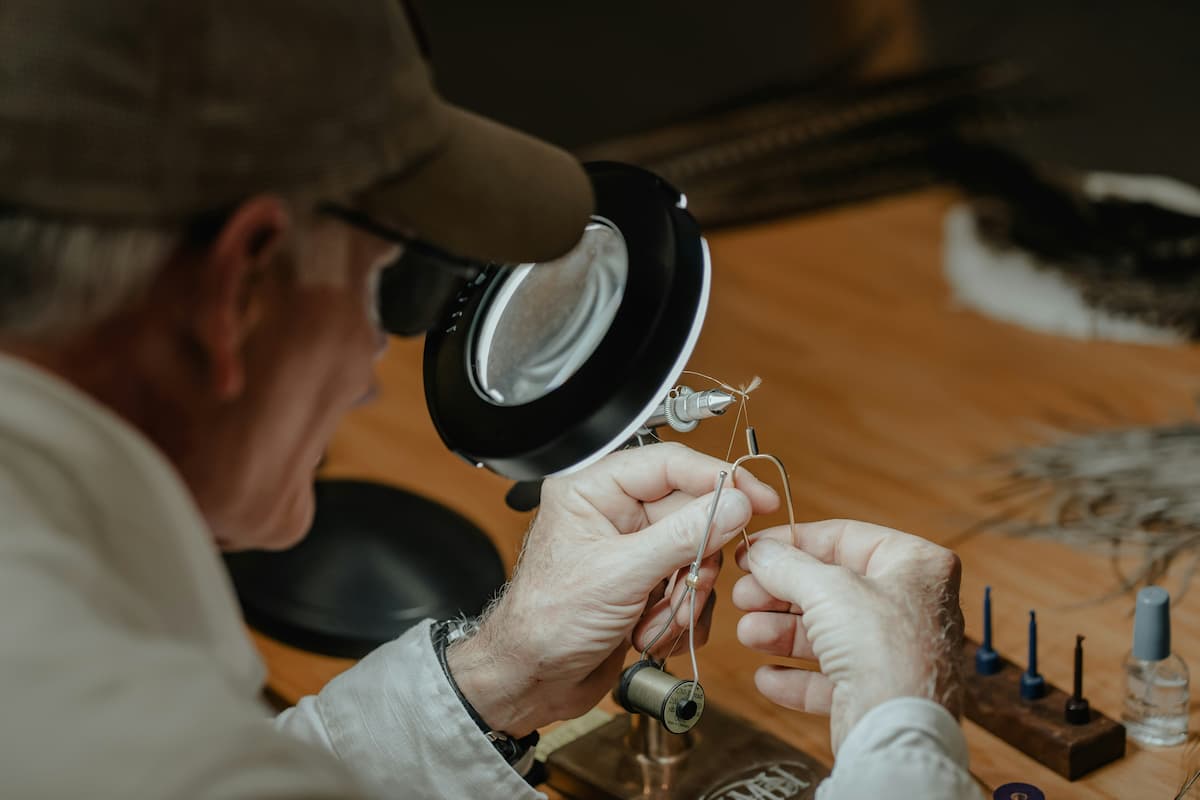
Tiny adjustments, absolute concentration, repetition, and a finished product you can be proud of: It should come as no surprise after what we've learned about fly fishing and mental health that tying flies is also an activity that can promote nervous system regulation and overall wellbeing.
In part three of our series on fly fishing and mental health, we're taking a look at how fly tying can improve mental health, with comments from an EMDR practitioner who's been leading group fly-tying efforts for several years.
In this series on fly fishing and mental health
- Hearing "Fishing is my therapy" bothers me
- What the research actually says about fly fishing and mental health
- Inside a fly fishing therapy session
- Why tying flies is good for your brain (we're here)
Origins in WWII neurological rehabilitation
Tying flies is one of the first areas where fly fishing practices were brought to bear on recovery, when WWII veterans who had suffered injuries to their extremities—often even fitted with prosthetics—were given fly-tying tools and materials to rehabilitate their fine motor skills.
"William Black, a noted fly tier during this period, taught fly tying to several hundred wounded marines and sailors at the Great Lakes Naval Hospital during the war," Bruce Ajari writes in the Sierra Sun. Another fly-tyer, Bill Blades, continued to work with veterans, and the method was passed person-to-person until Project Healing Waters began to systematize it in occupational therapy programs at Walter Reed Army Medical Center. The therapy a novel departure from traditional rehab efforts, so much so that it gained popularity. "The first class involved five students," Ajari continues, describing the Walter Reed cohort. "Four had prosthetics on their left arms and one had a badly damaged and partially paralyzed right arm and hand."
Similarly, licensed professional counselor Bill Alexander relays an encounter with a veteran with a severe psychogenic tremor, who was able to calm his tremor during a tying session:
I observed the veteran’s frustration, and I told him that it was ok and that I broke thread all the time. I prepared his thread bobbin again, and he proceeded to wrap thread on the hook shank again—this time, without any tremors.
Improving cognitive focus and concentration
We live in a world where the finite pool of human attention has become commodified, channeled to the lowest bidder by media platforms, through our omnipresent devices. Tying flies can help reclaim attention and the ability to focus, all part of the fly fishing brain.
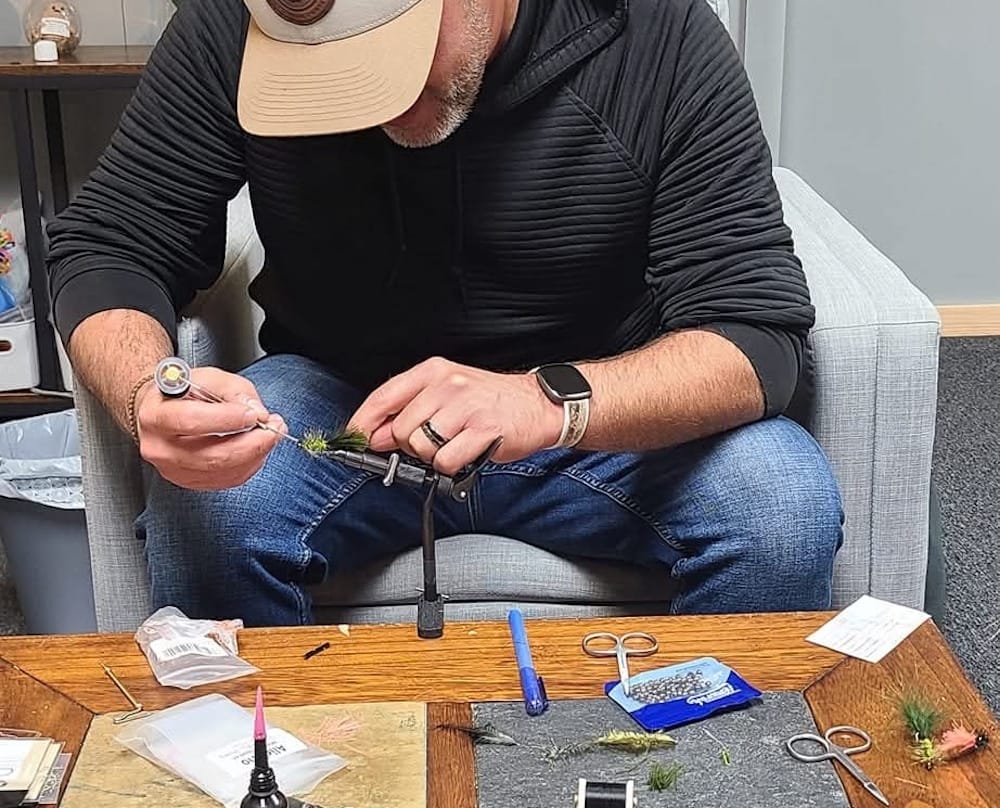
Sit down and commit to tie a dozen flies with some light background music. Stick your phone deep in a drawer, or somewhere far away ("Phone in the Room, Mind on the Roam"). By the third or fourth fly, when you've got your rhythm going, time will start to sail: The definition of entering a flow state. This new state can be a gateway to regaining control of your attention. It can also help you delve deeper into recognizing thoughts and feelings that might have been blocked by everyday noise. Notice what comes up.
"Fly tying in my individual counseling sessions can serve as a dual attention strategy while processing trauma, or just a strategy to take away from the awkwardness that clients sometimes experience during traditional talk therapy," says Christopher Postle, licensed clinical social worker and EMDR consultant, who often collaborates with Tony Parmenter. Last year he facilitated a men's fly-tying group focused on mindfulness, grounding, and mental health. "I have had very good results using this with clients that have difficulty 'opening up' as it seems to relax their nervous system."
Mindfulness and presence
Fly fishing is a delicate business. From wading lightly to casting gently, the sport rewards sensitivity. The same goes for fly tying. Too much pressure on the tying thread can result in a frustrating break, where your fly unravels. Materials can twist on the hook or not bind properly if your thread isn't manipulated just right. Heck, it can be hard getting a bead on a hook to tie a nymph when you're starting out. Interpreting guidance from other fly-tyers and developing your own little manual dexterity tricks to make things work is another aspect of the practice that helps clear your mind of day-to-day nuisances and stay focused on being present.
The key, says Postle? Staying aware and non-judgemental of your efforts. "None of the tying group members had any experience with fly tying prior to the group," he says. "That really allowed the opportunity for them to practice being non-judgemental, allowing the present to be what it is." He encourages his groups to engage their five sense and their internal body sensations as they tie flies.
Personal identity and accomplishment
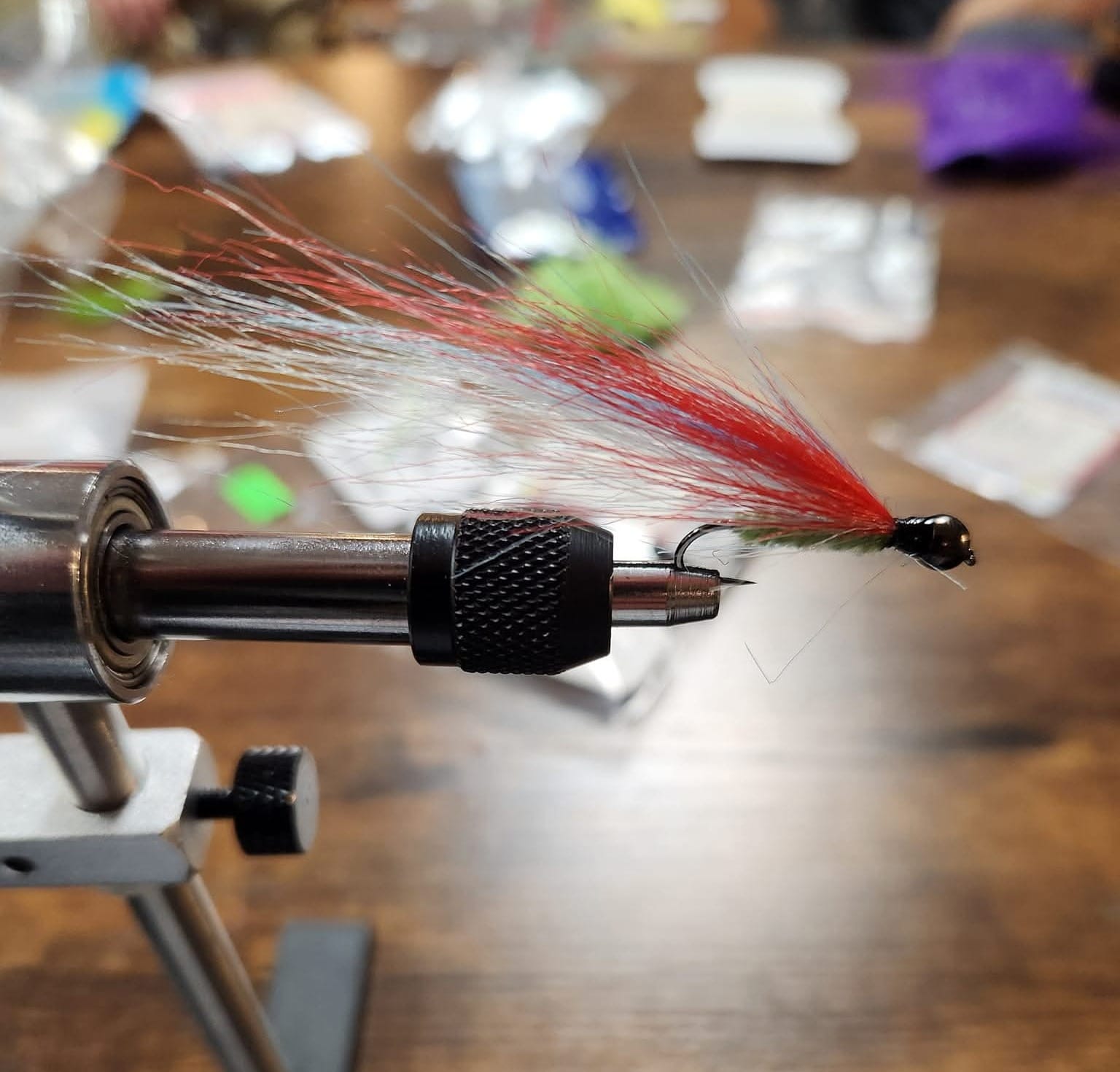
Last, and maybe most importantly, there's a sense of achievement and ownership that comes from tying flies. The number one question I get asked when I open a fly box around a beginner is "Did you tie all those yourself?" ("Just the ugly ones" is my standard self-deprecating answer.) Anyone who ties flies knows it's much more satisfying catching a fish on a fly you tied yourself, which is quickly intuited even by those brand new to the sport.
Trying out new colors and materials that interest you is key to bringing your personal creativity into the mix. Don't worry that your fly might be a variation on the many tied before it. They all are. Give it a name, a home in your rotation, and go catch a fish with it.
"When it's paired with other evidence-based interventions and the skill of mindfulness is brought into it, I think fly tying just serves as a creative way to practice the skills embedded in those interventions," Postle says.
So sit down, put your phone away, and tie some flies. Choose a few simple ones from our recent favorite fly tying book. And remember, if the process feels difficult at first: Your creations will be unique, and no matter how many fish you fool (or don't) they represent an important step forward in activating your creativity in the sport.