Mind in the line
Expect nothing, and other lessons from casting instructor boot camp
Before departing, I had taken leave of Eido Roshi, and spoke to him of odd death whispers that had come for several months. He nodded; perhaps what such whispers anticipated was a spiritual “great death” and a rebirth. “The snow,” he murmured, “may signify extinction, and renewal.” After a pause, he warned me, “Expect nothing.” The Roshi was pleased that there would be but two of us—this seemed to him a condition of true pilgrimage. He instructed me to recite the Kannon Sutra as I walked among the mountains, and gave me a koan (a Zen paradox, not to be solved by intellect, that may bring about a sudden dissolution of logical thought and clear the way for direct seeing into the heart of existence):
All the peaks are covered with snow—why is this one bare?
The Roshi rose from his black cushion and, taking me by the shoulders, touched my forehead three times with his own, then smote my back, and sent me on my way with a great shout.
“EXPECT NOTHING!” Walking along, I remind myself of that advice; I must go lightly on my way, with no thought of attainment.
—Peter Matthiessen, The Snow Leopard
CFStronauts:
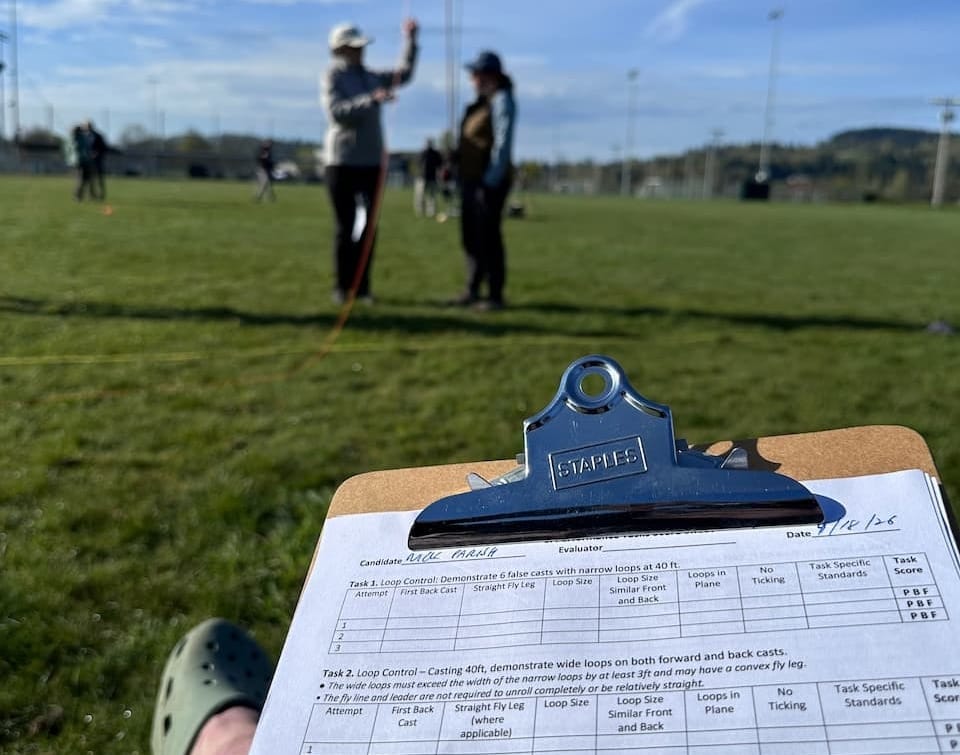
I'm back from my weekend Casting Instructor candidate boot camp, part of my extensive quest to become a certified casting instructor. I came, I saw, I casted. And I was thrown for a bit of a loop.
Like I said last week, I was intimidated walking in. Scared, even. But I had some confidence. It didn't last long. What I had been working on—in my back yard, in the park, in the casting pond, and on the water—all of a sudden wasn't working. Under the scrutiny of eagle-eyed Master Casting Instructors, who had examined hundreds of would-be test takers like me, I realized about two hours in on the first morning that I had a lot of consistency to build..
The test requires extreme precision. (Check it out.) And what I've learned over the years from books and videos, what has worked in fishing situations all over the world doesn't quite conform to all the standards. Sure, there were some nerves at play. (OK, a lot.) But beyond all that I still have a way to go to hone my cast to be picture perfect.
Were things egregiously bad? No. Did my casting improve over the workshop, with instructor and peer support? Absolutely. Was it what I expected? No. But, in a good way.
Expectation and acceptance
My first mistake? I came in expecting everything to work like it did in practice. How could I have been so naive about the state of my double haul?
For the most part, I was able to roll (cast) with it. Noticing bad feelings like frustration and embarrassment and letting them go. At no point did it get to What if I never get this?, rather, OK, this might take longer than expected. Then I remembered The Snow Leopard. "Expect nothing!" Go lightly on your way with no thought of attainment. What did that mean in the context of a bunch of casting nerds measuring loops in the middle of some park?
Observe judgement and feedback as point-in-time. Examiners want candidates to succeed. But at the same time they need to candidates to conform to standards, to build foundations for future achievement for both themselves and their students. A poor stop or over-rotation on a backcast at 40' isn't a big deal in a fishing cast, but when you try to cast 75' for the test, that fundamental flaw becomes a glaring error in over-exertion and inefficiency. In the words of basketball coach Larry Brown, you've got to play the right way. But one cast on one day—and a cast not even to a fish, to boot—doth not a caster make.
Look around at all the folks here to help you. Candidates and instructors were rooting for each other along the way. I made a few new friends, one who came in clutch with loaner line on the first day, when an examiner cast my rod and declared it overlined to the point of feeling dead. Another is a Portlander, and we started scheming to host more drop-in group practice sessions at Westmoreland Park this summer. (More on these soon, likely starting next month.) And so many of you got in touch with a kind word after last week's note. We can step lightly knowing there's a warm and welcoming harbor of camaraderie around the corner, and we don't have to schlep so much.
Remember every beginner feels frustrated. It helped to remember what everyone new to the sport is going through when they pick up a fly rod for the first time and start casting. It's a weird, counter-intuitive athletic motion, unique because you're flinging a thing, but there's no follow-through.
The realization: Let joy overflow.
Surprisingly enough, my moment of realization wasn't on the casting field. It was after the group dinner on the first day. I got to connect with other people like me, who care so much about helping people experience the joy of fly fishing that they have tackled even harder tests than the one I was getting worked up about.
The reason to perform well isn't just in conforming to the test, it's in doing so while overflowing with enthusiasm for the task, so that even the harshest result (self-inflicted, or otherwise) doesn't dull the internal sense of something special being conveyed.
My Brazilian colleagues use a term I love, ginga. Literally, it's the core swaying motion of capoeira, the active stance emblematic of that martial art. Taken together with another great Brazilian creative art form, samba, and applied to football (like all things are in Brazil) it represents a sense of soul, of artistic joy, the heart of the beautiful game, joga bonito. I think maybe ginga in casting a fly rod comes in the connection between the caster's body, the rod, and the line, the energy that comes from just enough force, measured in grams and ounces, amplified through the efficiencies of physics and proper movement. As one instructor said over the weekend, "take your mind and put it in the line."
I'm getting there. And I have a secret pathway, thanks to you. The test isn't just casting: There are six teaching tasks as well, where candidates are expected to teach beginner and intermediate casters what they need to understand to get started.
And I'm happy to say this is where I did well, and earned plaudits from the examiners. But I didn't do it well because I had crammed all this knowledge into my head. I did it well because I felt the spirit of the thing, and was able to speak to my examiner like a student from class. I felt the ginga, thanks to all the discussions we've had: At the casting pond, on the water, here, in these notes. I could get in touch with the fishy soul of what we do, and why we do it. As I become a more consistent caster, the quest will be to find that ginga in the casting dance, that spirit of pure feeling, mind in the line. That will be what keeps me positive and growing. I'm grateful for all the chances we've had to figure out our own version of joga bonito, and am excited to carry on.
Let's go fishing
I'm excited to announce I'll be teaching a fishing and fly tying workshop through Landdd gallery here in Oregon on Saturday, May 16. We're going to be doing a waterside fly tying and fishing event, making some flies out of whatever funky materials we come up with to see if they'll fish. Sign up if you're interested, it's going to be a lot of fun! (landdd.org)
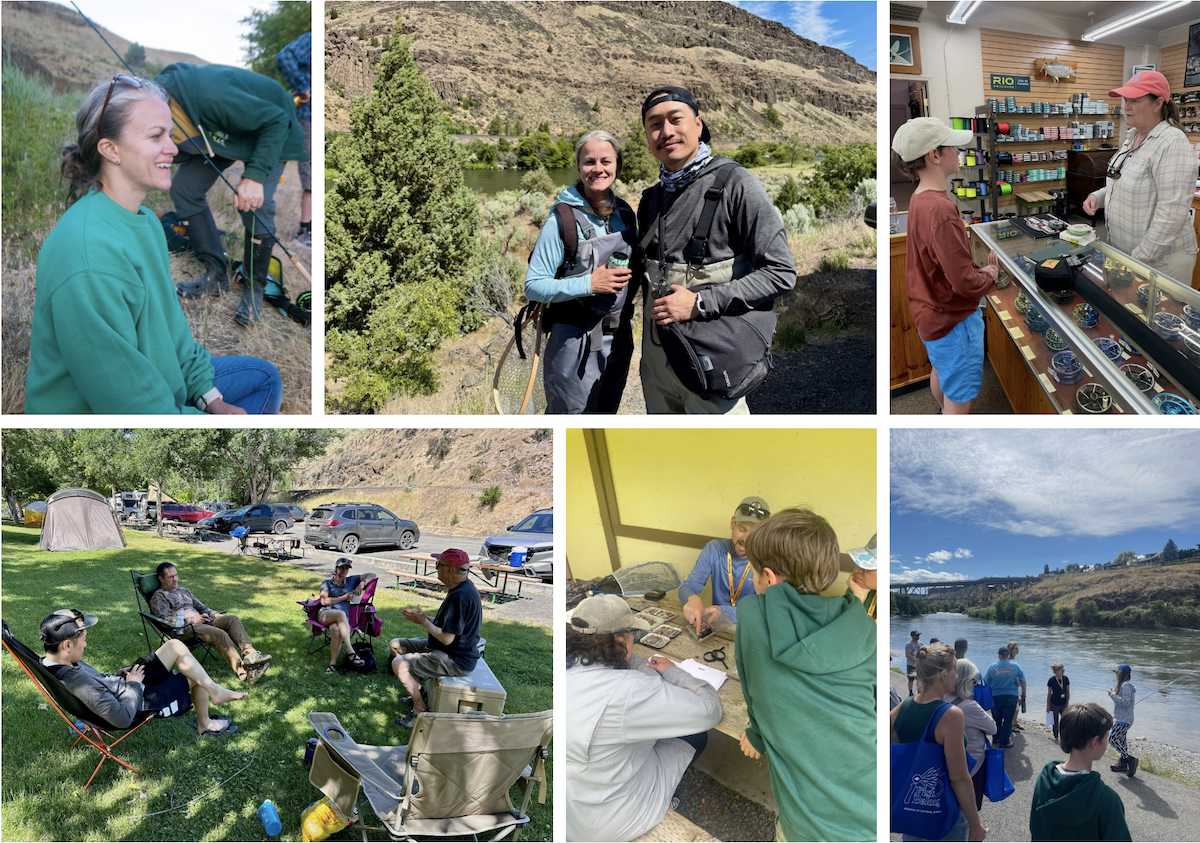
Register for the Maupin Meetup!
The salmonfly hatch and all the beauty of late spring in the high desert will be upon us soon. Join CFS May 28-31 in Maupin, Oregon, for some classic big bug fishing and the DRA's TroutFest celebration.
Fly fishing and mental health
Our series continues! Most recently Tony Parmenter, who has built a practice around therapeutic fly fishing, talked us through the steps of fly fishing EMDR therapy.
How a fly fishing therapist integrates tenkara and EMDR therapy
"Just showing up is one of the most important things you can do."
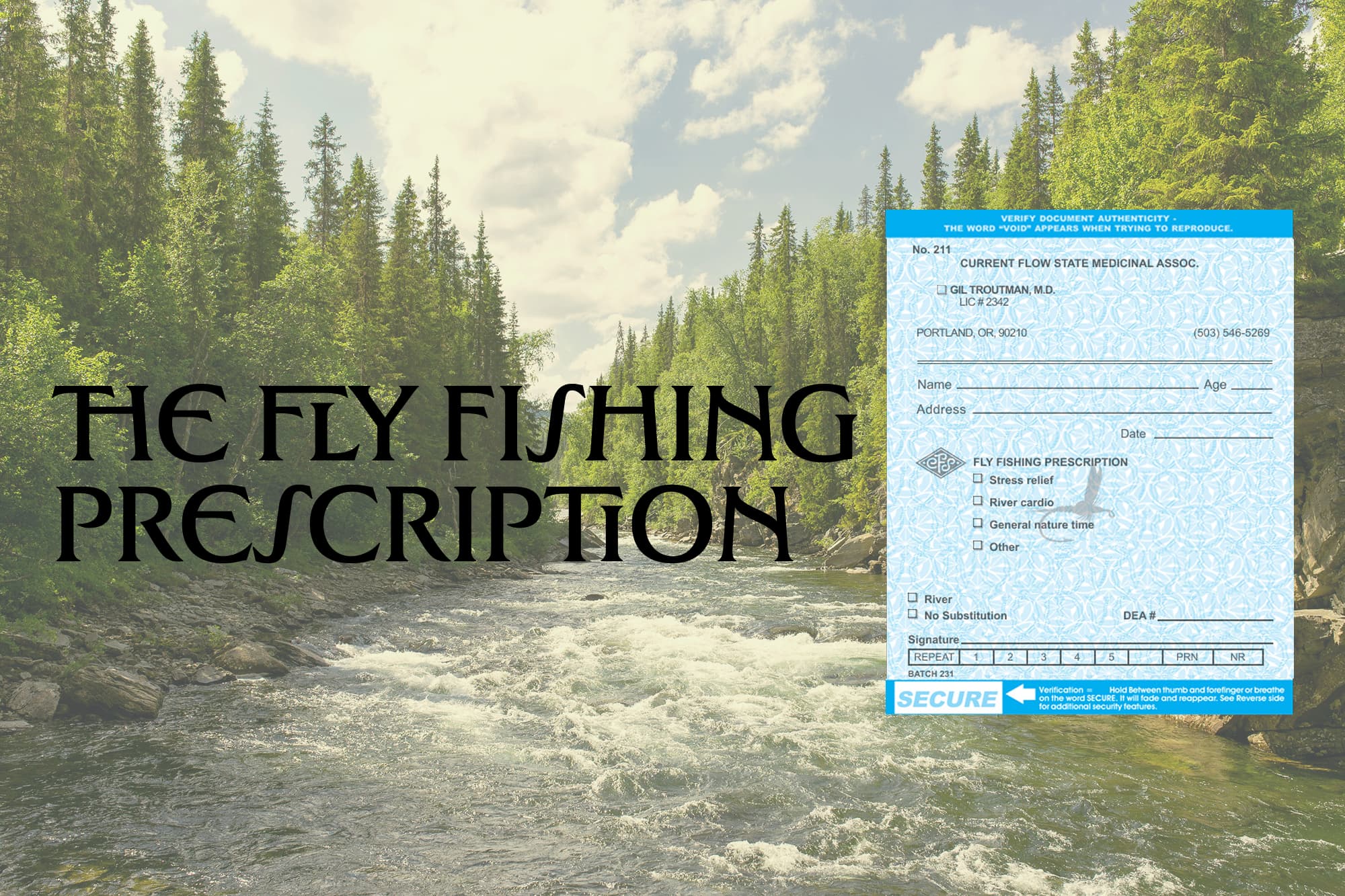
Fly fishing is good for you
Research proves fly fishing improves your mental and physical health.
Leaders ➰
Ten fishy links to start your week on the fly side of life
Angling &...
The Sacred Art of Detangling (4-min read)
I love the positive reframing of a tangle here. But when I get super knotty, and thinking "I wonder if there's a physics problem to describe this,” I remind myself of a simple mantra: When in doubt, cut it out. Fishing time is too short for some hardcore birds' nests. (grey matters)
How these Utah women are redefining the world of fly-fishing (8-min read)
Emma Neff in the Deseret News profiles some lady anglers bringing a new spirit to Utah angling. (ksl.com)
All About the Mercury: The Spring Smallmouth Window (6-min read)
More than anything, water temperature determines when and where smallmouth bass are active in spring. Yet another good reason to always carry a thermometer. (skwalafishing.com)
Leaders and Tippet Material (20-min read)
I tend to agree with Cosmic John's opinions on a lot of things. If you need a refresher on leaders and tippet, here's a good primer. (Box of Rain)
Yellowstone To Open Fishing Season Early (2-min read)
If you have an open calendar (looking at you, retired friends) there's a great case to be made for heading to Yellowstone in early May. The park has an earlier-than-usual opening day this year, starting May 1. (flylordsmag.com)
A river still runs through us (5-min read)
We shared a heads-up about this event in our events calendar (below, if you're new) but here's a rundown of the star-studded 30th anniversary panel celebrating The Movie. (explorebigsky.com)
PICK OF THE WEEK
🎥 SCORCHER: Midwest Smallmouth Musings from the Crew Behind Water Sabbath (9-min watch)
If you still need your bass whistle whetted, watch this short from fly angler/artist Jake Keeler and filmmaker Mike Thienes. (The Flyfish Journal)
...Aware & Active & Alive to the world
Warmer winters and snow drought may threaten western U.S. water by speeding flows, study finds (3-min read)
Unlike the peaks in Eido Roshi's koan, climate scientists know why ours are bare. The sourest "told you so" ever. (news.oregonstate.edu)
A Force of Nature: Canada's Strategy to Protect Nature (20-min read)
Amid the heartbreak of the federal government sacrificing the Boundary Waters at the altar of greed, Canadian prime minister Mark Carney announced its new conservation strategy, A Force of Nature. Quetico forever. (canada.ca)
Visite Amazonia (3-min read)
All nine Brazilian states are uniting in a tourism effort to acquaint others with this globally critical habitat, with a beautiful design formed of the river's meanders. Now that's some ginga. (visiteamazonia.com.br)
What we once thought timeless (8-min read)
Originally published in Hatch magazine, J. Carrol Sain digs down into the deep, visceral anxiety that comes when you watch what our climate emergency is doing to your home ecosystems. I love Sain's writing, for its lush metaphor and strong observational perspective and resonant imagery and sentiment. (jcarrolsain.substack.com)
What Not to Do When Creating Space for Wildlife (6-min read)
Ian Rose talks to experts about common mistakes gardeners make when improving their backyard habitat. I'm in the middle of naturescaping my space into a mini oak savannah, and this is a good reminder of how we might approach a project with good goals in mind yet unwittingly cause harm. (sierraclub.org)
Wildlife Conservation Police Are Searching Thousands of Flock Cameras for ICE (7-min read)
In Florida, Fish and Wildlife Conservation Commission (FWC) officers are querying license plate scanning service Flock on behalf of immigration officers, in what seems like a loophole that's outside their remit. This seems like a recipe for loss of public trust and cooperation. (404media.co)
Want to cover Oregon's outdoors? Apply for Statesman Journal internship (1-min read)
The Salem Statesman Journal's outdoor writer, Zach Urness, is looking for a few good outdoors enthusiasts for the SJ's paid summer internship, which includes working on the Explore Oregon podcast. Could it be you? (statesmanjournal.com)
Events 📆
Got an event you want the community to know about? Send it over, and I'll include it here. You can see all of our upcoming CFS events on Luma.
April 23, Ashland, OR
Screening of The River Remembers and First Descent: Kayaking the Klamath (Ashland Independent Film Festival)
April 24-25, Gresham, OR
Sandy River Spey Clave (Sandy River Spey Clave)
April 25, Vida, OR
The Wooden Boat Show on the McKenzie River (The Redsides)
April 30, "Running Wild" Tour, Seattle
(Wild Salmon Center)
May
CFS: May 16, Fly Fishing and Fly Tying, OR
(landdd.org)
May 20, Portland, OR
"Running Wild" showing (Wild Salmon Center)
CFS: May 28-31, Maupin, OR
It's our annual Maupin Meetup! Registered now, before it fills up. (CFS Events)
June
June 23, "Running Wild" Tour, San Francisco
(Wild Salmon Center)
June 26-28, La Pine, OR
Tenkara Oregon's Tenkara Bugout (Tenkara Oregon)
That's it that's all! Current Flow State is a weekly newsletter from me, Nick Parish.
Would you rather make 30 four-foot loops, or four 30' loops? Tell me on Bluesky 🦋, Instagram 📸, YouTube 🎥, or the Fishcord 💬.
If you enjoyed this, please share it with a friend. We all need more fishing buddies. 💌
Read our editorial policy or browse the newsletter archives.
CFS members support and sustain the site, and our community. Learn more about membership benefits. If you're getting value from this work, consider becoming a member and giving back.